TSMC’s Japan Subsidiary Defies Odds with Q1 Pivot to Profitability
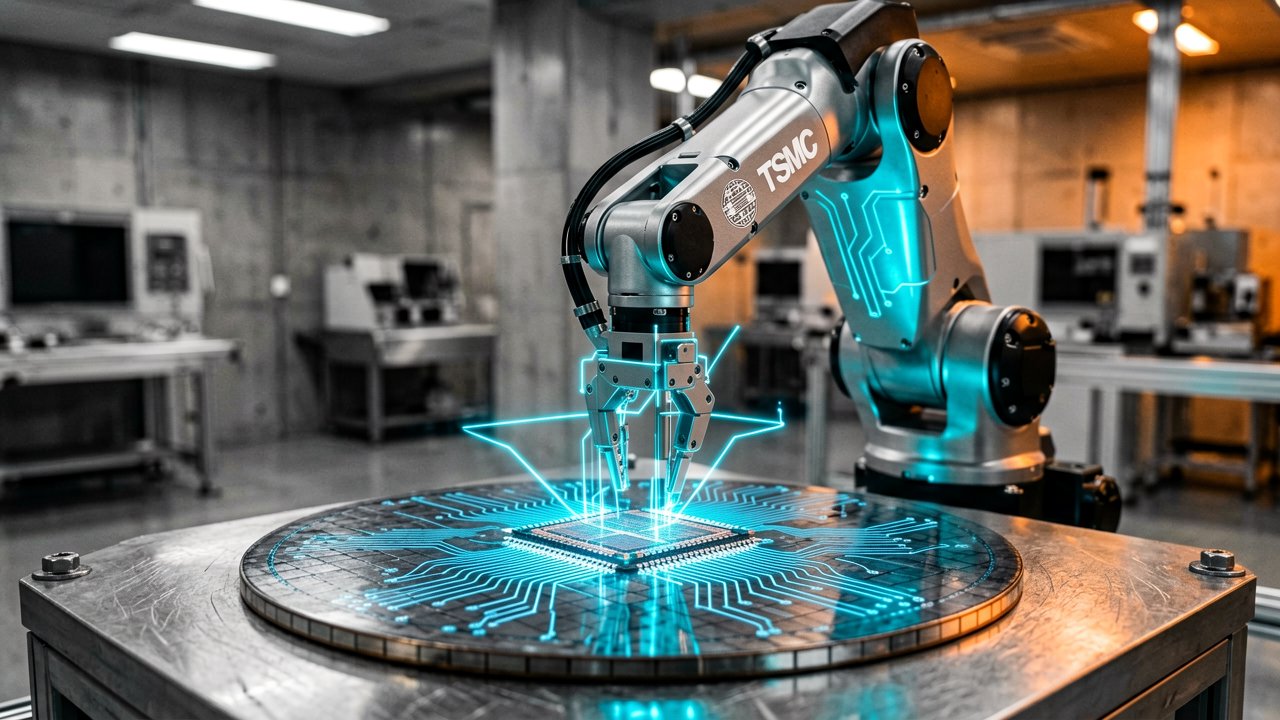
The Rising Sun of Silicon: JASM Hits the Black
If you've been tracking the global semiconductor land grab, you know that Taiwan Semiconductor Manufacturing Co. (TSMC) hasn't just been building factories—it's been building a new map of the tech world. The latest dispatch from the front lines? Japan Advanced Semiconductor Manufacturing Inc. (JASM), TSMC's high-stakes joint venture in Kumamoto, has officially stopped bleeding money. According to recent filings, the subsidiary swung to a profit of NT$951 million (roughly $30.19 million) in the first quarter of 2026, as reported by The Economic Times. For a facility that only kicked off mass production in late 2024, that’s a sprint, not a crawl.
To put that into perspective, JASM was staring down a loss of NT$1.39 billion just one quarter prior. Rewind to the first quarter of 2025, and the deficit was a gaping NT$3.25 billion hole. This turnaround isn't just a lucky break; it’s a masterclass in operational efficiency and "improving production utilization," a phrase analysts love to use when a massive, complex machine finally starts humming at the right frequency. It seems the Kumamoto fab has finally found its rhythm, shedding the heavy weight of start-up costs that defined its 2025 fiscal year, as noted by Focus Taiwan.
The AI Windfall and Overseas Momentum
While Japan was finding its footing, TSMC’s broader global strategy is starting to look less like a gamble and more like a visionary play. The Kumamoto success story is part of a tidal wave of record-breaking financials for the mothership. TSMC's consolidated net profit for Q1 surged by 58.3% year-over-year, hitting a record NT$572.5 billion, per CNBC. The driver? An insatiable appetite for AI silicon. It turns out that when the world is desperate for the brains behind generative AI, having a brand-new, highly efficient fab in a stable geography like Japan is a massive competitive edge.
Interestingly, JASM isn't the only overseas unit making headlines. TSMC's Arizona subsidiary also reported a staggering leap in profit, raking in NT$18.81 billion in Q1—surpassing what it earned in the entirety of 2025, according to BigGo Finance. This cross-continental profitability suggests that TSMC’s "glocalization" strategy is paying off far earlier than skeptics predicted. By diversifying its manufacturing footprint while keeping its cutting-edge 3nm and 5nm tech at the core of its revenue (accounting for 74% of wafer sales), the company is insulating itself against regional volatility while feeding the global AI beast.

Looking ahead, the road in Kumamoto is only getting more ambitious. With the first fab now profitable, the focus shifts to the upcoming second fab, which is pivoting to the advanced 3nm process to meet global demand. While construction costs and geopolitical tensions in the Middle East remain "macro uncertainties" for CEO C.C. Wei, the Q1 results send a clear signal: TSMC's Japanese experiment is no longer an experiment—it's a profit engine. The "Silicon Island" of Kyushu is back in business, and this time, it has the world’s most powerful chipmaker leading the charge.
Beyond the Bottom Line: The Kumamoto Alchemy
What Most Reports Miss: The pivot from a NT$3.25 billion loss to a NT$951 million profit in just twelve months isn't just a triumph of accounting; it’s a cultural and geopolitical feat that many industry veterans thought would take years longer to achieve. While the headlines scream about "utilization rates," the real story in Kumamoto is the successful fusion of TSMC’s notoriously rigid, high-pressure work culture with Japan’s meticulous manufacturing traditions. This isn't just another factory; it’s the most successful template for TSMC’s global expansion to date.
Historically, the Japanese semiconductor industry had been in a state of managed decline since its 1980s heyday. When the Japanese government dangled billions in subsidies to lure TSMC to Kyushu, skeptics whispered about "hollowed-out talent pools" and the "slow pace of Japanese bureaucracy." Yet, JASM has defied those tropes. By partnering with local heavyweights like Sony and Denso, TSMC didn't just build a fab; it tapped into a ready-made ecosystem of specialized engineers and automotive supply chains that were desperate for a localized supply of high-end logic chips.
From the perspective of stakeholders in Tokyo, this profit swing is a massive sigh of relief. The Japanese government has essentially bet the nation's digital future on JASM being the "spark plug" for a wider industrial revival. Had the fab languished in the red, the political capital for Fab 2—which aims for the even more sophisticated 6nm and 7nm nodes—might have evaporated. Instead, the early profitability validates the massive public investment and strengthens the argument for Japan as a "safe harbor" compared to the logistical and labor hurdles TSMC has faced in the Arizona desert.
There's also a subtle, human element to this efficiency. Reporters on the ground have noted the "TSMC effect" in Kumamoto—a local economy suddenly flush with high-paying jobs and a housing market that has been jolted awake. This community buy-in has likely contributed to the rapid ramp-up of the facility. Unlike the labor disputes that slowed progress in the U.S., the collaboration in Japan has been characterized by a shared sense of urgency, with Japanese workers reportedly embracing the grueling "24/7" fab lifestyle to ensure the facility's success.
Ultimately, JASM’s first-quarter performance serves as a blueprint for "glocalization." It proves that TSMC can export its secret sauce—that obsessive focus on yield and speed—if the host country provides the right mix of infrastructure, local partnership, and industrial discipline. As the second Kumamoto fab begins to take shape, the conversation is no longer about whether TSMC can survive outside of Taiwan, but rather how much of the global AI pie Japan can now claim as its own.
The Efficiency Paradox: Scaling on Shaky Ground?
Reading Between the Lines: While the market cheers for JASM’s green ink, a seasoned analyst has to wonder if this "miracle" turnaround is sustainable or merely a byproduct of a desperate, supply-starved moment in tech history. The narrative of operational excellence is compelling, but it conveniently masks the reality that this profitability is heavily cushioned by unprecedented Japanese state support. When billions in taxpayer yen are effectively subsidizing the electricity, land, and equipment, the "swing to profit" looks less like a lean manufacturing victory and more like a carefully engineered fiscal landing.
There is also a glaring contradiction in TSMC’s global posture. CEO C.C. Wei has spent months publicly dampening expectations, citing rising costs and the "dilution" of profit margins as the company builds abroad. Yet, the Q1 numbers tell a story of explosive growth. This suggests a classic "under-promise and over-deliver" strategy, designed to keep investors calm while simultaneously pressuring governments for even more subsidies. If Japan can reach profitability this fast, the argument that overseas fabs are a massive drag on the bottom line starts to lose its teeth—potentially making it harder for TSMC to squeeze more concessions out of Washington or Berlin in the future.
Furthermore, the reliance on the AI gold rush creates a precarious "single-point-of-failure" for the Kumamoto fab’s long-term roadmap. Right now, the world can’t get enough silicon, but the semiconductor industry is notoriously cyclical. If the AI bubble experiences even a minor correction, the high fixed costs of these new overseas facilities could quickly turn them back into expensive paperweights. TSMC is betting that the demand curve is permanent, but history suggests that today’s "essential infrastructure" often becomes tomorrow’s overcapacity headache.
We must also consider the "talent poaching" friction bubbling under the surface. To get JASM profitable this quickly, TSMC didn't just train new staff; they aggressively lured the best talent from established Japanese firms. This has created a localized wage inflation in Kumamoto that might eventually bite back. If the cost of keeping the lights on in Kyushu begins to mirror the exorbitant labor costs of Silicon Valley, the "Japan advantage"—that perfect mix of quality and cost-control—might evaporate as quickly as it appeared.
Projecting forward, the real test isn't Fab 1; it’s the upcoming 3nm transition. Moving from mature nodes to the bleeding edge in a foreign country is where the real technical gremlins live. Achieving profitability on legacy tech is one thing; doing it while wrestling with the physics of sub-5nm chips in a new geography is a different beast entirely. For now, TSMC is taking a victory lap, but the road ahead in Japan is likely to get a lot steeper before it levels out.
It turns out that if you throw enough government subsidies and a global AI panic into a blender, you can actually make a semiconductor fab profitable in record time—just don’t ask the taxpayers for the recipe.
Artūras Malašauskas is an AI Systems Integrator with 20+ years of production-grade web engineering experience. He has designed, shipped, and scaled enterprise Python/PHP systems for logistics, SaaS, and public-sector clients. For the past year, he has focused exclusively on AI integrations: deploying open-source LLMs, building generative media pipelines (image, audio, video), and engineering multi-agent workflows for real production environments. His standard: reproducibility, security, cost-efficient inference—no vaporware. He documents and evaluates emerging AI tooling, separating verified capabilities from marketing noise. Technical editor at: muza-ai.eu, ai-verslas.lt, ai-naujinos.lt Connect on LinkedIn
Comments