The Face of the Future: Xiaomi’s AI-Powered Entry into the Frictionless Home
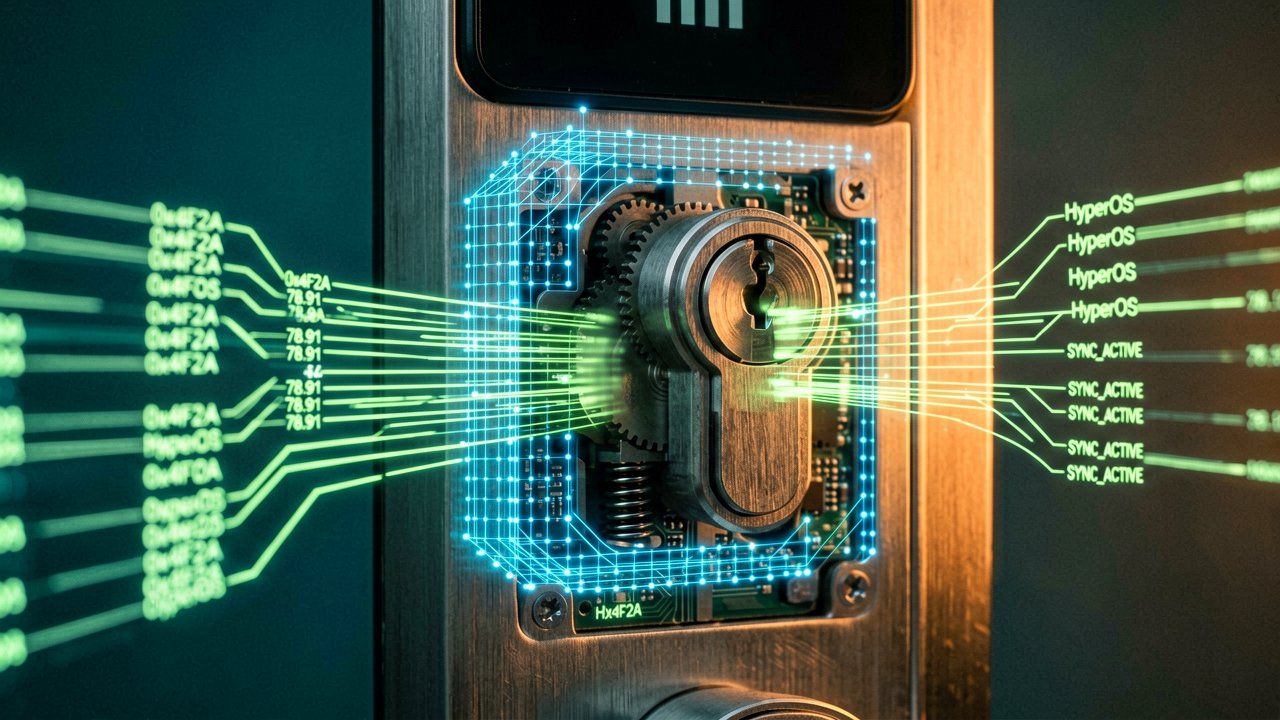
Xiaomi has once again pushed the boundaries of the connected home with the launch of its latest Smart Door Lock, a device that feels less like a security fixture and more like a high-tech concierge. Integrating advanced 3D structured light technology, this new entry into the Xiaomi ecosystem aims to eliminate the friction of entering your home, trading traditional keys and even fingerprint scans for a seamless, hands-free facial recognition experience.
Precision Security Meets Convenience
The standout feature of this new release is its specialized AI-powered facial recognition system. Unlike simple 2D camera solutions that can be fooled by photos or videos, Xiaomi utilizes a sophisticated sensor array to map the contours of a user's face in three dimensions. According to reports from Gizmochina, this system is designed to function effectively in various lighting conditions, including total darkness, thanks to integrated infrared sensors.
For those who worry about the speed of biometric locks, Xiaomi claims a near-instantaneous unlock time. The lock identifies authorized users as they approach, allowing for a fluid "walk-through" entry. This is particularly useful for users carrying groceries or those with young children, where fumbling for a phone or a keycard is a genuine hassle.
A Multimodal Approach to Access
While facial recognition is the headline act, Xiaomi hasn't stripped away the alternatives. The lock remains a versatile hub for home access, supporting multiple "fallback" methods. As detailed by Gadgets 360, the device typically supports high-grade semiconductor fingerprint recognition, permanent and temporary passwords, Bluetooth unlocking via the Mi Home app, and even physical emergency keys.

This multimodal approach ensures that the lock remains functional regardless of the scenario. If a guest needs temporary access, the owner can generate a one-time password remotely. This flexibility is a hallmark of Xiaomi’s philosophy: provide cutting-edge tech, but keep the practical safety nets in place.
Integrated Smart Home Ecosystem
True to form, this smart lock isn't a siloed device. It acts as a primary trigger for home automation routines. Using the Mijia/Mi Home platform, users can set the lock to perform specific actions upon entry, such as turning on the hallway lights, disarming the security alarm, or starting the air conditioning. The synergy between the lock and other Xiaomi smart devices creates a cohesive "living" environment that anticipates the user's needs.
Furthermore, the lock often features a built-in smart doorbell and an indoor screen. As noted by Notebookcheck, these integrated cameras allow homeowners to see who is at the door in real-time through their smartphones or compatible smart displays, effectively serving as a front-door security camera and intercom system in one unit.
Design and Battery Longevity
Visually, the lock follows Xiaomi’s established minimalist aesthetic—sleek, matte finishes and a durable build that hides its complex internals. Despite the power-hungry nature of constant 3D scanning and Wi-Fi connectivity, the company has optimized energy consumption. The device generally utilizes a large-capacity rechargeable lithium battery, often supplemented by a secondary battery pack to ensure the door remains operational even during a charging cycle.

Safety remains the backbone of the hardware. The lock body usually features a C-class lock cylinder, the highest safety rating in the industry, making it highly resistant to forced entry or technical picking. By combining "tank-like" physical security with "Silicon Valley" software, Xiaomi is making a strong case for the smart lock as a mandatory upgrade for the modern household.
As the smart home market matures, the focus is shifting from "cool gadgets" to "invisible technology" that works without being asked. This new facial recognition lock is a step toward that invisible future, where your home simply recognizes you and opens up, no questions asked—unless you're a stranger.
The Strategic Blueprint: Behind the rapid rollout of Xiaomi’s biometric door locks lies a massive pivot in the company’s corporate philosophy. Since 2023, the brand has abandoned its image as a mere smartphone vendor to embrace a comprehensive "Human × Car × Home" strategy. This ecosystem approach, as highlighted by Xiaomi Global, aims to merge personal devices, smart appliances, and electric vehicles into a single, AI-driven operating environment powered by the proprietary HyperOS.
A Massive AIoT Footprint
The scale of this operation is staggering. By the end of 2025, Xiaomi’s AIoT platform—excluding phones and laptops—surpassed 1 billion connected devices, a nearly 20% year-over-year increase. According to Xiaomi Global News , the company now supports over 22 million users who have five or more devices linked within this network, making the smart door lock a critical gateway for a deeply loyal customer base.
This growth is fueled by aggressive R&D spending, which the company projected would exceed RMB 30 billion (approx. $4.1 billion) in 2025 alone. As reported by Xiaomi Discovery , this investment has allowed the brand to master foundational core technologies, including the 3D structured light algorithms that now define their flagship security products.
The Ecosystem Chain and Local Dominance
While Xiaomi is the face of the brand, much of the hardware innovation stems from its "Ecosystem Chain" model. One key player in this specific sector is Lockin, a specialized smart lock enterprise within the Xiaomi network. According to data from Baidu Baike, Lockin held a commanding 19.2% market share in the Chinese smart lock market in 2024, acting as the primary engineering engine for many of the biometric breakthroughs seen in the current product lineup.
The latest locks, such as the Smart Door Lock 2 Face Recognition Version, are not just iterative updates but are designed to handle complex edge cases. Research from Xiaomi-MIUI reveals that the 3D structured light tech is specifically tuned for "inclusivity"—meaning it reliably identifies children as short as 1.2 meters and elderly users whose fingerprints may have faded over time.
Going Beyond the Domestic Market
For years, these high-end locks were exclusive to the Chinese mainland, but 2025 and 2026 have marked a major global push. In a statement captured by Forbes, Xiaomi executives confirmed that the brand is now aggressively exporting its "Human × Car × Home" strategy to international markets, including Europe and the Middle East.
This expansion includes not just security hardware but "white goods" like air conditioners and refrigerators that communicate directly with the smart lock. As noted by Notebookcheck, specialized "self-install" versions of their smart locks have already begun appearing in global online stores from Japan to the UAE, signaling that the keys-to-face transition is no longer a localized trend, but a global objective for the tech giant.
Beyond the Keyhole: The introduction of 3D structured light facial recognition into Xiaomi’s smart lock lineup represents a decisive move to shift consumer perception of home security from "active protection" to "passive verification." By automating the entry process, Xiaomi isn't just selling a lock; they are engineering a frictionless gateway that relies on high-fidelity biometric data to render traditional keys—and even physical touch—obsolete. This transition signifies a broader market trend where the hardware is merely a vehicle for sophisticated AI algorithms.
Market Penetration and the Biometric Shift
The timing of this launch aligns with a significant surge in biometric adoption. According to industry reports from Elock Security, the penetration rate of 3D face recognition smart locks in major markets like China is projected to reach nearly 50% by 2025. Xiaomi’s move to democratize this technology in mid-range models directly challenges premium competitors, forcing a market-wide recalibration of what constitutes "standard" home security features.
From an analytical standpoint, this shift is driven by the falling costs of NPU (Neural Processing Unit) hardware and 3D sensors. As noted by Mordor Intelligence, biometric units are seeing a compound annual growth rate (CAGR) of over 17%, largely because users now prioritize "walk-through" convenience over the minor effort of a fingerprint scan. Xiaomi is successfully capitalizing on this behavioral shift by positioning their locks as the first point of contact in a broader "Human × Car × Home" ecosystem.
Security Architecture and HyperOS Integration
Critically, the intelligence of these locks is no longer siloed. Under the new HyperOS architecture, the smart lock serves as a primary sensor for the home’s "intelligent brain." As detailed by ITP.net, Xiaomi’s HyperMind component can learn user behavior patterns, meaning the act of unlocking the door can trigger complex, personalized automation routines that adjust lighting, climate, and security states across the entire household without manual input.
This integration is backed by a robust security framework. To combat the inherent risks of networked biometrics, Xiaomi utilizes a self-developed TEE (Trusted Execution Environment) Security System. According to Xiaomi Global, this isolated OS runs on dedicated hardware to safeguard sensitive biometric data, ensuring that "your face" never leaves the device's encrypted storage, thereby mitigating concerns regarding cloud-based data breaches.
Addressing the "Dystopian" Elephant in the Room
However, the rapid normalization of facial recognition in residential spaces is not without its critics. Privacy advocates often point to the potential for "privacy mining" and the non-consensual collection of data. Reports from ISACA highlight that unlike passwords, biometric traits cannot be changed if compromised, making the security of the local storage vault the most critical link in the chain.
Xiaomi has attempted to front-run these concerns by emphasizing a "local-first" data policy. By processing facial maps locally on the MJA1 security chipset rather than in the cloud, they address the primary fear of centralized biometric databases. This analytical approach suggests that for smart locks to achieve global ubiquity, manufacturers must win the "trust war" as much as the "technology war."
The Economic Ripple Effect
The broader economic implications are also noteworthy. The global smart lock market is expected to skyrocket to over $14 billion by 2033, as reported by Transpire Insight. Within this space, residential users account for nearly 60% of demand, as homeowners look for integrated systems that reduce the likelihood of lost keys and improve general household management.
Furthermore, the push into international markets like the UAE and Europe demonstrates Xiaomi’s intent to lead the global standard for smart living. Through partnerships with major real estate developers to bundle these locks into new "smart city" housing projects, as mentioned in Gulf Business, Xiaomi is effectively ensuring its ecosystem becomes the default infrastructure for the next generation of urban dwellers.
Ultimately, the "smart" in smart door locks is shifting from simple connectivity to proactive intelligence. Xiaomi’s latest release is a bellwether for a future where your house doesn't just protect you from the outside world—it recognizes you as you return to it, seamlessly blending high-stakes security with the ultimate luxury of doing absolutely nothing to get inside.
"While we are finally living in the future where our houses recognize us like a loyal golden retriever, let’s just hope the AI doesn't get 'moody' and decide you look a bit too suspicious after a rough Monday or a bad haircut. After all, being locked out because your own door doesn't 'vibe' with your morning face is the kind of high-tech tragedy Shakespeare never saw coming."
Artūras Malašauskas is an AI Systems Integrator with 20+ years of production-grade web engineering experience. He has designed, shipped, and scaled enterprise Python/PHP systems for logistics, SaaS, and public-sector clients. For the past year, he has focused exclusively on AI integrations: deploying open-source LLMs, building generative media pipelines (image, audio, video), and engineering multi-agent workflows for real production environments. His standard: reproducibility, security, cost-efficient inference—no vaporware. He documents and evaluates emerging AI tooling, separating verified capabilities from marketing noise. Technical editor at: muza-ai.eu, ai-verslas.lt, ai-naujinos.lt Connect on LinkedIn
Comments