The Great Inference Pivot: Silicon Giants and Startups Take on Nvidia’s Crown
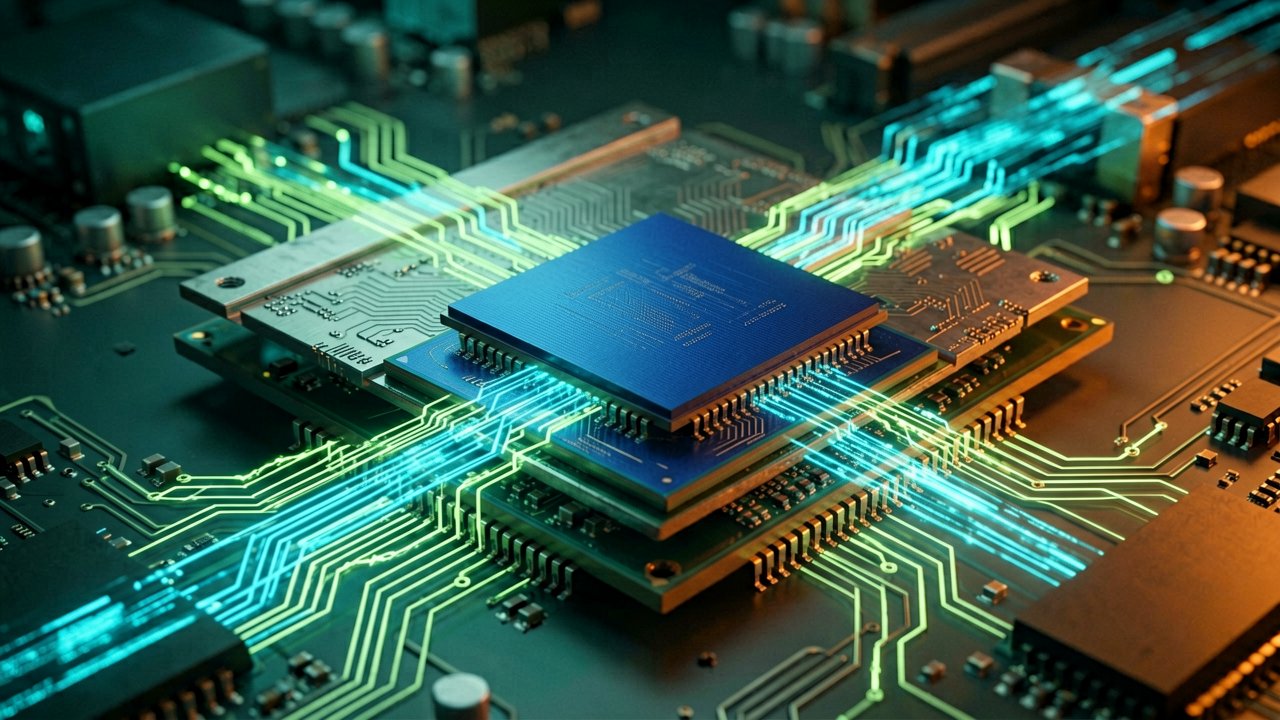
For the better part of two years, Nvidia has enjoyed a near-monopoly on the hardware powering the generative AI revolution. Its H100 and Blackwell GPUs became the gold standard for "training"—the computationally heavy process of teaching large language models (LLMs) how to think. however, the industry is reaching a critical inflection point where the focus is shifting from building models to running them. This transition to "inference" is cracking the door open for a new breed of competitors and custom silicon solutions.
The Pivot from Training to Inference
While training requires massive clusters of interconnected GPUs, inference—the act of a model actually answering a user’s prompt—is a different beast entirely. Efficiency, latency, and cost-per-token are the new metrics that matter. As companies look to scale AI features to millions of users, the sheer expense of running these services on general-purpose Nvidia chips is becoming a bottleneck. This shift has emboldened startups like Groq, which specializes in Language Processing Units (LPUs) designed specifically to deliver blazing-fast inference speeds that traditional GPUs struggle to match, as noted by MIT Technology Review.
Hyperscalers Take Control
The biggest threat to Nvidia doesn’t come from a rival chipmaker, but from its own biggest customers. Tech giants like Amazon, Google, and Microsoft are tired of waiting in line for Nvidia’s limited supply and paying a premium for it. By developing their own custom AI chips—such as Google’s TPU v5p and Amazon’s Trainium and Inferentia lines—these hyperscalers can optimize hardware specifically for their internal software stacks. According to analysis from CNBC, this move toward "in-house" silicon allows these firms to slash operational costs and reduce their dependency on a single vendor.
Cerebras and the Specialized Hardware Surge
It isn't just the cloud giants making moves. Startups are rethinking chip architecture from the ground up. Cerebras Systems, for instance, has gained significant traction with its Wafer-Scale Engine, a dinner-plate-sized chip that bypasses the communication bottlenecks of traditional GPU clusters. By keeping the entire model on a single piece of silicon, Cerebras claims to offer performance levels that make standard AI hardware look like legacy tech. As reported by Reuters, the company's focus on specialized niches is proving that one size does not fit all in the evolving AI ecosystem.
Nvidia’s Defensive Strategy
Nvidia isn't standing still while its moat is under siege. CEO Jensen Huang has pivoted the company's narrative from being a chip vendor to being a "data center scale" company. By tightly integrating its hardware with its proprietary CUDA software platform, Nvidia makes it incredibly difficult for developers to switch to rival hardware. Furthermore, Nvidia is reportedly launching a new business unit specifically to help other companies design their own custom AI chips, a "if you can't beat 'em, join 'em" strategy highlighted by Bloomberg.
The Road Ahead: A Fragmented Market
The "GPU squeeze" of 2023 is evolving into the "Inference War" of 2025 and beyond. We are likely moving toward a fragmented landscape where Nvidia remains the king of high-end training, while a mix of custom ASICs (Application-Specific Integrated Circuits) and specialized startups handle the day-to-day heavy lifting of AI responses. For the tech industry, this competition is a net positive; it drives down the "AI tax" and accelerates the deployment of smarter, faster, and cheaper applications for everyone.
The Strategic Pivot: While the broader market focuses on the sheer number of transistors, the real battle is being fought in the architectural nuances of how data moves through silicon. Nvidia’s historical advantage was built on the versatility of its Parallel Processing architecture, but the "Inference Era" is exposing a fundamental trade-off: a chip designed to do everything (training, gaming, and simulation) is rarely the most efficient at doing just one thing. This realization has sparked a venture capital gold rush into specialized architectures that treat AI not as a graphical problem, but as a memory-routing challenge.
Groq and the Deterministic Revolution
At the forefront of the specialized surge is Groq, founded by former Google TPU engineers. Their approach abandons the traditional GPU "kernel" system in favor of a Software-Defined Hardware model. By using a deterministic architecture, Groq ensures that the timing of data movement is known exactly before a program even runs. This eliminates the need for complex "schedulers" found on Nvidia chips, allowing for the ultra-low latency required for real-time AI agents. According to Forbes, this radical rethink of the compute stack is what allows them to achieve tokens-per-second metrics that were previously thought to be years away.
The Hyperscaler 'Sovereign Silicon' Movement
The move by Amazon and Google to build their own chips is about more than just cost—it’s about supply chain sovereignty. During the peak of the GPU shortage, lead times for Nvidia’s H100s stretched to nearly a year. By investing in their own "Inferentia" and "Trainium" chips, Amazon Web Services (AWS) can provide its customers with a predictable price-to-performance ratio that isn't subject to Nvidia's margin requirements. As detailed by The Wall Street Journal, these custom chips are now being offered at significant discounts compared to Nvidia-based instances, forcing a price war in the cloud compute sector.
Cerebras and the 'Wafer-Scale' Gambit
Cerebras Systems represents perhaps the most daring engineering feat in the industry. Traditional chips are cut from a silicon wafer, but Cerebras uses the entire wafer as a single processor. This "Wafer-Scale Engine" contains trillions of transistors and, more importantly, massive amounts of on-chip memory. In standard AI setups, the bottleneck is often the speed at which data travels between the GPU and the external memory; by keeping everything on-chip, Cerebras effectively deletes that bottleneck. Wired has noted that this architecture could potentially reduce the power consumption of massive AI clusters by orders of magnitude.
Apple’s Quiet Inference Dominance
While the focus is often on data centers, a significant portion of the inference shift is happening "at the edge"—on our phones and laptops. Apple’s M-series and A-series chips feature a dedicated "Neural Engine" specifically tuned for AI tasks. By keeping AI processing local to the device rather than sending it to an Nvidia-powered cloud, Apple is creating a massive, decentralized inference network. This strategy, as explored by The Verge, not only enhances user privacy but also bypasses the need for high-end server-grade GPUs for many everyday AI tasks like image generation or text summarization.
The Sustainability Factor
Finally, the competition is being driven by the environmental cost of AI. Nvidia’s high-performance GPUs are notoriously power-hungry, requiring specialized liquid cooling and massive electrical infrastructure. Competitors are using "efficiency" as their primary marketing tool. Startups like d-Matrix are developing "in-memory computing" solutions that minimize the energy lost during data transfer. As global power grids struggle to keep up with data center demand, the company that can provide the most "tokens per watt" may eventually unseat the company that simply provides the most "tokens per second," a trend closely monitored by The Economist.
Reading Between the Lines: The commoditization of AI compute is no longer a theoretical threat; it is a structural reality that challenges the very foundation of Nvidia’s trillion-dollar valuation. While Nvidia has successfully branded its GPUs as the "essential oxygen" of the AI ecosystem, we are entering a phase of specialized atmospheric engineering. The market is realizing that using a high-end H100 to summarize a grocery list is the computational equivalent of using a Ferrari to deliver mail—it’s impressive, but fiscally irresponsible and structurally inefficient.
The Disintegration of the GPU Premium
Nvidia’s historically high margins are predicated on a scarcity of alternatives and the stickiness of their CUDA software. However, as the industry moves toward standardized frameworks like PyTorch and OpenAI’s Triton, the hardware layer is becoming increasingly "abstracted away." This means developers care less about whose logo is on the chip and more about the cost-per-inference. As noted by The Financial Times, this shift toward software-agnostic hardware represents the first real crack in Nvidia’s defensive perimeter, potentially forcing a "race to the bottom" in chip pricing that the industry hasn't seen in decades.
The Rise of 'Application-Specific' Dominance
The transition from general-purpose GPUs to Application-Specific Integrated Circuits (ASICs) marks the maturity of the AI sector. In the early days of any technology, the most versatile tool wins; as the technology matures, the most efficient tool wins. We are seeing a bifurcation where Nvidia may retain the crown for "Discovery" (training), but lose the "Utility" (inference) market to custom silicon. According to Barron's, this creates a precarious situation for investors who have priced Nvidia for perpetual dominance across all sectors of the AI stack.
Capital Expenditure as a Competitive Weapon
The decision by Big Tech firms to design their own silicon is a long-term play to reclaim the billions in capital expenditure currently flowing into Nvidia’s coffers. By controlling the silicon, companies like Meta and Alphabet can vertically integrate their AI services, offering them at lower prices than competitors who remain shackled to third-party hardware costs. This "Sovereign Silicon" movement, as analyzed by Bloomberg, suggests that the future of AI power will be concentrated in the hands of those who own the "foundry-to-feature" pipeline, rather than just the chip design.
The Hidden Risk of Over-Optimization
There is, however, a contrarian risk: over-optimization. The AI field moves so fast that a custom chip designed for today’s Transformer models might become an expensive paperweight if a new architecture—like State Space Models (SSMs) or Liquid Neural Networks—becomes the new standard tomorrow. Nvidia’s greatest strength remains its flexibility; its chips can be reprogrammed for whatever comes next. As TechCrunch points out, the "chip wars" are as much a gamble on the future of mathematics as they are on the future of physics.
"In the end, we might find that while Nvidia built the first skyscrapers of the AI city, the rest of the world is now busy building the suburbs with much cheaper bricks. Just remember: today’s 'unbeatable' hardware monopoly is usually tomorrow’s 'really great deal' on eBay."
Artūras Malašauskas is an AI Systems Integrator with 20+ years of production-grade web engineering experience. He has designed, shipped, and scaled enterprise Python/PHP systems for logistics, SaaS, and public-sector clients. For the past year, he has focused exclusively on AI integrations: deploying open-source LLMs, building generative media pipelines (image, audio, video), and engineering multi-agent workflows for real production environments. His standard: reproducibility, security, cost-efficient inference—no vaporware. He documents and evaluates emerging AI tooling, separating verified capabilities from marketing noise. Technical editor at: muza-ai.eu, ai-verslas.lt, ai-naujinos.lt Connect on LinkedIn
Comments