The Wrist-Bound Zen: Headspace Reimagines Mindfulness via Apple Watch
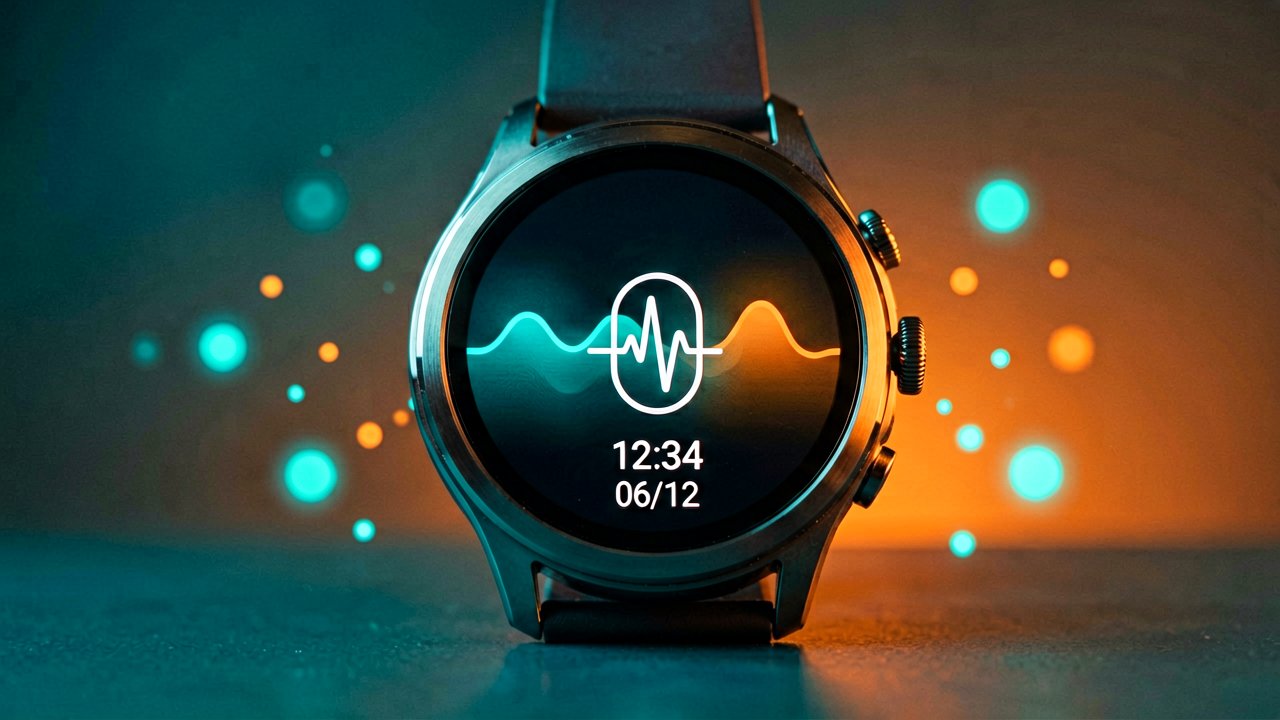
Mindfulness on the Move: Headspace Lands on Apple Watch
In a week where wearable technology continues to blur the lines between fitness tracking and mental health, the biggest buzz comes from the meditation giant Headspace. The company has officially launched its dedicated app for the Apple Watch, aiming to make mindfulness as accessible as checking a notification. According to The Verge, the move is a strategic play to meet users where they are—literally—by stripping away the friction of needing a smartphone to find a moment of calm.
The new watchOS integration isn't just a mirrored notification center; it’s a streamlined version of the core platform. Users can now access "SOS" sessions for high-stress moments and a selection of guided meditations directly from their wrist. As noted by TechCrunch, this fits perfectly into Apple’s broader ecosystem strategy, which has increasingly prioritized "snackable" health interventions over long-form content.
From a tech-analytic perspective, this launch signals a shift in the "attention economy." By decoupling meditation from the phone, Headspace is effectively removing the primary source of digital distraction—the very device that often causes the stress users are trying to alleviate. 9to5Mac highlights that the app includes complications for the watch face, allowing users to start a session with a single tap, further lowering the barrier to entry for daily practice.
The Wearable Wellness Arms Race
Headspace isn't alone in this endeavor. The health tech sector is currently seeing a massive influx of capital and engineering talent focused on "ambient health." This refers to technology that monitors and assists us without requiring constant manual input. By leveraging the Apple Watch’s heart rate sensors and haptic feedback, Headspace is positioning itself as a proactive health tool rather than a reactive one.

Industry analysts at MobiHealthNews suggest that this integration is part of a larger trend where mental health services are becoming "platform agnostic." Whether you are on a treadmill, at a desk, or commuting, the goal for these companies is to provide a seamless layer of support. This launch specifically targets the "in-between moments" of life, turning a thirty-second elevator ride into a breathing exercise.
However, the competition is stiff. With Apple’s own "Mindfulness" app built directly into the Watch, Headspace has to prove that its premium content and brand recognition are worth the extra footprint. As reported by Wareable, the battle for the wrist is no longer just about steps and calories; it’s about who can best manage the user’s cognitive load in an increasingly noisy digital world.
, the company identified the Apple Watch as an "absolute no-brainer" because it allows users to capture "micro-moments" of wellness without the inevitable vortex of social media notifications and emails that come with unlocking a phone.The technical integration goes deeper than simple audio playback. The app now leverages Heart Rate Variability (HRV) data via Apple Health to act as a proactive coach. As detailed by HLTH, the system can identify physiological signals of stress and trigger gentle haptic nudges on the wrist. These tactile cues guide users through a 60-second "tactile breathing" exercise, effectively turning the device into a physical anchor for the user's attention during moments of acute anxiety.
This "proactive" approach marks a significant pivot from the app's origins. While the early days of Headspace focused on 10-to-20-minute guided sessions, the current iteration is designed for the high-friction realities of 2026. Headspace highlights that the new SOS mode is specifically tailored for specific emotional states like being "Burned Out" or "Losing Your Temper," offering immediate, bite-sized interventions that require zero navigation through a complex library.

From Startup to Clinical Giant
The timing of this release coincides with Headspace’s broader transformation into a full-stack mental health provider. Following its landmark $3 billion merger with Ginger, the company has shifted its focus heavily toward enterprise and clinical settings. According to Fierce Healthcare, the brand is increasingly positioning its tools as "clinically backed micro-interventions" that can be prescribed or integrated into corporate wellness programs.
Financially and strategically, Headspace is preparing for a new era. Industry reports from Business of Apps estimate the company generated approximately $140 million in 2025, supported by a massive footprint of over 5,000 corporate partnerships. This growth is being bolstered by "Ebb," their empathetic AI companion, which logged over 11 million minutes of interaction in the last year alone, as noted in the Headspace 2025 Year in Review.
Ultimately, the Apple Watch app serves as the "front door" to this vast ecosystem. By making the entry point a simple vibration on the wrist, Headspace is betting that the future of mental health isn't found in a long therapy session once a week, but in a hundred small, data-driven moments of recalibration every day. As competitors like Calm and Apple's own native Mindfulness app vie for the same real estate, Headspace is leaning into its clinical heritage and AI-driven personalization to stay ahead in the wearable wellness race.
The Strategy of Subtraction: Why the Wrist Matters
The Backstory: This launch isn't just about adding a new screen; it’s about a calculated retreat from the smartphone. Headspace’s internal data revealed a compelling driver for this expansion: roughly 50% of its existing member base already owns an Apple Watch. According to MobiHealthNews, the company identified the Apple Watch as an "absolute no-brainer" because it allows users to capture "micro-moments" of wellness without the inevitable vortex of social media notifications and emails that come with unlocking a phone.
The technical integration goes deeper than simple audio playback. The app now leverages Heart Rate Variability (HRV) data via Apple Health to act as a proactive coach. As detailed by HLTH, the system can identify physiological signals of stress and trigger gentle haptic nudges on the wrist. These tactile cues guide users through a 60-second "tactile breathing" exercise, effectively turning the device into a physical anchor for the user's attention during moments of acute anxiety.
This "proactive" approach marks a significant pivot from the app's origins. While the early days of Headspace focused on 10-to-20-minute guided sessions, the current iteration is designed for the high-friction realities of 2026. CNET highlights that the new SOS mode is specifically tailored for critical emotional states like being "Panicking," "Burned Out," or "Losing Your Temper," offering immediate, bite-sized interventions that require zero navigation through a complex library.
From Startup to Clinical Giant
The timing of this release coincides with Headspace’s broader transformation into a full-stack mental health provider. Following its landmark merger with Ginger, the company has shifted its focus heavily toward enterprise and clinical settings. According to Built In, the brand is increasingly positioning its tools as clinically backed micro-interventions that can be prescribed or integrated into corporate wellness programs to offset cooling consumer app momentum.
Financially and strategically, Headspace is preparing for a new era. Industry reports from Business Model Canvas Template estimate the global mental health app market is projected to reach $17.5 billion by 2030, with Headspace shifting toward B2B contracts and clinical reimbursements. This growth is being bolstered by "Ebb," their empathetic AI companion, which saw significant engagement throughout 2025, as noted in the Headspace 2025 Year in Review.
Ultimately, the Apple Watch app serves as the "front door" to this vast ecosystem. By making the entry point a simple vibration on the wrist, Headspace is betting that the future of mental health isn't found in a long therapy session once a week, but in a hundred small, data-driven moments of recalibration every day. As competitors like Calm and Apple's own native Mindfulness app vie for the same real estate, Headspace is leaning into its clinical heritage and AI-driven personalization to stay ahead in the wearable wellness race.
Decoding the Bio-Feedback Pivot
Reading Between the Lines: The pivot from "on-demand" meditation to "biometric-triggered" intervention represents the most significant shift in mental health technology since the App Store launched. By hooking into heart rate variability (HRV) data, Headspace is attempting to bridge the gap between subjective feeling and objective physiological markers. This isn't just about convenience; it's about shifting the burden of self-awareness from the user to the algorithm, potentially capturing users in high-stress states before they even consciously realize they are spiraling.
From a market standpoint, this move is a defensive masterstroke against "platform cannibalization." For years, third-party health apps have feared the "Sherlocking" effect—where Apple integrates a basic version of their features into watchOS for free. By utilizing complex Apple Health data for real-time SOS prompts, Headspace is differentiating itself from Apple’s generic "Breathe" reminders through depth and clinical validation. They are moving from being a "content library" to an "intelligence layer," making their subscription fee feel like a necessary medical utility rather than a luxury digital lifestyle choice.
However, the analytical elephant in the room remains "intervention fatigue." As wearables transition from passive trackers to active participants in care, as noted by Mindbowser, the risk of digital nagging becomes real. If your watch buzzes every time your heart rate spikes during a heated meeting, the device itself could become a source of anxiety. The success of Headspace's latest gambit will depend entirely on the "empathy" of its AI triggers—knowing precisely when to nudge a user and, more importantly, when to stay silent and let them breathe on their own.
"We've officially reached the era where your watch knows you're about to lose your cool before your coworkers do. It's a brave new world where 'checking your pulse' is no longer a metaphor—it's a push notification. Let’s just hope it doesn’t start vibrating during awkward family dinners, or we might need a whole new SOS mode for 'Aunt Susan’s Politics'."
Artūras Malašauskas is an AI Systems Integrator with 20+ years of production-grade web engineering experience. He has designed, shipped, and scaled enterprise Python/PHP systems for logistics, SaaS, and public-sector clients. For the past year, he has focused exclusively on AI integrations: deploying open-source LLMs, building generative media pipelines (image, audio, video), and engineering multi-agent workflows for real production environments. His standard: reproducibility, security, cost-efficient inference—no vaporware. He documents and evaluates emerging AI tooling, separating verified capabilities from marketing noise. Technical editor at: muza-ai.eu, ai-verslas.lt, ai-naujinos.lt Connect on LinkedIn
Comments