Dexcom Unveils G8: The AI-Driven Future of Continuous Glucose Monitoring
The Next Leap in Metabolic Monitoring
The landscape of diabetes management is shifting once again as Dexcom, a titan in the glucose monitoring space, pulls back the curtain on its newest flagship: the Dexcom G8. Building on the massive success of the G7, this latest iteration isn't just a hardware refresh; it’s a fundamental pivot toward an AI-driven ecosystem. According to reports from MedTech Dive, the device aims to bridge the gap between simple data collection and actionable metabolic intelligence.
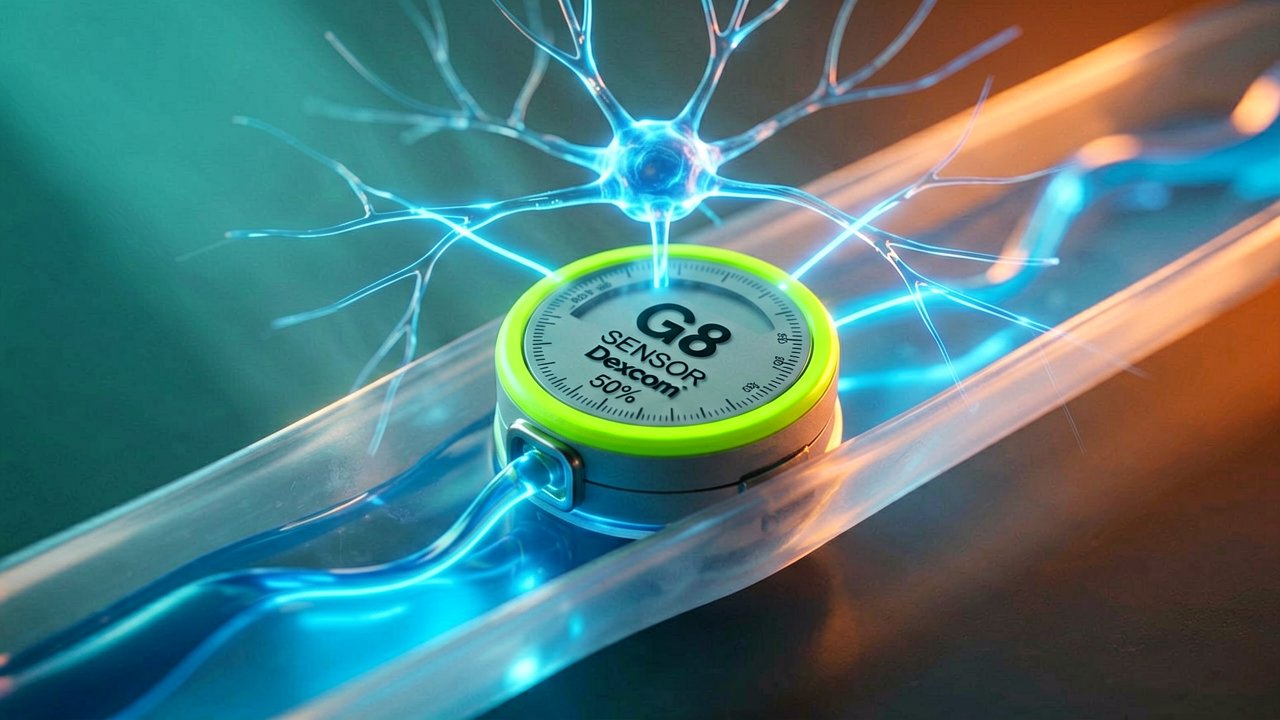
The most immediate change is the hardware profile. The G8 sensor has managed to shrink even further, boasting a footprint that makes it virtually unnoticeable under clothing. But the real magic lies beneath the plastic shell. The new sensor technology utilizes an enhanced enzymatic membrane designed to reduce "noise" during the first few hours of wear. This effectively eliminates the "warm-up" jitters that have historically plagued continuous glucose monitors (CGMs), providing rock-solid accuracy from the moment of application.
Artificial Intelligence at the Core
While the hardware is impressive, the "Advanced AI" mentioned in the unveiling is the G8's true North Star. Dexcom has integrated a proprietary machine learning layer directly into the receiver app. As noted by MobiHealthNews, this AI doesn't just track where your blood sugar is—it predicts where it will be with startling precision by analyzing heart rate data, sleep patterns, and historical insulin sensitivity.
This predictive capability, dubbed "Predictive Insight Engine," allows the G8 to alert users of potential hypoglycemic events up to 40 minutes before they occur. Unlike previous versions that relied on static thresholds, the G8 learns the user's specific physiological responses to meals and exercise. This personalization reduces "alarm fatigue," a common complaint among CGM users who feel bombarded by generic notifications.
Seamless Connectivity and Ecosystem Integration
Dexcom is also leaning heavily into the "Direct-to-Watch" feature that began rolling out late in the G7’s lifecycle. The G8 arrives with native support for the latest Apple Watch and Garmin ecosystems right out of the box. Industry analysts at Fierce Biotech highlight that this independence from the smartphone is a critical quality-of-life improvement for athletes and active users who don't want to carry a bulky handset during workouts.
Furthermore, the G8 is designed to be the primary brain for Automated Insulin Delivery (AID) systems. By partnering with pump manufacturers like Tandem and Omnipod, Dexcom ensures that the G8’s high-fidelity data feeds directly into the algorithms that control insulin dosing. This creates a "closed-loop" experience that is smoother and more responsive to the rapid glucose spikes associated with high-carb meals.
Expanding Beyond Type 1 Diabetes
Interestingly, the marketing surrounding the G8 suggests a broader ambition. Dexcom is no longer just eyeing the Type 1 community. With the inclusion of simplified "Metabolic Health" modes, the G8 is positioned to appeal to Type 2 patients and even non-diabetic biohackers. The software can now translate complex glucose curves into a simple "Stability Score," making the data accessible to someone just looking to optimize their midday energy levels.
As the G8 moves toward global regulatory filings, the message from Dexcom is clear: the future of health is continuous, invisible, and incredibly smart. By marrying sophisticated sensor chemistry with localized AI, the G8 isn't just a medical device—it’s a sophisticated wearable that happens to save lives. It marks a definitive end to the era of reactive medicine, ushering in a period where our devices know our bodies better than we do.
The Visionary Road to late 2027
The Strategic Evolution: While the initial unveiling of the Dexcom G8 has sparked significant excitement, the company has clarified that this is a long-term play for dominance in the metabolic health sector. During the Dexcom Investor Day on May 14, 2026, CEO Jake Leach emphasized that the G8 represents a "completely new product platform" rather than an incremental update. This platform is built on a custom silicon chip designed to process additional physiological signals, a technical feat that has reportedly been in development for several decades at the company. Despite the early announcement, the road to commercial availability is deliberate; Dexcom plans to submit the G8 for regulatory review in 2027, targeting a full commercial launch in late 2027 or early 2028.
The G8's hardware is a marvel of miniaturization, coming in at 50% smaller than the already compact G7. This reduction is achieved through a radical redesign of the internal battery and antenna systems, optimizing power efficiency to maintain the new 15-day wear-time standard. As reported by , this 15-day window is set to become the baseline for all future Dexcom sensors, starting with the rollout of the G7 15-day version later this year. This shift is designed to reduce the "burden of day one" for users—the initial period of physiological adjustment and calibration that often occurs with new sensor applications.
A Multi-Analyte Future Beyond Glucose
Perhaps the most transformative aspect of the G8 platform is its potential for multi-analyte sensing. Dexcom has confirmed that the underlying G8 technology is capable of measuring more than just glucose; future iterations of the sensor are expected to track ketones, lactate, and even potassium. According to insights from MobiHealthNews, the inclusion of ketone monitoring is a top priority, as it would offer a critical safety net for those at risk of diabetic ketoacidosis. This puts Dexcom in direct competition with other industry leaders working on dual-sensor technologies, such as Abbott’s upcoming biowearables.
The integration of AI isn't limited to the G8 sensor itself. Dexcom is simultaneously upgrading its broader software ecosystem, including the Stelo app intended for non-insulin users. New features include "GenAI" insights powered by Google Cloud's Vertex AI platform, which will provide users with tailored coaching based on their unique glucose responses to sleep and exercise. As noted by HLTH, these software enhancements are meant to make metabolic data accessible to a wider demographic, potentially reaching up to 12 million individuals as Medicare coverage for CGM technology continues to expand through 2027.
Financially, Dexcom is positioning itself for a period of aggressive growth and stability. The company recently outlined a roadmap targeting over 10% annual revenue growth through 2030, supported by a $1 billion stock repurchase program set for 2026. This financial health provides the runway needed to finalize the G8’s complex regulatory journey while continuing to support the G7 and Stelo product lines. By the time the G8 hits the market, Dexcom envisions a world where "factory calibration" is replaced by "self-adapting precision," where the sensor learns and compensates for the specific physiological quirks of the person wearing it.
The Strategic Reengineering of Metabolic Data
Beyond the Hardware Horizon: The unveiling of the Dexcom G8 represents a fundamental shift in the medical device playbook, moving from a "reactive hardware" model to a "proactive intelligence" platform. Analysts at Medical Device Network note that while the 50% smaller form factor is a significant engineering achievement, the G8’s true competitive moat is its bespoke silicon chip. This isn't just about miniaturization; it’s about localized processing power that allows the device to adapt to individual physiological shifts in real-time, effectively moving the "brain" of the operation from the cloud back to the person.
This strategic move comes as Dexcom faces tightening competition and pricing pressures. As reported by Yahoo Finance, the company is pivoting to defend its premium market position while simultaneously scaling for a massive influx of Type 2 patients. By making the G8 more accurate and reliable through AI, Dexcom is betting that clinicians will favor "intelligence" over the lower-cost alternatives provided by traditional consumer electronics firms. The goal is clear: transition from being a diabetes company to a "biosensing leader" where glucose is just the first of many metabolic signals monitored by a single, invisible patch.
Furthermore, the G8 serves as a defensive wall against the "data fatigue" that often leads to patient dropout. According to insights from MobiHealthNews, the integration of generative AI within the Stelo and G8 apps aims to provide what they call a "nudge, not judge" experience. By synthesizing sleep, exercise, and glucose data into personalized coaching, Dexcom is moving beyond providing numbers to providing narratives. This shift is essential for long-term user retention, particularly as the market expands to millions of non-insulin-using lives covered by expanding Medicare decisions expected by late 2026.
Ultimately, the G8 is Dexcom’s answer to the "biowearable" revolution. While tech giants chase non-invasive optical sensors that remain clinically elusive, Dexcom is doubling down on the proven precision of enzymatic membranes, supercharged by decades of proprietary algorithms. By the time the G8 hits the market in late 2027, the success of this strategy will be measured not just by unit sales, but by how effectively it can turn complex physiological noise into a silent, autonomous partner in human health.
The future of healthcare looks less like a sterile doctor’s office and more like a tiny, smart sticker on your arm that knows you better than your mother does. Just don’t be surprised when your G8 starts judging your 2:00 AM refrigerator raids before you even reach for the handle—at this rate, the next version might just lock the kitchen door for you.
Artūras Malašauskas is an AI Systems Integrator with 20+ years of production-grade web engineering experience. He has designed, shipped, and scaled enterprise Python/PHP systems for logistics, SaaS, and public-sector clients. For the past year, he has focused exclusively on AI integrations: deploying open-source LLMs, building generative media pipelines (image, audio, video), and engineering multi-agent workflows for real production environments. His standard: reproducibility, security, cost-efficient inference—no vaporware. He documents and evaluates emerging AI tooling, separating verified capabilities from marketing noise. Technical editor at: muza-ai.eu, ai-verslas.lt, ai-naujinos.lt Connect on LinkedIn
Comments