The Face of Modern Entry: SwitchBot Debuts the World’s First 3D Structured-Light Smart Deadbolt
The New Frontier of Biometric Access
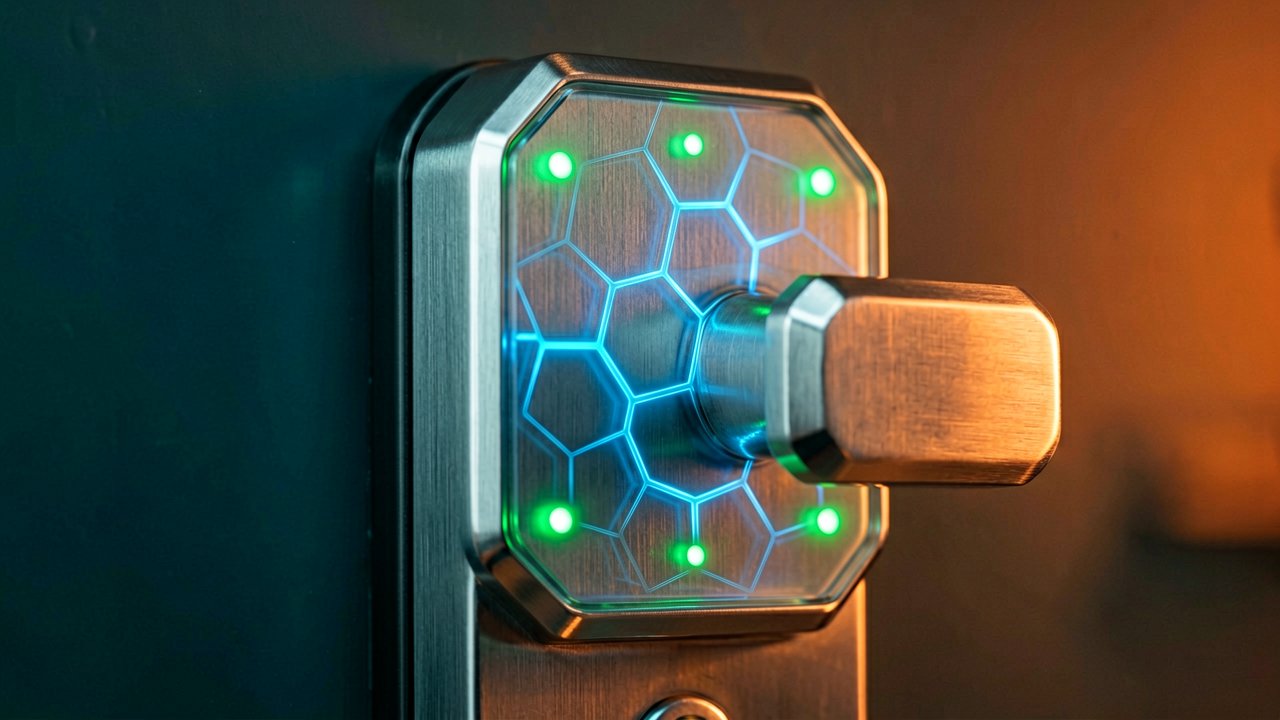
In a market saturated with fingerprint sensors and keypad entries, SwitchBot is looking to leapfrog the competition. The company has officially debuted its SwitchBot Lock Vision Series, marking a significant milestone as the world’s first smart deadbolt to integrate 3D structured-light facial recognition. While facial scanning has become the gold standard for smartphone security, its implementation in home hardware has historically been bulky or less reliable—until now.
The standout feature of the Lock Vision Series is the 3D structured-light technology, a sophisticated upgrade over standard 2D camera recognition. As reported by The Verge, this system projects thousands of invisible infrared dots to create a depth map of the user's face. This means the lock can differentiate between a living person and a high-resolution photo or video, effectively neutralizing "spoofing" attempts that often plague cheaper smart cameras.
Speed Meets Security
SwitchBot claims the recognition process happens in under 0.6 seconds. For the average user, this translates to a "walk-up" experience where the door unlocks before you even reach for the handle. According to technical specs highlighted by CNET, the hardware is designed to work in various lighting conditions, including direct sunlight and total darkness, thanks to its dedicated infrared sensors. This solves a major pain point for early adopters of face-unlock tech who found themselves locked out after sundown.
Security enthusiasts will be pleased to know that the biometric data is processed locally. Rather than sending your facial map to the cloud—a common privacy concern—the Lock Vision handles the heavy lifting on a secure local chip. This "edge computing" approach, often discussed by TechCrunch as a growing trend in smart home privacy, ensures that even if the company's servers were compromised, your physical biometric data remains inside your home.
A Multi-Modal Approach to the Smart Home
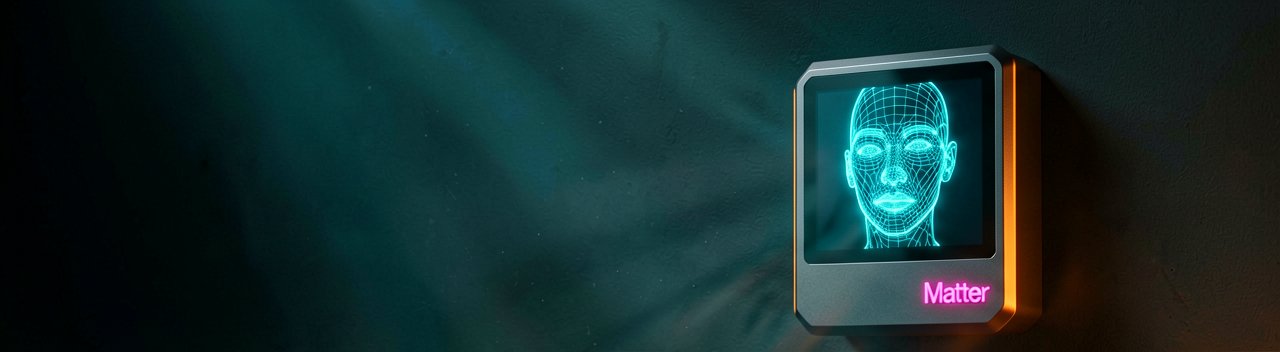
Beyond the headline-grabbing facial recognition, the Lock Vision Series remains a versatile tool. It supports traditional PIN codes, physical keys, Apple Home Key (via Matter), and fingerprint scanning. By integrating Matter support out of the box, SwitchBot is ensuring that its latest flagship plays nicely with Apple Home, Google Home, and Amazon Alexa ecosystems. This interoperability is a key focus for the brand as it expands its footprint in the global market, as noted by Digital Trends.
The device also features a built-in video doorbell, allowing homeowners to see who is at the door and communicate via two-way audio through the SwitchBot app. It’s an "all-in-one" philosophy that aims to replace three separate devices: the lock, the doorbell, and the security camera. With this launch, SwitchBot isn't just selling a deadbolt; they are attempting to own the entire front-porch experience through a single, highly-advanced piece of silicon and steel.
The Visionary Road to Modern Security
Behind the Innovation: The launch of the Lock Vision Series is not just another product release for SwitchBot; it represents a strategic evolution for a company that began as a humble Kickstarter project in 2016. Founded by engineers from the Harbin Institute of Technology, SwitchBot first captured the tech world's attention with its quirky "SwitchBot Bot," a tiny mechanical finger designed to press traditional light switches. Today, that startup has grown into a global leader in "embodied AI," recently making waves with its 2025 IPO on the Hong Kong Stock Exchange under its parent company name, OneRobotics.
The decision to implement 3D structured-light technology in a deadbolt was born from a desire to solve the "friction" of home entry. While traditional smart locks require a free hand for a fingerprint or a phone for geofencing, SwitchBot’s new system uses 20,000 infrared dots to identify users in less than a second. This technology, as detailed by PR Newswire, is similar to the hardware found in high-end smartphones, allowing it to work seamlessly even if a user is wearing glasses, a hat, or heavy makeup—scenarios that often cause cheaper 2D facial recognition systems to fail.
Solving the "Battery Anxiety" Puzzle
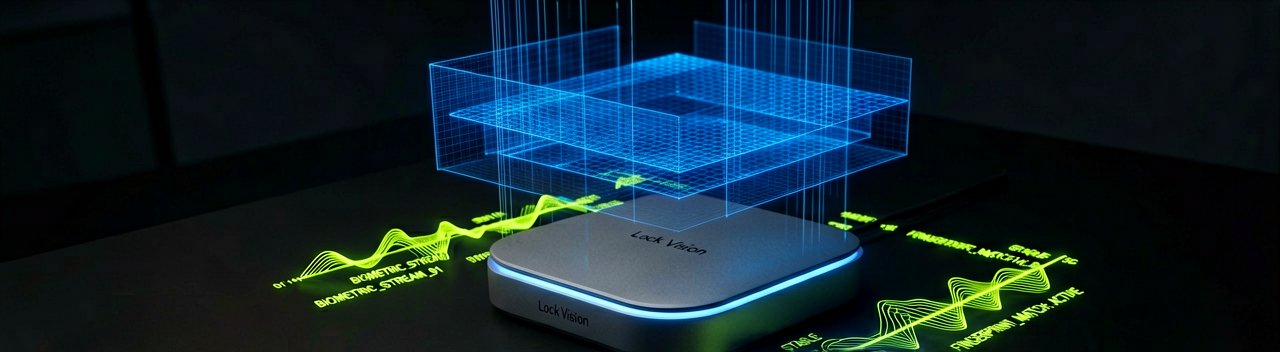
One of the primary hurdles for high-tech locks is power consumption. Infrared projectors and local AI processing are energy-intensive. To counter this, SwitchBot introduced its "Triple Power" protection system. The primary 10,000mAh rechargeable battery is designed to last up to a full year, but the real innovation lies in the redundancy. According to PCWorld, the lock includes a secondary CR123A backup battery and a built-in supercapacitor, ensuring that even if the main power source is depleted, users aren't left stranded on their doorstep.
Furthermore, the Lock Vision Series utilizes mmWave radar detection to conserve energy. Instead of keeping the cameras active at all times, the system remains in a low-power state until it detects a person approaching within a range of 0.6 to 0.9 meters. This intelligent wake-up feature, highlighted in technical reviews by The Verge, allows the device to offer "always-ready" facial recognition without draining the battery in a matter of weeks.
A Unified Smart Home Philosophy
SwitchBot’s growth strategy centers on the "Matter-over-Wi-Fi" standard, which allows its devices to communicate locally across different ecosystems like Apple Home and Google Home without proprietary hubs. This "local-first" approach is a significant pivot for the brand. As noted by Digital Trends, by keeping biometric data and control commands off the cloud, SwitchBot is positioning itself as a privacy-centric alternative to the industry giants, appealing to a savvy consumer base that is increasingly wary of data breaches.
The Lock Vision is also part of a broader "embodied AI" ecosystem that includes robot vacuums, air purifiers, and even a tennis-ball-collecting robot. By integrating the lock with their new Hub 3—a device featuring a touchscreen and a "Dial Master" controller—SwitchBot is moving toward a future where the front door is the primary sensor for the entire home. When the lock recognizes you, it doesn't just open the door; it can trigger a "Welcome Home" scene that adjusts your thermostat, turns on the lights, and starts your favorite playlist, all via the universal Matter protocol.
The Biometric Arms Race Moves to the Front Porch
The Strategic Pivot to "Hands-Free" Living: SwitchBot’s aggressive move into 3D structured-light facial recognition represents more than just a spec-sheet flex; it is a calculated bet on the death of the "interaction point." For years, the smart home industry has struggled with the paradox of convenience—where pulling out a phone to unlock a door often takes longer than using a physical key. By prioritizing sub-second facial recognition, SwitchBot is attempting to shift the smart lock from a digital tool into an invisible utility, effectively removing the user from the "authentication" equation entirely.
From a market perspective, this launch signals a direct challenge to premium incumbents like August and Yale. While those brands have leaned heavily into ecosystem prestige and sleek aesthetics, SwitchBot is winning the R&D war by democratizing high-end sensors previously reserved for the smartphone industry. As noted by analysts at TechCrunch, the integration of 3D depth-mapping—which is significantly more expensive to manufacture than standard 2D optics—suggests that SwitchBot is willing to squeeze its hardware margins to capture the "prosumer" segment of the Matter-enabled market.
The Privacy Paradox and the "Local-Only" Edge
Analytical scrutiny must be applied to the privacy implications of mounting a high-resolution face scanner on a front door. SwitchBot is attempting to preempt the inevitable backlash by championing local processing. This "Edge AI" strategy, frequently discussed by Wired, serves a dual purpose: it mitigates the latency of cloud-based verification and acts as a robust defense against the growing "big brother" stigma. By ensuring that biometric templates never leave the silicon inside the door, SwitchBot is positioning itself as the "Anti-Big-Tech" alternative in a landscape dominated by data-hungry giants.
However, the long-term success of the Lock Vision Series will depend on its reliability in "edge cases"—pun intended. The transition from 2D to 3D recognition solves for photo-spoofing, but it introduces complexities in thermal management and power draw. According to architectural reviews from The Verge, the challenge for SwitchBot will be maintaining this high-performance sensor suite through varying seasonal extremes without the hardware throttling or the battery life plummeting. It is a high-stakes engineering tightrope that will define whether facial recognition becomes a standard deadbolt feature or remains a niche luxury.
Matter as the Great Equalizer
The decision to include native Matter support is the final piece of the analytical puzzle. By decoupling the hardware from a proprietary app experience, SwitchBot is admitting that the future of the smart home is platform-agnostic. This move, as observed by industry watchers at CNET, allows a relatively young company to compete on a level playing field with Apple and Google. If the Lock Vision can provide a better "Home Key" experience than Apple's own ecosystem partners, SwitchBot stands to become the default hardware layer for the modern automated household.
"We’ve finally reached the era where your house recognizes you faster than your own dog does—and thankfully, the door doesn't require treats to let you in, just a semi-decent facial structure and a battery charge that lasts longer than a New Year's resolution."
Artūras Malašauskas is an AI Systems Integrator with 20+ years of production-grade web engineering experience. He has designed, shipped, and scaled enterprise Python/PHP systems for logistics, SaaS, and public-sector clients. For the past year, he has focused exclusively on AI integrations: deploying open-source LLMs, building generative media pipelines (image, audio, video), and engineering multi-agent workflows for real production environments. His standard: reproducibility, security, cost-efficient inference—no vaporware. He documents and evaluates emerging AI tooling, separating verified capabilities from marketing noise. Technical editor at: muza-ai.eu, ai-verslas.lt, ai-naujinos.lt Connect on LinkedIn
Comments