NVIDIA Unveils SANA-WM: The 2.6B Parameter World Model Redefining Single-GPU Video Generation
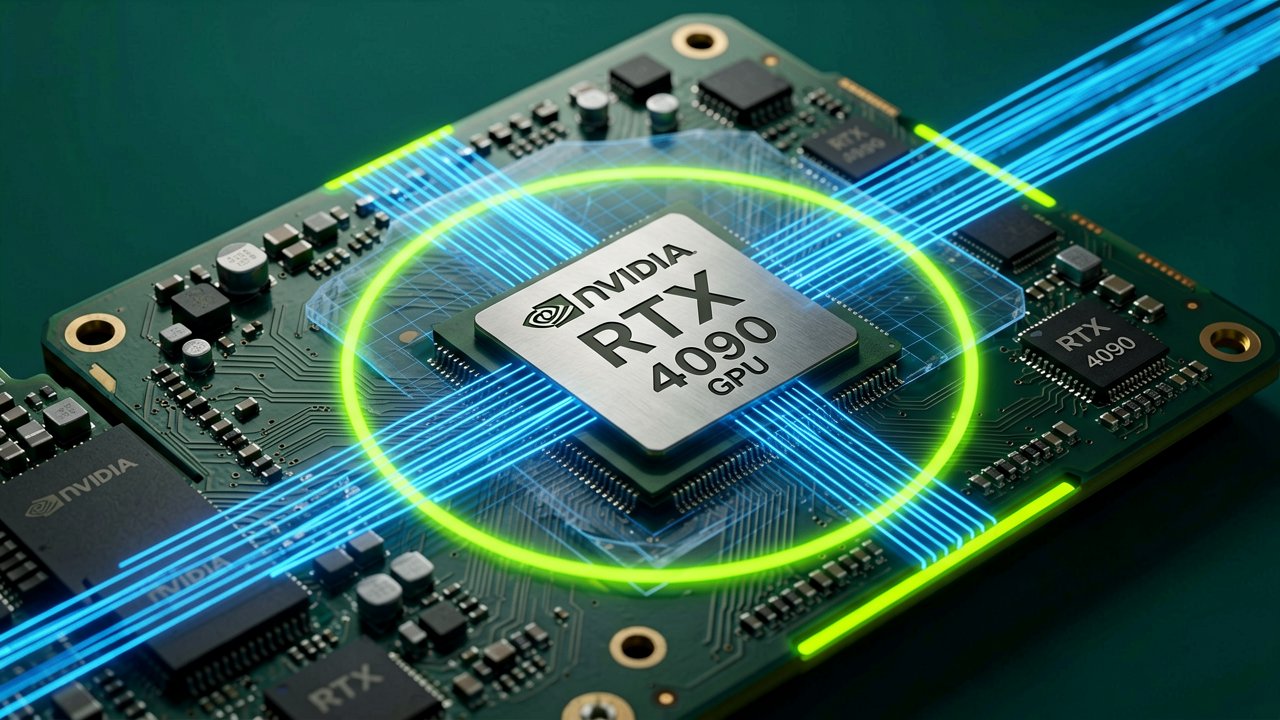
In the rapidly accelerating race to build digital simulators of the physical world, NVIDIA has just lowered the barrier to entry significantly. The company recently unveiled SANA-WM, a 2.6-billion-parameter open-source world model designed to generate high-quality, minute-scale 720p video content. What makes this release particularly striking isn't just the visual fidelity, but the fact that it achieves these results on a single consumer-grade GPU, as detailed by Hugging Face researchers and the official project documentation.
Efficiency Meets Scale
Traditional video generation models often require massive compute clusters to render even a few seconds of coherent footage. SANA-WM shifts this paradigm by utilizing a highly efficient architecture that prioritizes "linear attention" mechanisms. This approach allows the model to handle long-range dependencies in video frames without the exponential memory growth typical of standard Transformers. According to reports from NVIDIA TechALab, the model can generate videos up to one minute in length at 720p resolution, maintaining impressive temporal consistency throughout the duration.
A Bridge to Real-World Simulation
While many generative AI models focus on artistic flair, SANA-WM is positioned as a "World Model." This means it isn't just "painting" pixels; it is attempting to understand the underlying physics and causal relationships of the environments it depicts. This capability is crucial for applications in autonomous driving and robotics, where synthetic data must reflect realistic physical constraints. Tech analysts at VentureBeat have noted that NVIDIA’s decision to open-source these weights could democratize the development of sophisticated simulators that were previously the exclusive domain of tech giants.
The Architecture of SANA-WM
The secret sauce behind SANA-WM’s performance lies in its deep compression techniques. By using a specialized VAE (Variational Autoencoder) and a streamlined DiT (Diffusion Transformer) backbone, the model compresses video data into a latent space that is much easier to process. This enables the 2.6B parameter model to punch far above its weight class. As highlighted by NVIDIA’s GitHub repository, the system supports various aspect ratios and can be fine-tuned for specific domains, making it a versatile tool for researchers looking to push the boundaries of temporal generative AI.

Why Open Source Matters Here
By releasing SANA-WM under an open-source license, NVIDIA is effectively setting a new benchmark for the "small-but-mighty" category of AI models. It challenges the notion that high-definition video synthesis requires H100 clusters, proving that optimization can often outweigh sheer scale. For the broader developer community, this provides a transparent foundation to study how world models learn dynamics, potentially leading to safer and more predictable AI systems in the future. It's a bold move that keeps NVIDIA at the center of the generative conversation, not just as a hardware provider, but as a software innovator.
The Strategic Pivot Toward Open Physical AI: The release of SANA-WM is more than just a standalone technical breakthrough; it is a key pillar in NVIDIA’s broader mission to dominate the "Physical AI" landscape. As detailed by NVIDIA News, this initiative is designed to bridge the gap between digital simulation and real-world robotics. By providing open-source models like SANA-WM under the Apache 2.0 license, NVIDIA is encouraging a massive influx of developers to build and refine autonomous systems using their foundational tools, effectively creating a standardized ecosystem for world modeling.
A Massive Financial Bet on Open Weights
NVIDIA's commitment to the open-source community is backed by staggering capital. Recent financial filings and reports from reveal that the company plans to invest approximately $26 billion over the next five years into the development of open-source and open-weight AI models. This aggressive spending is intended to challenge the dominance of closed-source giants like OpenAI and Google, ensuring that the next generation of AI "factories"—environments where AI agents are trained—runs predominantly on NVIDIA-optimized architectures and hardware.
Collaboration Across Academic Frontiers
The development of the SANA family—which includes both the SANA-WM video model and the high-speed SANA image synthesis frameworks—is the result of a high-level collaboration between NVIDIA Research, MIT, and Tsinghua University. According to documentation on the portal, this partnership focused on solving the "efficiency gap" in latent diffusion models. By replacing standard attention layers with linear diffusion transformers (DiT), the team managed to create a system that can generate 4K images on a standard laptop and minute-long videos on a single GPU, a feat previously thought impossible for models of this scale.
The Role of Data and Precision Labeling
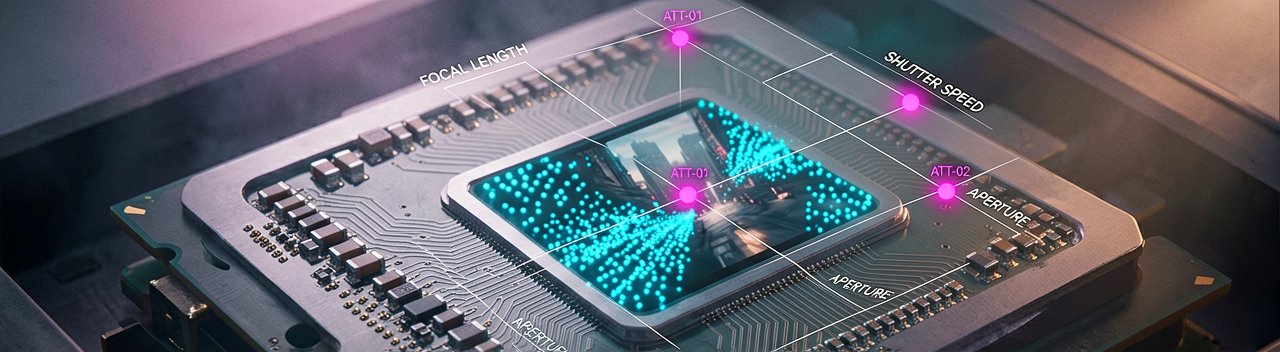
A critical component of SANA-WM’s success is its training data. Unlike typical video generators that rely on loosely captioned web clips, NVIDIA trained SANA-WM using a "Robust Annotation Pipeline." As noted by NVlabs, this pipeline extracts metric-scale 6-DoF (Six Degrees of Freedom) camera poses from over 213,000 public video clips. This high-precision labeling allows the model to follow specific camera trajectories with "mathematical accuracy," making it an ideal tool for generating synthetic training data for autonomous vehicles and humanoid robots that must understand spatial depth and movement.
Future-Proofing Through Distillation
To ensure these models remain accessible as hardware evolves, NVIDIA is also focusing on extreme optimization techniques. The company recently highlighted that distilled variants of SANA models are already capable of running on the upcoming RTX 50-series architecture using NVFP4 quantization. Reports from AI Films Studio suggest that these optimizations allow for denoising a full 60-second 720p clip in just 34 seconds. This move ensures that even as models grow in complexity, the hardware requirements for inference remain within reach of individual creators and local researchers.
The Strategic Shift from "Bigger is Better" to "Smarter is Lethal": For years, the generative AI narrative has been dominated by a "scaling law" obsession—the idea that adding more parameters and more compute is the only path to better models. NVIDIA’s SANA-WM effectively shatters this consensus by proving that a compact 2.6B parameter model can match or exceed the coherence of "black box" giants like Sora in specific domains. By prioritizing architectural efficiency over brute force, NVIDIA isn't just releasing a model; it's signaling a market pivot where specialized, localizable world models become the preferred choice for industries that value low latency and data sovereignty over generic cinematic flair.
Market Implications: The Death of the Compute Monopoly?
NVIDIA’s decision to open-source SANA-WM is a calculated move to maintain its lead in the "Inference Era." As market analysts at Investing.com have noted, NVIDIA's explosive growth in 2024 and 2025 was driven by the world’s insatiable demand for AI training hardware. However, as the industry shifts from training massive models to deploying them at scale, the focus is moving toward efficiency. By providing the tools to run high-end video generation on a single GPU, NVIDIA ensures that its consumer and enterprise hardware remains the indispensable foundation for the next wave of "Edge AI," effectively locking in a new generation of developers who no longer need to rely on expensive, closed-source cloud APIs.
Reading Between the Lines of "World Modeling"
The distinction between a "video generator" and a "world model" is critical for the future of robotics and autonomous systems. While platforms like Runway and Sora excel at visual storytelling, SANA-WM’s integration of 6-DoF camera control suggests it is built to be a simulator first and a creative tool second. According to NVIDIA News, this is part of the "Cosmos" initiative to accelerate Physical AI. In essence, NVIDIA is handing the industry a digital laboratory where robots can "dream" and learn from physics-accurate scenarios without the risk of real-world hardware damage, a strategy that could significantly shorten development cycles for humanoid robotics.
The Competitive Landscape: A High-Stakes Game of Open Weights
This release puts immense pressure on closed-source providers who have historically guarded their video architectures. As reported by WIRED, NVIDIA’s multi-billion dollar investment in open-source AI is designed to create a "gravity well" that pulls innovation toward its own ecosystem. If researchers can achieve state-of-the-art results using a 2.6B open model, the premium for closed-source subscriptions becomes harder to justify. This democratization of high-fidelity video generation could lead to a "fragmentation" of the AI market, where specialized, fine-tuned versions of SANA-WM emerge for everything from surgical simulations to localized architectural walkthroughs.
A Paradigm Shift in Synthetic Data
Finally, SANA-WM addresses one of the biggest bottlenecks in AI: the scarcity of high-quality, labeled video data. By using its own internal high-precision labeling pipelines, NVIDIA is demonstrating how the "self-improvement loop" works—using AI to generate the very data needed to train even better models. Insights from AI World suggest that this collective ingenuity, supercharged by open-source contributions, will likely lead to SANA-WM becoming the "Linux" of video generation—a robust, community-refined core that powers a thousand different commercial applications.
At the end of the day, NVIDIA has basically handed everyone a high-definition crystal ball that runs on a single GPU. It’s a bold move that says, "We don't just sell the shovels; we're giving away the map to the gold mine—as long as you use our shovels to dig it up." It turns out the future of reality isn't just being televised; it's being rendered in 720p by a model that’s smaller than your average smartphone's photo library.
Artūras Malašauskas is an AI Systems Integrator with 20+ years of production-grade web engineering experience. He has designed, shipped, and scaled enterprise Python/PHP systems for logistics, SaaS, and public-sector clients. For the past year, he has focused exclusively on AI integrations: deploying open-source LLMs, building generative media pipelines (image, audio, video), and engineering multi-agent workflows for real production environments. His standard: reproducibility, security, cost-efficient inference—no vaporware. He documents and evaluates emerging AI tooling, separating verified capabilities from marketing noise. Technical editor at: muza-ai.eu, ai-verslas.lt, ai-naujinos.lt Connect on LinkedIn
Comments