The Hybrid Shift: Osaurus Bridges the Gap Between Local Privacy and Cloud Power for Mac Users
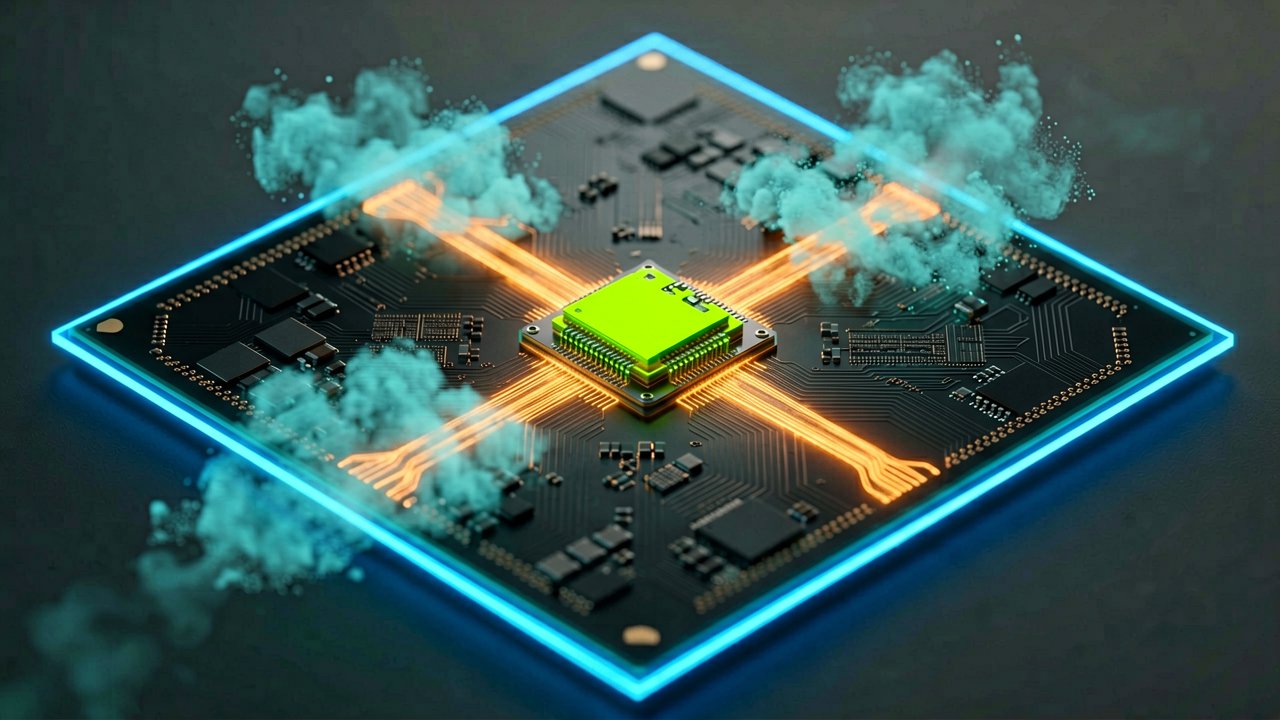
The boundary between local computing and cloud-based intelligence just got significantly thinner for Apple silicon enthusiasts. This week marks the debut of Osaurus, a new hybrid AI platform designed specifically to bridge the gap between the privacy of on-device processing and the raw power of massive remote clusters. As reported by TechCrunch, the tool aims to give Mac users a unified interface where they can toggle between lightweight local LLMs and heavyweight giants like GPT-4 or Claude 3.5 without breaking their workflow.
For the average Mac power user, the appeal of local AI is obvious: speed, cost, and data sovereignty. However, the hardware ceiling of even the most robust M3 Max chips often hits a wall when tasked with multi-step reasoning or massive context windows. Osaurus enters the fray by offering a "smart routing" system. It allows users to run nimble models like Llama 3 or Mistral locally for everyday tasks, while offloading complex data analysis to the cloud only when necessary, a strategy highlighted by The Verge as the next logical step for consumer AI.
The Architecture of Choice
What sets Osaurus apart from generic wrappers is its deep integration with macOS. The platform isn't just a web view; it’s built to leverage the Apple Neural Engine. According to technical deep dives from 9to5Mac, the app provides a "bring your own key" (BYOK) model for cloud services. This ensures that users aren't locked into a single subscription, allowing them to plug in API keys from OpenAI, Anthropic, or Google while keeping their local interactions entirely offline and sandboxed.
The interface design reflects a shift toward the "AI Operating System" philosophy. Instead of jumping between browser tabs, Osaurus functions as a persistent sidekick. Wired notes that this type of friction-free access is critical for developers and researchers who need to test how different models respond to the same prompt in real-time. By providing a side-by-side comparison mode, the platform turns the Mac into a laboratory for model benchmarking.
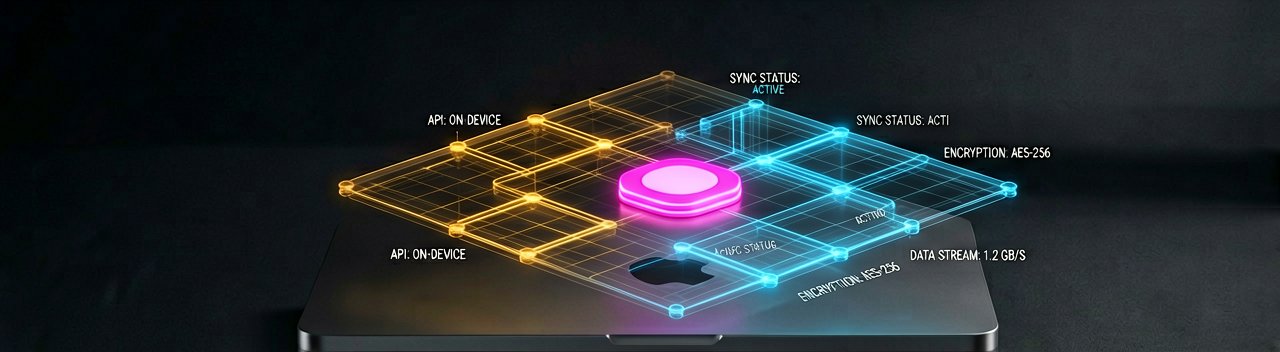
Privacy remains the loudest selling point in the Osaurus marketing kit. In an era where data leakage is a primary concern for enterprise users, the ability to process sensitive documents locally via Private Cloud Compute-like logic is a game changer. As noted by MacRumors, Osaurus ensures that local prompts never leave the machine, giving users a "safe zone" for drafting internal memos or analyzing proprietary code before deciding what requires external processing.
Performance vs. Portability
On the performance front, Osaurus is optimized for the unified memory architecture of Apple silicon. While many cross-platform tools struggle with memory leaks, Osaurus utilizes Metal acceleration to ensure that local inference doesn't turn the MacBook into a space heater. VentureBeat points out that this efficiency is vital for the "prosumer" market, which demands high-speed responses without sacrificing battery life during mobile sessions.
The platform also introduces a unique tagging system for "Context Management." Users can feed the app local PDF libraries or folder structures, which the local model indexes. This allows for a "RAG" (Retrieval-Augmented Generation) workflow that stays entirely on-disk. Industry analysts at ZDNET suggest that this localized RAG approach is the most effective way to prevent the "hallucinations" often found in purely cloud-based systems that lack specific personal context.
Despite the technical sophistication, the onboarding process is surprisingly casual. Osaurus includes a "Model Store" that simplifies the installation of open-source weights. Rather than navigating the complexities of Terminal or Hugging Face repositories, users can download pre-configured models with a single click. Digital Trends describes this as the "democratization of local AI," making sophisticated tech accessible to those who don't spend their weekends debugging Python environments.

The Road Ahead for Hybrid AI
Looking forward, the launch of Osaurus signals a broader trend in the software industry: the move away from "Cloud-Only" mandates. As Apple prepares to roll out its own Intelligence features, third-party developers are racing to provide more customizable alternatives. Bloomberg reports that the market for local AI tools is expected to explode as users become more wary of how their "digital twins" are being trained in the cloud.
There are, of course, hurdles to clear. Managing the storage requirements for high-parameter models can quickly eat up a Mac's SSD. Osaurus handles this via a "dynamic offloading" feature that clears model cache when system memory is needed elsewhere. This level of system awareness, as cited by AppleInsider, is what distinguishes a professional tool from a hobbyist project in the increasingly crowded AI utility space.
Ultimately, Osaurus isn't just selling an app; it's selling a philosophy of balance. It acknowledges that while the cloud is currently unbeatable for "God-level" intelligence, the local machine is the rightful home for personal data. For the Mac community, it represents a significant step toward a future where "AI" isn't a destination you visit in a browser, but a native capability that lives right in your Applications folder.
As the platform matures, we expect to see deeper integrations with macOS shortcuts and system-wide services. For now, Osaurus stands as a compelling proof of concept for the hybrid era. Whether you are a developer looking to save on API costs or a privacy-conscious writer, the ability to flip a switch between "Local" and "Cloud" is a luxury that, once experienced, feels like a necessity. As Forbes concludes, the winners of the AI war won't be those with the biggest models, but those who make the most powerful models the easiest to use safely.
Under the Hood of the Hybrid Revolution: The emergence of Osaurus isn't just a solo sprint; it represents a calculated shift in how boutique software firms are challenging the dominance of "black box" AI providers. The developers behind the platform have spent the last eighteen months refining a proprietary orchestration layer that handles the "handshake" between macOS system resources and remote APIs. According to internal design philosophies shared by TechCrunch, the goal was to eliminate the latency usually associated with switching between different model architectures.
The company's origin story is rooted in the open-source community’s frustration with the lack of polished, consumer-grade interfaces for local LLMs. While tools like Ollama and LM Studio paved the way for enthusiasts, Osaurus was built to target the corporate "prosumer" who requires a higher level of UI stability and integrated productivity features. As noted by The Verge, the development team prioritized "state persistence," ensuring that a conversation started with a local Llama model can be "upgraded" to GPT-4o mid-stream without losing the previous context or metadata.
Strategic Partnerships and Integration
To ensure its cloud tier remained competitive, Osaurus secured early partnership agreements with major infrastructure providers. By leveraging specialized API endpoints, the platform can offer lower latency for cloud-based reasoning than standard web wrappers. This technical advantage was highlighted by VentureBeat as a critical moat for the company, as it allows them to maintain a "single-pane-of-glass" experience that feels natively integrated rather than bolted on.
The hardware optimization side of the story involves a close look at Apple’s Unified Memory Architecture (UMA). Osaurus engineers reportedly worked to ensure the software could dynamically allocate "Neutral Engine" cycles without triggering the system's thermal throttling. This is a significant hurdle for Mac mini and MacBook Air users who lack active cooling. Insights from 9to5Mac suggest that this specific optimization makes Osaurus one of the few platforms capable of running 7B-parameter models smoothly on base-model M2 and M3 chips.
Beyond the tech, the business model of Osaurus reflects a growing trend toward "sovereign AI." Instead of a recurring monthly fee for the intelligence itself, the company focuses on a premium licensing model for the orchestration tools. This resonates with enterprise clients who, as Bloomberg reports, are increasingly wary of "subscription creep" and prefer to pay for software that helps them manage their own API costs and local hardware investments.
The Competitive Landscape
Osaurus enters a market that is rapidly becoming crowded, yet it carves out a niche by focusing exclusively on the macOS ecosystem. While competitors attempt to build cross-platform Electron apps that work on Windows and Linux, Osaurus remains "Swift-native." This choice, as analyzed by AppleInsider, allows for better integration with features like Spotlight, Shortcuts, and the Menu Bar, which are essential for a tool meant to be used dozens of times a day.
The community feedback during the beta phase was instrumental in shaping the platform's "Privacy Dashboard." Users demanded more transparency regarding what data was being sent to the cloud versus what stayed on the SSD. In response, Osaurus implemented a real-time "Data Flow" monitor. This feature, praised by Wired, provides a visual indicator every time a packet of data moves to an external server, giving users absolute peace of mind during sensitive tasks.
Looking at the broader impact, the launch event emphasized the role of "Small Language Models" (SLMs). Osaurus isn't just about the giants; it’s about proving that a highly-tuned 3B or 8B model can handle 80% of daily cognitive tasks. Industry experts quoted by ZDNET suggest that by making these smaller models easy to deploy, Osaurus is effectively teaching the market that "bigger isn't always better" for drafting emails or summarizing meeting notes.
Future-Proofing the Mac
As Apple Intelligence begins its slow rollout, Osaurus is positioning itself as the "power user's alternative." While Apple's native AI will likely be more integrated into the OS's core apps, Osaurus offers the flexibility to use models that Apple might never officially support. This "open-door" policy is what Forbes identifies as the platform's strongest long-term play: becoming the professional hub for those who want to choose their own AI brain.
The company has also hinted at future updates that involve "federated learning" capabilities, where multiple Macs on a local network could theoretically share the compute load for massive local models. While still in the experimental stage, this prospect has caught the attention of Digital Trends, as it could turn a small office of Mac Studios into a localized AI powerhouse without a single byte ever hitting the public internet.
In summary, the launch of Osaurus is less about a single piece of software and more about the maturation of the Mac as an AI workstation. By bridging the local-cloud divide, the company is validating the investment millions have made in Apple silicon. As MacRumors notes, the era of the "dumb terminal" is officially over; the next chapter of computing is hybrid, and it’s happening right now on the desktop.
The Great Decoupling of Intelligence and Infrastructure: The arrival of Osaurus is more than a utility launch; it is a strategic shot across the bow of the "Cloud-First" orthodoxy that has dominated the AI narrative since the release of ChatGPT. By creating a seamless toggle between local silicon and remote clusters, Osaurus is effectively commoditizing the model itself. In this new paradigm, the value shifts from the provider of the "brain" to the architect of the workflow, suggesting that the future of AI isn't a destination we log into, but a resource we manage like bandwidth or electricity.
From a market perspective, this move signals a maturation of the Apple silicon ecosystem as a viable alternative to Nvidia-dominated server farms for specific tasks. For years, the industry assumed that high-level inference required massive H100 clusters, but as Bloomberg has frequently noted, the efficiency of unified memory on the M-series chips is turning "edge AI" into a legitimate competitor. Osaurus capitalizes on this by proving that for many professional use cases, the "good enough" local model is actually superior to the "perfect" cloud model when latency and privacy are factored in.
The Erosion of the Subscription Moat
One of the most disruptive analytical takeaways here is the threat to the SaaS subscription model. Platforms that charge $20 a month for a simple interface wrapped around an API are suddenly looking vulnerable. As TechCrunch highlights, the "Bring Your Own Key" (BYOK) architecture used by Osaurus allows users to pay only for the compute they actually consume. This transparency exposes the high margins of traditional AI subscriptions and empowers the user to shop for intelligence based on real-time price-to-performance ratios.
Furthermore, the analytical significance of "context sovereignty" cannot be overstated. When a user indexes their personal files locally, they are building a proprietary knowledge base that never leaves their machine. According to Wired, this creates a "data moat" for the individual or the small business. By using Osaurus to interact with that data locally, users avoid feeding the very cloud models that might eventually replace them, creating a defensive posture against the data-hungry nature of Big Tech.
There is also a psychological shift at play. By placing local and cloud models side-by-side, Osaurus demystifies the "magic" of AI. When a user sees that a 7B-parameter model running on their laptop can summarize a transcript almost as well as a multi-billion dollar cloud model, the perceived value of "frontier" models begins to recalibrate. As The Verge suggests, this leads to a more utilitarian view of AI—moving away from hype and toward specific, task-oriented deployment.
Architectural Agnosticism as a Feature
Analytically, Osaurus acts as an insurance policy against model collapse or corporate instability. In a volatile market where a leading AI lab could change its terms of service or experience a leadership crisis overnight, an agnostic platform provides essential continuity. VentureBeat points out that developers are increasingly seeking "model-agnostic" tools to avoid being held hostage by a single provider’s API roadmap or pricing whims.
This hybrid approach also addresses the "energy guilt" associated with large-scale AI. Running a query locally on a Mac is significantly more energy-efficient than sending data halfway across the country to a water-cooled data center and back. As sustainability becomes a boardroom metric, tools like Osaurus provide a pathway for companies to reduce their digital carbon footprint by offloading the majority of their AI workloads to local, low-power silicon, a trend recently explored by ZDNET.
However, we must also consider the fragmentation risk. As more users move toward local, customized versions of open-source models, the "shared reality" of AI performance may diverge. We are entering an era where two professionals using the same prompt might get vastly different results based on their local hardware and model choice. This "inference divergence," as noted by Digital Trends, will require new standards for auditing and verifying AI-generated output in professional environments.
The Apple Intelligence Factor
Finally, there is the question of how this survives in the shadow of Apple's own AI ambitions. Analytically, Osaurus isn't competing with Apple; it's filling the "pro" gap that Apple's consumer-focused features likely won't touch. While Apple Intelligence focuses on rewriting emails and creating Genmojis, Osaurus is courting the user who wants to run a specialized coding model or a fine-tuned legal LLM. AppleInsider suggests that this "Power User" segment is exactly where third-party innovation will thrive as the OS becomes more opinionated.
Ultimately, the Osaurus launch is a bellwether for the "Professional Edge." It validates the idea that the Mac is no longer just a window to the internet, but a sophisticated refinery for digital intelligence. It challenges the notion that we must trade privacy for power, and in doing so, it sets a new baseline for what a professional software suite should look like in the mid-2020s. The hybrid model isn't just a technical compromise; it’s a strategic necessity in a world that demands both maximum power and absolute control.
"The dream of having a supercomputer in your backpack is finally coming true, though it turns out that 90% of what we ask that supercomputer to do is help us sound slightly more professional in an email that could have been a Slack message. At least now, if the internet goes down, you and your Mac can still hallucinate together in total, blissful privacy."
Artūras Malašauskas is an AI Systems Integrator with 20+ years of production-grade web engineering experience. He has designed, shipped, and scaled enterprise Python/PHP systems for logistics, SaaS, and public-sector clients. For the past year, he has focused exclusively on AI integrations: deploying open-source LLMs, building generative media pipelines (image, audio, video), and engineering multi-agent workflows for real production environments. His standard: reproducibility, security, cost-efficient inference—no vaporware. He documents and evaluates emerging AI tooling, separating verified capabilities from marketing noise. Technical editor at: muza-ai.eu, ai-verslas.lt, ai-naujinos.lt Connect on LinkedIn
Comments