The Human-Centric Classroom: A Guide to AI as an Evolutionary Partner
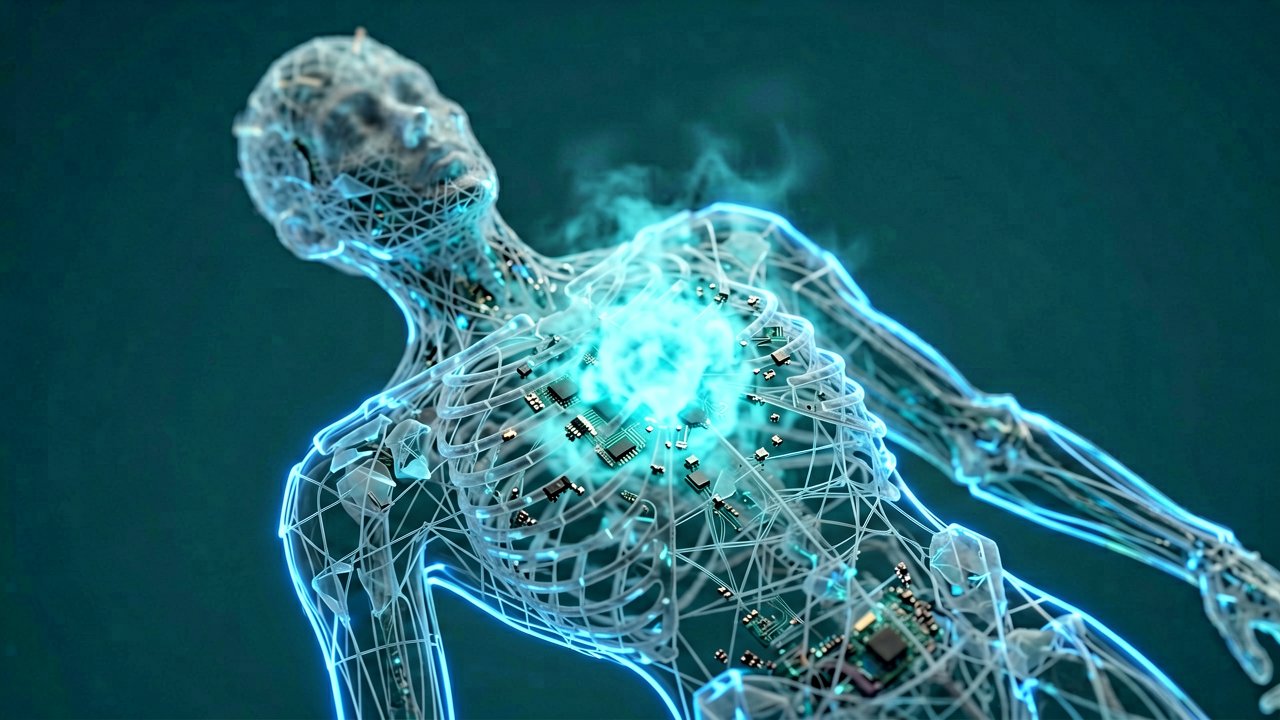
The rapid ascent of generative AI has sparked a fundamental debate in the hallowed halls of academia: is technology here to replace the instructor or to refine the student? Recent shifts in the narrative suggest a third path. Emerging educational models are moving away from the "efficiency-first" mindset, instead championing a "human-centric" approach that treats AI as a partner in augmenting human potential.
For students, the journey with AI is no longer just about generating a quick essay or solving a complex equation. It is about "knowledge building" rather than "knowledge passing." According to experts at , the focus is now on developing twelve core competencies that include a human-centered mindset and ethical navigation. This ensures that as algorithms grow more powerful, the learner’s ability to think critically and stay responsible remains the primary objective.
The Rise of the "Human Wisdom" Framework
A significant milestone in this evolution is the recent focus on "Human Wisdom for the Age of AI." As highlighted by Elon University, modern guides are now drawing on centuries of philosophical thought—from Aristotle to Descartes—to remind us that while machines process data, they lack lived experience. The goal is to cultivate ten essential human capabilities: curiosity, critical thinking, creativity, and ethics, among others.
This pedagogical shift encourages students to use AI to "orient" themselves to a topic or "brainstorm" multiple approaches, but emphasizes that the final synthesis must be a product of human judgment. By treating AI as a "cognitive scaffold," students can reach deeper levels of inquiry that were previously bogged down by administrative or foundational hurdles.

Teachers, meanwhile, find themselves in a state of professional metamorphosis. They are transitioning from the "sage on the stage" to "guides and mentors" who help students navigate the ethical minefields of the digital world. The Council of the European Union recently stressed that teachers must remain at the heart of the learning process, using AI to enhance inclusivity and accessibility rather than letting it dictate the curriculum.
Strategic Integration: Tools and Boundaries
Practicality remains the bedrock of this transformation. Educators are increasingly leveraging AI to automate clerical tasks, such as grading and scheduling, which frees up substantial time for high-touch interactions. In fact, reports from the Cengage Group indicate that AI usage among K-12 teachers has surged significantly, with over 50% now utilizing these tools for lesson planning and assessments.
However, the integration is not without its "guardrails." New guidelines suggest clear age limits—often recommending that students under 13 avoid independent conversations with generative AI platforms—to protect data privacy and ensure age-appropriate cognitive development. This "human-agent" approach ensures that technology supports human agency rather than undermining it through over-reliance.
The future classroom is likely to be a blend of high-tech tools and high-touch mentorship. AI-powered virtual tutors can provide 24/7 support for technical queries, but the "social-emotional learning" and "moral guidance" remain the exclusive domain of the human instructor. This division of labor allows for a more personalized learning path for every student, regardless of their starting point.

Furthermore, AI is proving to be a revolutionary force for inclusivity. Speech-to-text and text-to-speech platforms are breaking down barriers for learners with disabilities, making study materials more accessible than ever before. This aligns with the global "AI for all" mandate, ensuring that technological progress doesn't widen the existing digital divide.
Preserving the "Human Essence"
As we look toward the 2026-2027 academic cycles, the consensus is clear: AI should be used to extend human capabilities, not replace them. Whether it’s using tools like Semantic Scholar or Elicit for academic research or employing predictive analytics to catch struggling students early, the underlying motive must be the enhancement of the human experience.
The true test of AI in education won't be how well it can answer a prompt, but how well it can prompt a student to ask a better question. By focusing on the "timeless principles" of the liberal arts and combining them with the "algorithmic power" of modern tech, the education sector is building a future where students aren't just consumers of AI, but its ethical and creative masters.
In conclusion, the "Human-Centric AI Guide" is less about the software and more about the soul of learning. It’s a call to action for educators and students alike to reclaim the traits that make us uniquely human—curiosity, empathy, and wisdom—and use them to steer the silicon tide toward a more enlightened and equitable world.
As this technology evolves, so must our definitions of intelligence and capability. The partnership between human and machine is still in its honeymoon phase, but with the right frameworks and a focus on our inherent strengths, the classroom of tomorrow looks more human than ever before.
Behind the Silicon Curtain: The current transformation of the educational landscape is not merely a product of spontaneous innovation, but a concerted effort by global policy-makers and academic institutions to redefine the boundaries of machine assistance. At the heart of this movement are organizations like the UNESCO and the Elon University-led "Human Capabilities" project, which have pivoted from reactionary bans on AI to proactive integration strategies. These entities are working to ensure that the rapid commercialization of large language models by companies like OpenAI and Google does not override the fundamental developmental needs of young learners.
The "Student Guide to AI" project, specifically the iteration championed by Elon University’s Imagining the Internet Center, represents a collaborative push to ground digital literacy in classical humanism. By involving a network of scholars and technologists, they have identified a critical "capability gap" where students often mistake the fluency of AI for factual accuracy. Their work serves as a corrective measure, providing a roadmap for students to interrogate AI outputs through the lens of ten specific human attributes that machines cannot simulate, such as ethical reasoning and lived empathy.
The Institutional Vanguard
Major tech players are also shifting their corporate social responsibility focuses toward "Responsible AI in Education." For instance, Microsoft and Google have begun tailoring their workspace tools to include "AI Literacy" modules for teachers. These programs are designed to help educators understand the underlying mechanics of neural networks, moving beyond the interface to grasp how data bias can influence classroom outcomes. This transparency is crucial for maintaining the trust of both parents and academic boards.
On the policy side, the Council of the European Union has been instrumental in drafting the first comprehensive regulatory framework that treats AI in education as a "high-risk" application. This designation isn't meant to stifle growth but to mandate a human-in-the-loop requirement. It ensures that no high-stakes decision—such as university admissions or final grade assessments—is ever made by an algorithm without substantial oversight from a qualified human educator.
Parallel to these high-level initiatives, a new wave of "EdTech" startups is emerging with a focus on "White-Box AI." Unlike the "Black-Box" models that provide answers without explanation, these companies are building tools that reveal their reasoning steps. This allows students to critique the machine's logic, turning a potential cheating tool into a sophisticated Socratic tutor. This pedagogical shift is being closely watched by venture capitalists who see the "Human-Centric" niche as the next major growth sector in education technology.
Teacher Empowerment and the Administrative Shift
Educational non-profits are also playing a pivotal role by providing "AI Bootcamps" for underfunded school districts. These organizations recognize that the digital divide is no longer just about who has a laptop, but who knows how to prompt an AI effectively. By training teachers to be "AI Orchestrators," these programs ensure that the benefits of personalized learning reach students in every socio-economic bracket, not just those in elite private institutions.
The administrative burden on teachers has long been a cause of burnout, and this is where companies like Cengage and Pearson are focusing their AI integrations. By automating the more "robotic" aspects of teaching—such as tracking attendance, basic grading of multiple-choice questions, and organizing resource libraries—they are effectively giving teachers back hours of their week. The intent is to reinvest this "time dividend" into one-on-one mentorship and emotional support for students.
Furthermore, the development of "Personal Learning Clouds" is a trend gaining traction among educational theorists. These are AI-driven environments that follow a student from primary school through college, maintaining a portfolio of their human capabilities. Rather than just a transcript of grades, this AI partner documents a student’s growth in critical thinking and creativity over a decade, providing a more holistic view of their potential to future employers.
Global summits, such as the Digital Education Hackathon hosted by the European Commission, are fostering a culture of "Co-Creation." Here, students and teachers work alongside developers to build the very tools they will use. This ensures that the user experience is grounded in the reality of the classroom rather than the sanitized environment of a Silicon Valley lab. This collaborative spirit is essential for creating tools that respect the nuance of human learning.
Future-Proofing the Curriculum
As we look deeper into the "Human Capabilities" framework, it becomes clear that the goal is to create a generation of "AI-Resilient" citizens. This means teaching students to value the "struggle" of learning. Cognitive scientists involved in these guides argue that if everything is made too easy by AI, the brain’s ability to forge deep connections is weakened. Therefore, the guides include "AI-Free Zones" and "Manual Thinking" exercises to ensure the cognitive muscle doesn't atrophy.
The companies providing the infrastructure for this—cloud providers like AWS and Azure—are also being pressured to provide "Ethical API" access for schools. This would allow educational institutions to filter out harmful content or biased data sets at the source. It’s a complex dance between technical feasibility and educational necessity, but the dialogue between "Big Tech" and "Big Education" has never been more active or essential.
Ultimately, the story behind the human-centric AI guide is one of reclamation. It is a collective realization that while we can teach a machine to pass the Bar exam, we cannot teach it to care about justice. By emphasizing this distinction, the organizations and companies involved are ensuring that the future of education is not a race to the bottom of automation, but an ascent to the peak of human potential.
This evolution is supported by a growing body of peer-reviewed research suggesting that when AI handles the "knowledge acquisition" phase, humans can spend more time on "knowledge application." This shift is fundamentally changing the physical layout of schools—moving away from rows of desks toward collaborative "Maker Spaces" and "Debate Forums" where human capabilities are put to the ultimate test in real-world scenarios.
In the coming years, the success of these guides will be measured not by how many AI tools are in a classroom, but by the confidence and ethical clarity of the students who graduate from them. The partnership between institutional giants and grassroots educators is creating a safety net that ensures the "Human Essence" remains the North Star of the technological revolution.
Peeling Back the Algorithmic Layer: The pivot toward a human-centric AI framework in education is more than a pedagogical trend; it is a defensive repositioning of the human intellect in an era of generative abundance. Analytically, we are witnessing the "de-commoditization" of information. When a machine can synthesize the history of the Renaissance in seconds, the value of knowing the facts drops, while the value of knowing what to do with those facts—and questioning their origin—skyrockets. This creates a paradoxical "intelligence premium" where the most successful students will not be those who master the tech, but those who master the very human traits the tech cannot replicate.
From a market perspective, this shift is signaling a cooling period for "automated" education and a surge in "augmented" education. Investors are beginning to realize that tools offering pure automation face a race to the bottom in terms of pricing and academic integrity. Conversely, platforms that facilitate human-led "active learning" are gaining significant traction. This suggests that the next generation of EdTech unicorns will not be those that replace teachers, but those that serve as sophisticated mirrors, reflecting and amplifying the teacher’s unique ability to inspire and mentor.
The Paradox of Efficiency
One of the most striking analytical takeaways is the inherent conflict between institutional efficiency and cognitive friction. Education, by its nature, requires the "struggle" of the mind to retain and process information. If AI removes all friction, it inadvertently removes the learning itself. Therefore, the "human capability" guides are essentially introducing strategic inefficiency—intentional roadblocks where students must stop using the machine and start using their own biological neural networks to ensure long-term retention and critical development.
Furthermore, we must look at the data sovereignty implications. As students interact with these "human-centric" guides, they are generating a massive longitudinal dataset on how humans learn. There is a quiet but intense struggle behind the scenes regarding who owns this "pedagogical metadata." If companies can map the exact moment a human child grasps a complex concept, that data becomes arguably more valuable than the AI models themselves, leading to a new frontier in educational privacy and corporate ethics.
There is also the "homogenization risk" to consider. If every student across the globe is using the same "human-centric" AI frameworks to orient their thinking, we risk a global narrowing of perspective. True human creativity often stems from being "wrong" or "weird" in ways an AI wouldn't predict. The challenge for educators is ensuring that these guides don't become a "soft cage" that subtly nudges all student thought toward a standardized, machine-approved version of "human wisdom."
The Changing Currency of the Classroom
In the labor market of the near future, "AI Literacy" will be a baseline requirement, much like basic typing is today. The real differentiator—and what these guides are truly preparing students for—is "Epistemic Agency." This is the ability to determine what is true in a world flooded with synthetic content. Analytically, the classroom is transforming into a laboratory for truth-testing, where the teacher’s role is to act as a Chief Verification Officer, guiding students through the hallucinations of the digital age.
We are also seeing a shift in the "unit of assessment." The traditional essay is dying, not because students are cheating, but because it is no longer a reliable proxy for understanding. The move toward "process-based" evaluation—where students are graded on their prompts, their critiques of AI, and their iterative thinking—represents a fundamental change in how we measure human potential. This is a massive win for neurodiversity, as it allows for different styles of "intelligence" to be recognized beyond the standard written format.
However, a cynical look at the situation reveals a potential "Intelligence Divide." While elite institutions use AI to enhance human-to-human interaction, underfunded schools might be tempted to use it as a "cheaper" substitute for human staff. The analytical danger here is that "human-centric" education becomes a luxury good, while the masses are relegated to "automated-only" learning paths. Preventing this tiered reality is perhaps the most significant challenge facing global education boards today.
The geopolitical angle cannot be ignored either. Nations that successfully integrate human-centric AI frameworks will likely see a surge in innovation and soft power. By fostering a workforce that can work with AI without losing its creative edge, these countries are essentially "upgrading" their national human capital. This creates a new kind of "arms race"—one not focused on who has the fastest chips, but who has the most adaptable and ethically grounded citizens.
The Emotional Intelligence Pivot
Perhaps the most undervalued aspect of this news is the emphasis on Social-Emotional Learning (SEL). In an automated world, empathy becomes a high-value skill. The guides' focus on "lived experience" suggests that the future of education is leaning heavily into the humanities. We are seeing a "Re-Humanization" of the curriculum where philosophy, ethics, and interpersonal communication are no longer "soft skills" but the "hardest" skills of all because they are the least automatable.
Looking at the corporate involvement, it is clear that companies like Cengage and Pearson are pivoting to "Content + Coaching." They realize that providing information is a solved problem. The real value lies in the "coaching layer"—the AI that prompts the human and the human that prompts the AI. This symbiotic loop is the new engine of the educational economy, and it requires a delicate balance of technical prowess and psychological insight.
Finally, we must acknowledge the "feedback loop" between the user and the tool. As students become more adept at using AI to extend their capabilities, the AI itself will be tuned to be more "human-like." This creates a blurring of lines that will require constant ethical recalibration. The guides we see today are just the first draft of a new social contract between humanity and its most sophisticated creations—a contract that is being written in the classroom before it is signed in the boardroom.
In the final analysis, the "Human-Centric AI" movement is a testament to human resilience. It is an admission that while we have built a mirror that can mimic us, we still value the original more than the reflection. The success of this guide-driven era will depend on our ability to remain "un-automatable"—to stay curious, stay skeptical, and, most importantly, stay human in the face of the machine.
"Let’s be honest: the goal of 'human-centric AI' is to ensure that while the robots can eventually write our term papers, they’ll still have absolutely no idea why we find the concept of 'Monday mornings' so tragic. Use the AI to do your math, but keep your soul for the stuff that actually matters—like figuring out how to explain your browser history to a sentient toaster."
Artūras Malašauskas is an AI Systems Integrator with 20+ years of production-grade web engineering experience. He has designed, shipped, and scaled enterprise Python/PHP systems for logistics, SaaS, and public-sector clients. For the past year, he has focused exclusively on AI integrations: deploying open-source LLMs, building generative media pipelines (image, audio, video), and engineering multi-agent workflows for real production environments. His standard: reproducibility, security, cost-efficient inference—no vaporware. He documents and evaluates emerging AI tooling, separating verified capabilities from marketing noise. Technical editor at: muza-ai.eu, ai-verslas.lt, ai-naujinos.lt Connect on LinkedIn
Comments