Honor Robot Phone: The AI 'Species' Set to Disrupt the Mobile Market in Q3 2026
The smartphone industry is standing on the precipice of a literal and figurative transformation. Honor, the former Huawei sub-brand that has rapidly ascended the ranks of global tech leaders, has officially announced that its highly anticipated "Robot Phone" will arrive in the third quarter of 2026. This isn't just another flagship refresh; it is a declaration that the era of static glass slabs is coming to an end, replaced by hardware that moves, reacts, and interacts with its environment.
Confirming the timeline at a dedicated event, Honor CEO Li Jian clarified that the device—a standout curiosity at MWC 2026—will be commercially available between July and September of that year. As reported by Android Central, the Robot Phone represents the culmination of Honor’s "Alpha Plan," a strategic pivot designed to transform the company from a hardware manufacturer into an AI device ecosystem powerhouse. By positioning the launch in Q3, Honor is setting up a direct confrontation with the established giants, timing its release to coincide with the typical autumn refresh cycles of major competitors.
More Than a Camera: Embodied Intelligence
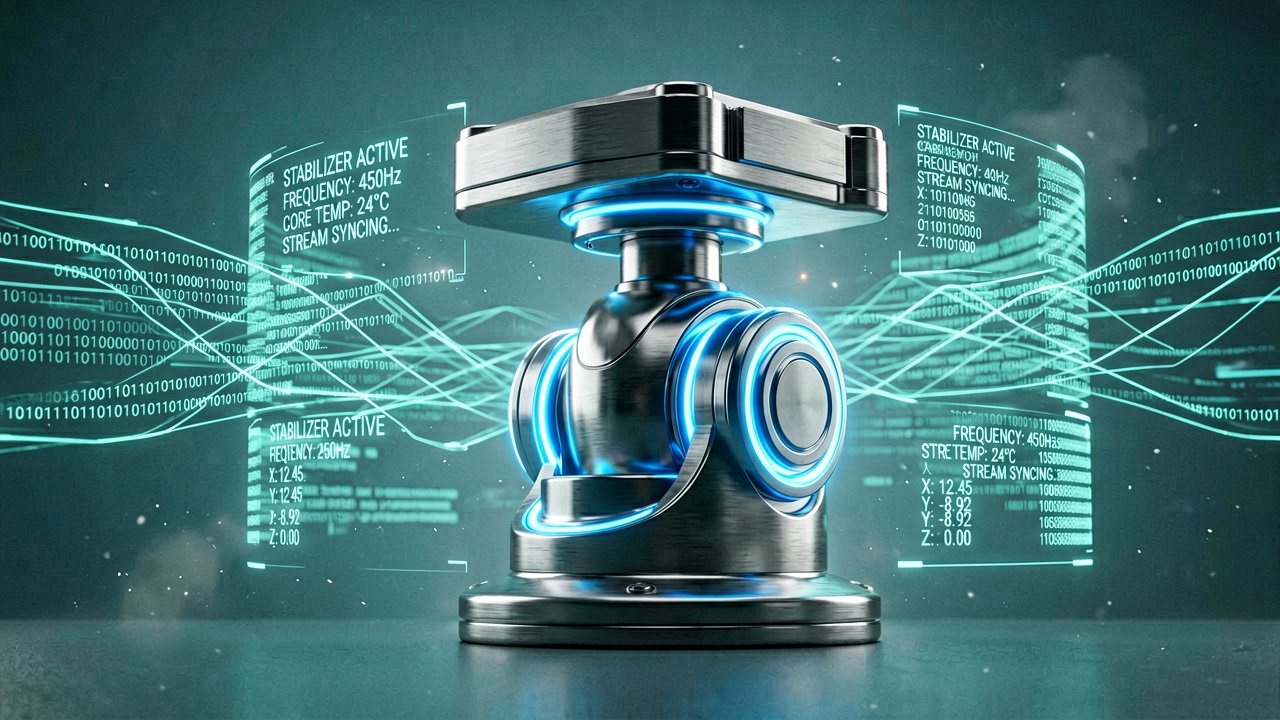
The centerpiece of the Robot Phone is its self-developed 4DoF (four degrees of freedom) gimbal system. Unlike the digital stabilization found in modern handsets, this is a physical mechanical arm that pops up from the device's chassis. According to technical details shared by Honor Global, the motor driving this system is 70% smaller than conventional gimbal motors, allowing it to tuck neatly away when not in use. This miniaturization is a significant engineering feat, enabling "robot-grade" motion control within a standard smartphone footprint.
But the movement isn't just for cinematic stability. Honor is branding this as "Embodied AI," where the phone uses its physical mobility to communicate with the user. The device is capable of expressive nods to indicate agreement or head shakes for disagreement. During showcases at the Cannes Film Festival, Honor demonstrated how the phone could identify sounds, track subjects autonomously across a room, and even "dance" by moving its camera head in rhythm with music. It is a level of personality that shifts the device from a tool to a companion.

The imaging capabilities are equally ambitious. Honor has partnered with cinematic legends ARRI to integrate professional-grade color science and tracking logic into the device. As noted by Mobile World Live, the device garnered significant attention from filmmakers for its ability to execute complex, stabilized tracking shots that previously required bulky external gear. The 200-megapixel sensor on the gimbal can flip 360 degrees, effectively serving as both the primary camera and a high-end selfie shooter that follows the user during video calls.
A Strategic Pivot for the AI Era
The Robot Phone is the physical manifestation of Honor’s broader AI vision, which includes on-device Large Language Models (LLMs) and an advanced YOYO assistant. At the World Internet Conference, CEO Li Jian emphasized that the device would feature an "intent-based UI," capable of anticipating user needs rather than just reacting to commands. This strategy is backed by a massive commitment; TechNode reports that Honor has pledged $10 billion over five years to build an ecosystem for these AI-driven smart devices.
Privacy remains a cornerstone of this transition. Honor has been vocal about its PFAST principle (Privacy, Fairness, Accountability, Security, and Transparency), ensuring that the data processed by the "embodied" AI stays on the device. This local processing is critical, as a phone that can "see" and "hear" its surroundings autonomously requires a higher degree of trust than a traditional handset. By keeping the AI's learning local, Honor aims to provide a personalized experience that doesn't compromise the user’s digital footprint.
As we approach the Q3 2026 window, the tech world will be watching closely to see if the Robot Phone can move beyond its status as a "cool gadget" to become a functional necessity. While pricing and specific regional availability—beyond an initial China-focused rollout—remain under wraps, the device has already succeeded in doing something few phones have in the last decade: it has made the mobile form factor feel exciting and unpredictable again. As GSMArena points out, the "next evolution of mobile filmmaking" is nearly here, and it might just look back at us when we speak to it.
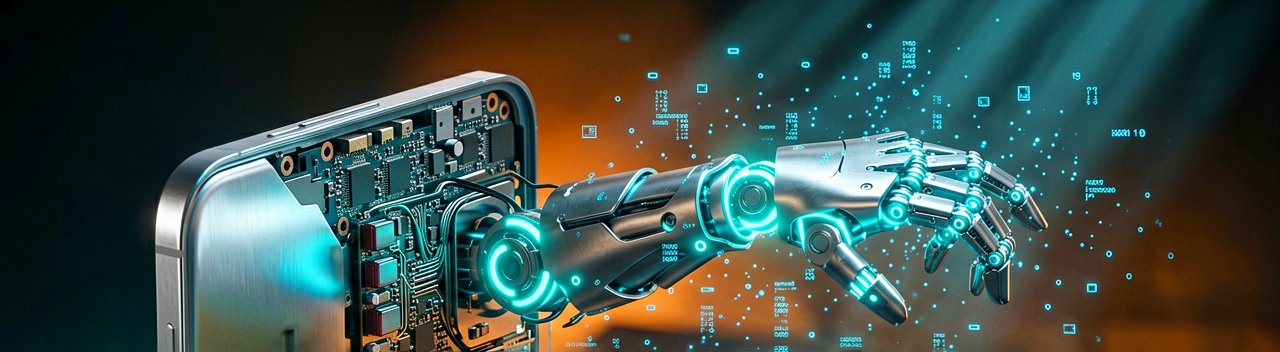
Peering Under the Hood: The road to the Honor Robot Phone’s Q3 2026 debut is paved with a series of high-stakes R&D breakthroughs and strategic alliances that redefine what it means to be a "mobile" technology company. While the world sees a moving camera, the internal engineering at Honor’s Shenzhen headquarters has been focused on solving the paradox of high-torque robotics within a device that still needs to fit comfortably in a pocket. This journey began years ago, as Honor sought to differentiate itself in a post-Huawei landscape, ultimately leading to the creation of the "Alpha Plan," a secretive roadmap designed to merge silicon with kinetic movement.
A significant portion of the development has centered on the "Micro-Gimbal" system, a component that went through over 500 iterations before reaching the current 4DoF (four degrees of freedom) standard. This isn't just a motor; it is a complex array of magnetic actuators and liquid-cooling pathways designed to prevent the phone from overheating during extended robotic tracking sessions. Engineers had to develop a new proprietary lubricant that wouldn't degrade under the high-frequency vibrations of the gimbal’s motors, ensuring that the robotic "nod" remains silent and fluid even after thousands of uses.
The Power Behind the Motion
The silicon architecture required to drive this embodied AI is equally impressive. Honor has worked closely with chip designers to implement a dedicated "NPU-K" (Neural Processing Unit for Kinetics). This specialized core handles the spatial awareness and real-time pathfinding necessary for the phone to track a user’s face or a moving pet without lagging. By offloading the mechanical calculations from the primary CPU, Honor ensures that the phone remains snappy and responsive, even when the robotic arm is performing complex 360-degree rotations in the background.
Furthermore, the collaboration with ARRI, the German cinematic giant, has moved beyond simple software filters. ARRI’s engineers have reportedly been embedded within Honor’s imaging labs to help tune the "Active Frame" logic. This system uses the gimbal's physical movement to mimic the handheld "breath" of professional cinematography or the smooth pans of a Hollywood dolly shot. It represents a rare moment where professional cinema hardware logic is shrunk down to the consumer level, allowing the Robot Phone to serve as an autonomous director for solo content creators.
Strategically, Honor’s $10 billion investment reflects a massive gamble on the future of "Intent-Based Computing." The company isn't just building a phone that moves; it is building a platform that can perceive human emotion. During private briefings, Honor executives have discussed a future where the device uses its gimbal to tilt toward a user when it detects a "questioning" tone of voice, effectively using body language to bridge the gap between human and machine. This level of interaction requires massive data processing, all of which Honor insists is handled locally to maintain their stringent privacy standards.
A Competitive Ripple Effect
The announcement has sent shockwaves through the supply chain, particularly for companies specialized in miniaturized sensors and actuators. Suppliers who traditionally focused on drone technology or surgical robotics are now finding themselves in talks with mobile OEMs. This shift suggests that Honor’s move is forcing the entire industry to reconsider the "slab" form factor. Competitors are now scrambling to file patents for their own kinetic components, fearing that the "static phone" will soon look as dated as a rotary dial in the face of Honor’s moving, interactive companion.
The Q3 2026 launch window is also a tactical masterstroke regarding the global retail landscape. By aiming for this period, Honor is securing prime positioning in carrier stores just as the back-to-school and holiday shopping seasons begin. Analysts suggest that the "wow factor" of a phone that can physically move on a store display will be a powerful marketing tool, potentially siphoning away early adopters who have grown weary of the incremental updates offered by traditional smartphone leaders.
As we look toward the actual release, the focus remains on the software ecosystem. Honor is currently courting developers to create "Robo-Apps"—software that can specifically utilize the gimbal’s movement for gaming, augmented reality, and remote healthcare. Imagine a physical fitness app where the phone follows you across the room to correct your form, or a gaming experience where the phone’s "head" reacts to in-game explosions. Honor’s vision is to turn the phone from a passive observer of our lives into an active participant.
Ultimately, the story of the Honor Robot Phone is a story of corporate reinvention. By leaning into robotics, Honor is attempting to leapfrog the competition and define a new category of "Embodied AI" devices. The Q3 2026 launch will not just be a product release; it will be a stress test for the idea that consumers want their technology to move, react, and perhaps even "feel" more human. Whether this leads to a new era of mobile interaction or remains a niche luxury, Honor has undeniably set the stage for the most significant hardware shift in over a decade.
The Kinetic Pivot: From a market standpoint, Honor’s move toward "Embodied AI" is a calculated gamble to escape the "Commodity Trap" that has plagued the high-end smartphone market for the better part of a decade. For years, the industry has suffered from diminishing returns on hardware iterations—pixels have peaked, refresh rates have plateaued, and silicon gains have become incremental. By introducing a mechanical 4DoF gimbal into the chassis, Honor is attempting to reset the consumer’s value proposition from "what the screen can show" to "what the device can do autonomously." It is a shift from passive consumption to active kinetic utility.
Analyzing the competitive landscape, this Q3 2026 launch is a direct challenge to the supremacy of Apple and Samsung, who have historically played it safe with rigid industrial designs. Honor is effectively betting that the "cool factor" of a robotic companion will outweigh the inherent risks of mechanical failure and increased weight. If successful, this creates a new high-margin category that justifies a premium price tag not just through software, but through tangible, proprietary mechanical engineering that cannot be easily replicated by a software update or a third-party accessory.
The Sustainability of Moving Parts
One cannot ignore the "Right to Repair" and durability implications of this hardware shift. Introducing high-speed motors and articulating joints into a device that lives in a pocket—subject to lint, dust, and drops—is an engineering nightmare. Honor’s focus on 70% smaller motors suggests they are prioritizing density, but the analytical question remains: what is the MTBF (Mean Time Between Failures) for a phone that "nods" every time you get a notification? For this to be a market success, Honor must prove that their robotic arm is as resilient as a standard volume rocker, or risk a PR crisis centered on "mechanical fatigue."
From an ecosystem perspective, the "Alpha Plan" reveals Honor’s ambition to become the primary interface for the AI-driven home. A phone that can see, track, and rotate autonomously is no longer just a communication tool; it is a mobile sensor hub. By integrating with on-device LLMs, the Robot Phone could theoretically act as a localized security camera, a telepresence robot for remote work, or an autonomous videographer. Honor is positioning the smartphone as the "brain" for a future suite of robotic peripherals, effectively turning the phone into the master controller of a kinetic IoT environment.
The partnership with ARRI is particularly telling of Honor’s demographic targeting. They aren't just looking for the average social media scroller; they are hunting the "Prosumer" and the "Solo-Creator." As the creator economy continues to explode, a device that eliminates the need for a human camera operator or a bulky tripod becomes an indispensable business tool. This is a vertical integration strategy: Honor is selling a camera, a gimbal, and an AI editor all wrapped in a single 6.7-inch frame, drastically lowering the barrier to high-end content production.
Geopolitical Hardware Sovereignty
There is also a significant narrative regarding technological sovereignty here. As a Chinese firm, Honor’s $10 billion R&D investment is a statement of independence. By developing their own actuators and kinetic NPUs, they are reducing reliance on western-designed mechanical standards. This "full-stack" approach to robotics—from the motor to the AI logic—ensures that they own the intellectual property at every level, making them more resilient to supply chain shifts and establishing them as a primary innovator rather than a follower of Silicon Valley trends.
The timing of the Q3 launch suggests Honor wants to capture the narrative before the "AI-phone" fatigue sets in. While competitors are focused on generative AI chatbots, Honor is focusing on generative *action*. The market has been flooded with software AI features that often feel like gimmicks; however, a phone that physically reacts to your presence is a visceral, unmistakable differentiator. It turns the digital interaction into a physical one, which could be the key to winning over a younger generation that values experiential hardware over spec sheets.
However, the risk of "Uncanny Valley" syndrome is real. For many users, a phone that moves on its own might feel intrusive or unsettling. Honor’s UX designers have the monumental task of making the Robot Phone’s movements feel "friendly" rather than "predatory." The success of the device will likely hinge on whether the 4DoF movements feel like a helpful assistant or a surveillance tool. This isn't just a technical hurdle; it’s a psychological one that will define whether consumers are ready to let robots live in their pockets.
Looking at the broader economic impact, Honor is essentially kickstarting a "Micro-Robotics" boom. If the Robot Phone captures even 5% of the global flagship market, the demand for miniaturized precision motors will skyrocket, potentially lowering the cost of similar technology for medical devices and wearable tech. Honor isn't just launching a phone; they are stress-testing a supply chain for the future of humanoid robotics. The phone is simply the most profitable way to distribute that technology at scale.
In a world where we’ve spent a decade staring at flat rectangles, Honor is finally giving us a phone that can look back—let’s just hope it doesn’t start judging our screen time with a disappointed shake of its mechanical head.
Artūras Malašauskas is an AI Systems Integrator with 20+ years of production-grade web engineering experience. He has designed, shipped, and scaled enterprise Python/PHP systems for logistics, SaaS, and public-sector clients. For the past year, he has focused exclusively on AI integrations: deploying open-source LLMs, building generative media pipelines (image, audio, video), and engineering multi-agent workflows for real production environments. His standard: reproducibility, security, cost-efficient inference—no vaporware. He documents and evaluates emerging AI tooling, separating verified capabilities from marketing noise. Technical editor at: muza-ai.eu, ai-verslas.lt, ai-naujinos.lt Connect on LinkedIn
Comments