Precision Aesthetics: How AI is Re-Coding Botulinum Toxin Injections

For decades, the success of botulinum toxin (BoNT) injections—whether for smoothing glabellar lines or treating post-stroke spasticity—rested almost entirely on the "golden eye" and steady hand of the practitioner. But as we move deeper into the mid-2020s, a new collaborator is entering the exam room. Artificial Intelligence (AI) is rapidly evolving from a back-office novelty into a vital tool for anatomical mapping, dose optimization, and predictive modeling.
The current landscape of AI in this field is characterized by a transition from static analysis to dynamic, real-time intervention. According to recent reviews in Cureus, AI's role spans the entire procedural lifecycle: from pre-procedural facial analysis to image-guided injections and objective post-treatment outcome assessments. This systematic approach aims to eliminate the "trial-and-error" nature of dosing that has long characterized neurotoxin therapy.
The Aesthetic Frontier: Beyond Skin Deep
In the realm of aesthetic medicine, computer vision algorithms are setting a new standard for facial analysis. These systems can identify subtle asymmetries and predict aging patterns with a level of granularity that often escapes the human eye. Platforms mentioned by , such as ModiFace and Crisalix, now use deep learning to offer patients "before-and-after" simulations that are increasingly based on actual tissue dynamics rather than simple photo filters.
This "hyper-personalization" is more than just a marketing gimmick. By analyzing diverse data points—ranging from skin texture to genetic predispositions—AI-driven software can recommend specific injection points to restore balance. This reduces the risk of common complications like "frozen face" or eyelid ptosis, aligning the artistic goals of the injector with the biological realities of the patient.

Clinical Rigor: Managing Spasticity and Dystonia
While aesthetics garner the most headlines, the therapeutic applications of AI-guided BoNT are arguably more profound. Managing focal spasticity requires pinpoint accuracy to ensure the toxin reaches the specific overactive muscle fibers. The AIMS study highlighted how AI can provide standardized and reproducible treatment recommendations that align closely with clinical guidelines, offering a safety net for less experienced practitioners.
However, the transition to clinical practice isn't seamless. Research published in PubMed indicates that while AI models are excellent at following established literature, they often lack the "clinical intuition" needed for complex presentations, such as multi-joint contractures. In these cases, the AI typically recommends more conservative dosages than veteran human specialists, underscoring the current role of AI as a decision-support tool rather than an autonomous provider.
The Challenges of Translation and Trust
The road to widespread adoption is paved with significant "black box" hurdles. One of the primary technical challenges is that botulinum toxin formulations are not interchangeable; AI models trained on one specific brand or dilution often fail to generalize safely to others. As noted in the Cureus mini-review, this lack of interoperability can lead to off-target diffusion if the algorithm doesn't account for the unique spread characteristics of different toxins.
Ethical and regulatory concerns also loom large. As AI begins to handle sensitive biometric data, issues of privacy and "algorithmic bias" become paramount. There is a critical need for diverse datasets to ensure that facial recognition and muscle mapping work accurately across all ethnicities and skin tones. Without transparent governance, the "democratization" of these high-stakes procedures could inadvertently introduce new risks.
Future Perspectives: Toward Autonomous Precision
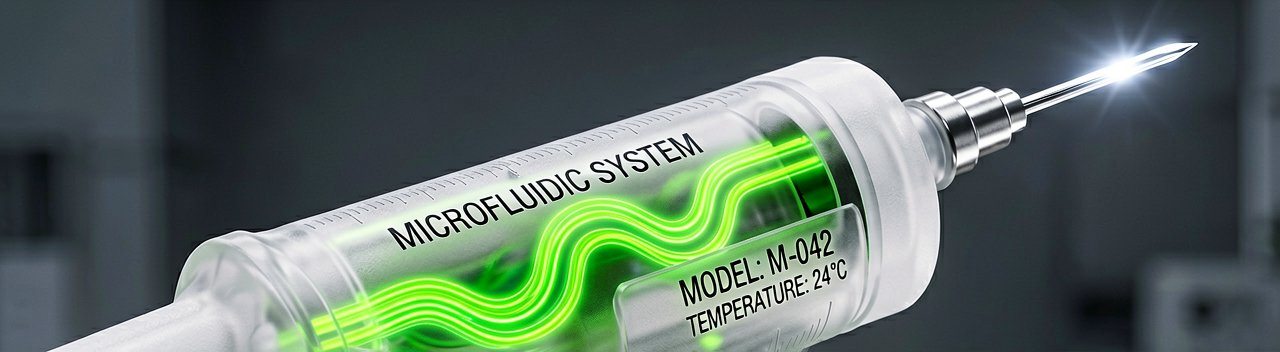
Looking ahead, the integration of AI with augmented reality (AR) and robotic assistance represents the next "translational" leap. We are moving toward a future where "smart needles" equipped with sensors can confirm their anatomical position in real-time, guided by an AI overlay that displays the patient’s underlying vascular and muscular structure. This would virtually eliminate the risk of accidental intravascular injection.
Ultimately, the goal is not to replace the clinician, but to augment their capabilities. The future of botulinum toxin therapy lies in a hybrid model where AI handles the heavy lifting of data analysis and precision guidance, while the human expert provides the nuanced interpretation and compassionate care that no algorithm can replicate. As these technologies mature, the "science of the syringe" will continue to evolve, making treatments safer, more effective, and more accessible than ever before.
For those interested in the molecular underpinnings of these treatments, further reading is available at MDPI, which offers a comprehensive look at how BoNT mechanisms are being re-evaluated in the age of digital health. The synergy between one of the world's most potent neurotoxins and its most advanced digital tools is just beginning to unfold.
Behind the Silicon Syringe: The integration of artificial intelligence into the botulinum toxin (BoNT) market is not just a theoretical shift; it is being driven by a concentrated ecosystem of pharmaceutical giants, med-tech startups, and academic consortia. Leading the charge are established industry titans like AbbVie (Allergan Aesthetics), Galderma, and Merz Aesthetics. These organizations are increasingly pivoting from being pure drug manufacturers to becoming "solution providers" by acquiring or partnering with AI software developers to create proprietary diagnostic ecosystems.
AbbVie, the maker of Botox, has significantly invested in digital transformation to maintain its market dominance. By leveraging vast proprietary clinical datasets, they are developing AI tools designed to help practitioners predict patient responsiveness. This move is a strategic response to the rise of biosimilars, where data-driven precision becomes the primary differentiator between products. Their focus remains on "treatment consistency," using AI to standardize outcomes across a global network of providers.
Meanwhile, Galderma has embraced the "augmented injector" philosophy through its FACE by Galderma platform. This system utilizes advanced facial mapping to allow for a holistic assessment of the "dynamic face" rather than just static wrinkles. By integrating AI-driven simulation, they aim to bridge the communication gap between patient expectations and clinical reality. This technology identifies the subtle interplay between different muscle groups, ensuring that a forehead injection doesn't inadvertently cause a brow drop.
The Rise of the Precision Tech Players
Beyond the "Big Three" of aesthetics, specialized tech firms like Revance Therapeutics and various Silicon Valley startups are introducing novel delivery systems. Revance, for instance, has focused on the longevity of its formulations, and is exploring how digital tracking can monitor the "wear-off" period of toxins. This data is crucial for AI models to determine the optimal timing for touch-up treatments, moving away from the standard three-month appointment cycle toward a truly personalized schedule.
In the diagnostic space, Canfield Scientific remains a pivotal player. Their Visia Skin Analysis systems have become the hardware backbone for AI research in dermatology. These machines capture high-resolution multispectral images that serve as the raw material for deep learning models. By quantifying pores, wrinkles, and vascularity with mathematical precision, Canfield provides the objective "ground truth" data required to train AI to recognize the subtle changes induced by BoNT.
The academic side of this evolution is equally vigorous, with institutions like the Mayo Clinic and various European neurological centers leading the translational research. These groups are focused on the "Medical BoNT" side, specifically for chronic migraine and cervical dystonia. Their work involves using AI to process electromyography (EMG) signals, allowing for "smart" needles that can automatically identify the most hyperactive motor points within a muscle group during the injection process.
Collaborations and Clinical Integration
A notable trend is the formation of "Aesthetic Intelligence" consortia, where software engineers work directly alongside master injectors. These collaborations aim to decode the "tacit knowledge" of expert physicians—the subconscious cues they use to judge skin thickness or muscle strength—and translate those cues into code. This process is essential for creating AI that doesn't just follow a manual but adapts to the unique biological "noise" of an individual patient.
Furthermore, the role of "Real-World Evidence" (RWE) platforms is growing. Companies are now using AI to scrape anonymized data from thousands of electronic health records to identify long-term safety trends that might be missed in controlled clinical trials. This large-scale data harvesting helps in identifying rare side effects or discovering new therapeutic benefits, such as the potential for BoNT to alleviate symptoms of depression by inhibiting facial expressions associated with negative emotions.
As these companies continue to merge biological science with computational power, the regulatory landscape is also shifting. The FDA and EMA are currently refining their frameworks for "Software as a Medical Device" (SaMD). This means that in the near future, an AI diagnostic tool used for botulinum toxin planning may require the same level of rigorous clinical validation as the toxin itself, ensuring that the "digital brain" behind the needle is as reliable as the medicine inside it.
Finally, the movement toward "at-home" monitoring tools is gaining momentum. Startups are developing smartphone-based AI apps that allow patients to track their muscle movement recovery in the weeks following an injection. This data is fed back to the clinic, allowing the AI to learn from the "decay curve" of the toxin's effect. This closed-loop system represents the ultimate goal of the industry: a continuous, data-driven relationship between the patient, the practitioner, and the technology.
Decoding the Digital Syringe: The marriage of artificial intelligence and botulinum toxin (BoNT) is not merely a technical upgrade; it is a fundamental reconfiguration of the risk-reward ratio in precision medicine. From an analytical standpoint, the most critical shift is the transition from subjective "artistic" judgment to objective, quantifiable data. By 2026, the botulinum toxin market is projected to reach approximately $13.87 billion, as reported by Mordor Intelligence. This growth is being fueled by an AI-enabled "democratization" of procedures, where algorithms act as a bridge, bringing the expertise of master injectors to a wider pool of practitioners.
One of the most striking developments is the emergence of predictive biomarkers. Platforms like DystoniaBoTXNet have demonstrated that AI can analyze brain MRIs to predict treatment efficacy in focal dystonia with a staggering 96.3% accuracy, according to researchers at Mass Eye and Ear. This level of foresight effectively ends the "trial-and-error" era of neurotoxin therapy, ensuring that patients who are unlikely to benefit are redirected toward alternative treatments before a single drop of toxin is wasted.
However, the analytical lens also reveals a "complexity gap." While AI is excellent at following standardized guidelines, it frequently falters when faced with atypical clinical presentations. The AIMS study, published in PubMed, highlighted that current AI models tend to recommend more conservative dosages than veteran human specialists. This discrepancy suggests that while AI is an exceptional "compliance officer," it has yet to master the "clinical courage" required for complex, high-stakes medical cases like multi-joint spasticity.
The Regulatory Bottle Neck: Logic vs. Learning
The regulatory landscape remains the most significant friction point for these innovations. Traditional FDA frameworks were built for "static" medical devices, but AI is inherently "dynamic." According to the Bipartisan Policy Center, the FDA is currently struggling with workforce constraints while simultaneously rolling out its own internal AI models, like "Elsa," to speed up scientific reviews. This "AI reviewing AI" scenario creates a novel legal and ethical loop that hasn't been fully tested in the courts.
Furthermore, there is the persistent issue of "algorithmic bias." Most current aesthetic datasets are heavily skewed toward specific demographics. As noted by Wiley Online Library, if an AI is trained on images that do not reflect global diversity, its recommendations for facial symmetry and aging could be not only inaccurate but ethically problematic. Solving this requires a move toward "Explainable AI" (XAI), where the machine can actually show its work, explaining exactly why it chose a specific injection point.
The economic implications are also shifting. As procedures become more standardized and "de-risked" by AI, we are seeing a drop in the average age of first-time users. In the U.S. alone, the "Baby Botox" trend among those under 30 has seen a massive 73% increase, according to data from StatiFacts. AI is the primary catalyst here, as virtual simulators allow young patients to preview preventive results, significantly lowering the psychological barrier to entry.
Yet, an over-reliance on silicon-based guidance poses a risk of "aesthetic homogenization." If every injector uses the same algorithm to achieve the "ideal" face, we risk losing the unique anatomical character that makes human beauty compelling. The industry must navigate this tension between the safety of the average and the brilliance of the bespoke. For now, the most successful practitioners are those who treat AI as a high-resolution compass, rather than an autopilot.
In the final analysis, the "mini-review" of current applications reveals that we are in a high-velocity transitional phase. The technology has moved beyond the lab, but it has not yet reached the level of "plug-and-play" simplicity. The future belongs to the "hybrid practitioner"—someone who can interpret the AI’s data stream through the lens of human empathy and anatomical nuance. The needle is still in our hands, but the brain behind it is becoming increasingly digital.
As we look toward 2030, the integration of real-time ultrasound and AI-guided targeting will likely become the standard of care. This will move BoNT from a "best guess" procedure to a "verified strike" intervention. While the challenges of data privacy and formulation-specific modeling remain, the momentum is undeniable. The era of "blind" injections is coming to an end, replaced by a vision that is as sharp as a laser and as data-rich as a supercomputer.
Ultimately, we’re moving toward a world where your botulinum toxin injection is planned with more precision than a Mars rover landing. It’s comforting to know that even as AI takes over the world, it’s still dedicated to making sure your forehead doesn't move when you're surprised—a truly noble use of our greatest technological achievement.
Artūras Malašauskas is an AI Systems Integrator with 20+ years of production-grade web engineering experience. He has designed, shipped, and scaled enterprise Python/PHP systems for logistics, SaaS, and public-sector clients. For the past year, he has focused exclusively on AI integrations: deploying open-source LLMs, building generative media pipelines (image, audio, video), and engineering multi-agent workflows for real production environments. His standard: reproducibility, security, cost-efficient inference—no vaporware. He documents and evaluates emerging AI tooling, separating verified capabilities from marketing noise. Technical editor at: muza-ai.eu, ai-verslas.lt, ai-naujinos.lt Connect on LinkedIn
Comments