When Algorithms Decide Morality: Humanity's Unavoidable Dialogue with AI Ethics
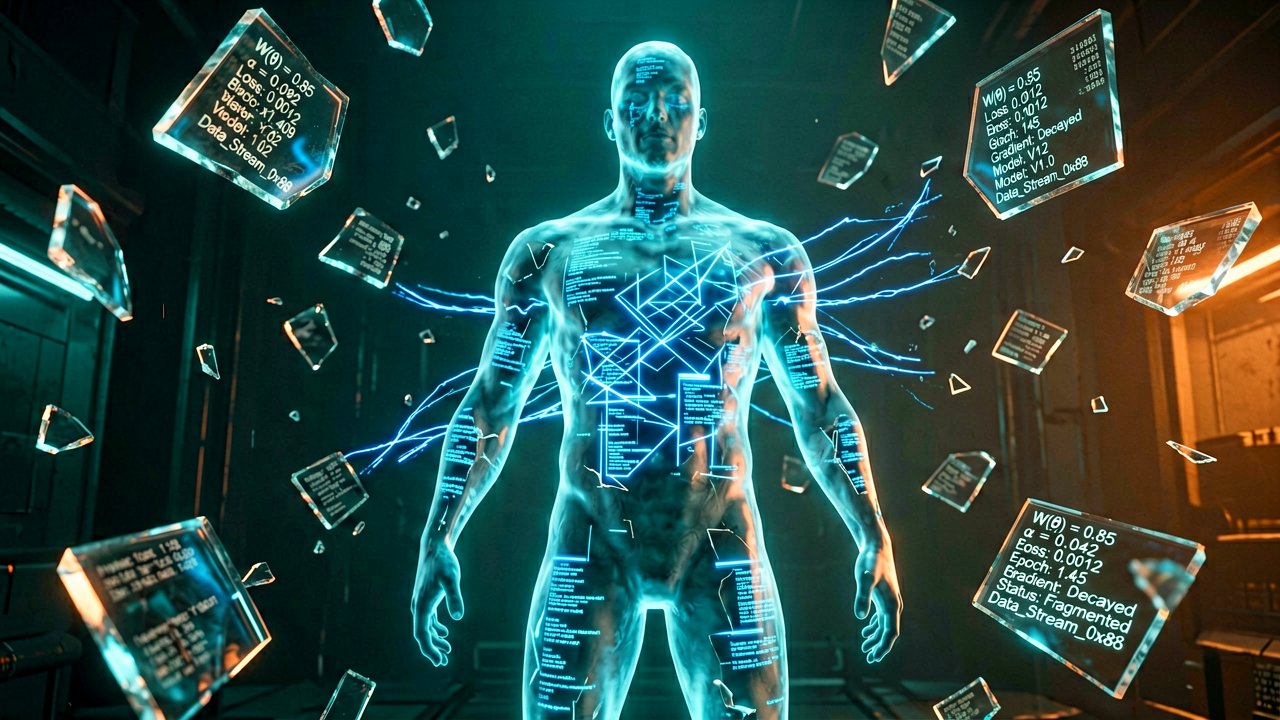
We have handed the keys of decision-making to systems that do not possess a soul, yet we expect them to steer us toward virtuous outcomes. As automated tools dictate everything from courtroom risk assessments to medical triage priorities, we are no longer just outsourcing labor—we are outsourcing our conscience. This architectural shift in society leaves us at a terrifying crossroads where code dictates human worth.
The core tension of this digital epoch is that artificial intelligence inherently lacks a built-in commitment to truth, relying instead on statistical probabilities that can easily mirror our worst historical prejudices. When machine learning models absorb vast oceans of human data, they do not distill our highest philosophical aspirations. Instead, they weaponize our biases under the guise of mathematical objectivity.
The Ghost in the Executive Code
The illusion of cold, hard algorithmic neutrality is crumbling. Every time a developer adjusts a weight or prunes a dataset, they are fundamentally making a value-loaded decision that ripples across millions of lives. This systemic reality means that engineers, often working in isolated corporate silos, are silently drafting the moral blueprints of our collective future without public mandates.
True moral governance cannot be achieved through corporate self-regulation or performative corporate pledges. Experts writing for The Conversation argue persuasively that ordinary citizens, rather than just technical elites, must actively set the ethical boundaries for AI deployment. Without an open, democratic framework, we risk completely dissolving the foundational trust that holds our civic institutions together.
Reclaiming the Human Prerogative
A machine can process billions of variables in a fraction of a second, but it cannot comprehend empathy, remorse, or the messy nuances of human intent. Relying too heavily on synthetic decision-making fundamentally weakens our own capacity for moral reflection, dulling the very emotional instincts that make us human. We face a future where the mechanical optimization of society leaves no room for the radical grace of human judgment.
To preserve our core values, humanity must reclaim its role as the ultimate arbiter of right and wrong. We must draw a hard line between tasks that require computational calculation and those that demand genuine moral accountability. Ensuring that human agency remains embedded at the center of high-stakes technology is not an optional engineering preference; it is our final line of defense.
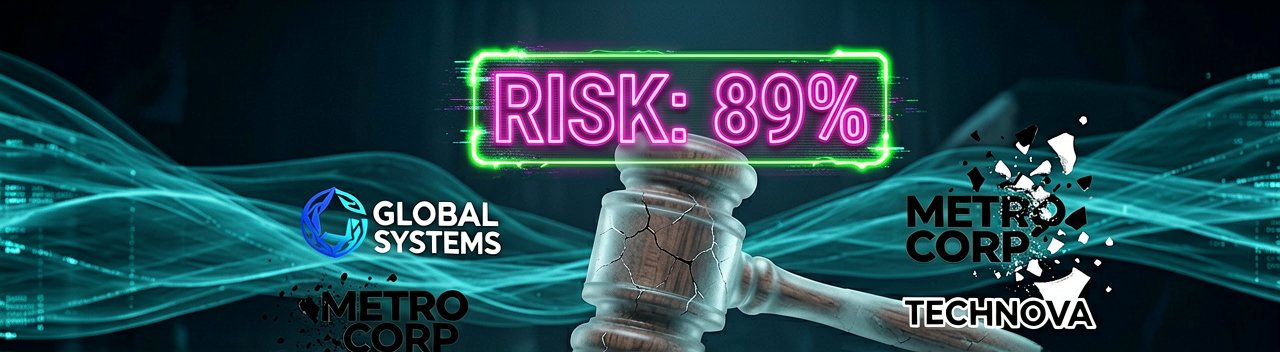
The automated gavel falls in silence, leaving no room for human grace. Across the globe, judicial systems are quietly letting proprietary risk-assessment tools whisper recommendations into the ears of judges, dictating the length of prison sentences and the price of bail. When an algorithm scans a defendant’s history, it reduces a messy, complicated human life to a single, cold risk score. This mathematical reductionism completely ignores the systemic inequities that shaped that life, effectively laundering past societal prejudices through a shiny veneer of objective code.
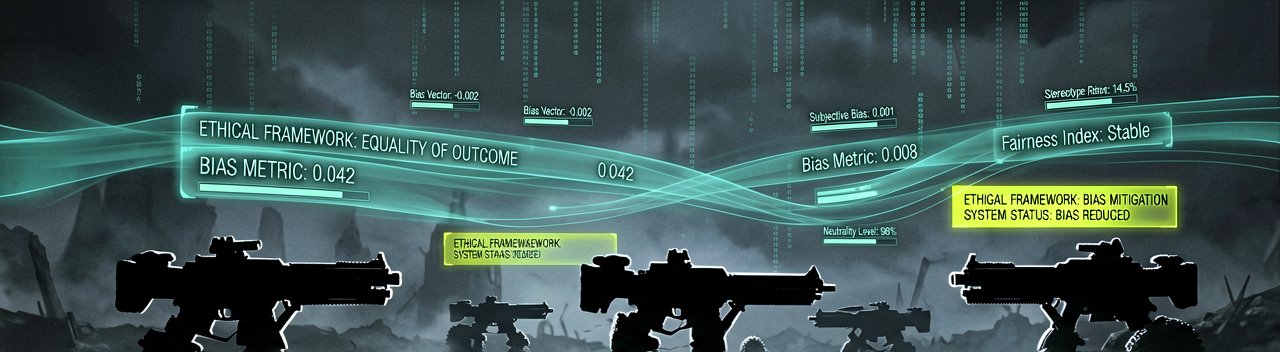
This erosion of human agency extends far beyond the courtroom, quietly reshaping the foundational mechanics of global conflict. Modern defense systems are increasingly relying on target-recognition software to identify threats in active war zones, introducing a terrifying level of automation to the battlefield. The push toward fully autonomous weapons systems highlights a chilling reality where the life-or-death calculus is outsourced to a processor that cannot feel the weight of its own actions, erasing the vital buffer of human compassion and moral hesitation from the front lines.
The High Cost of Efficiency
We are trading away our moral responsibility for the seductive promise of corporate efficiency and technical optimization. Tech conglomerates continually rush products to market under the banner of progress, yet they routinely obscure the underlying training data behind nondisclosure agreements and trade secrets. This profound lack of transparency makes it virtually impossible for the public to scrutinize the deep-seated biases or ethical shortcuts baked into the systems that actively manage their lives.
The solution requires more than just minor adjustments to a dataset or the creation of superficial corporate ethics boards. Academics and tech researchers at organizations like the IEEE Spectrum and civil rights advocates emphasize that true accountability demands legally binding regulatory frameworks and absolute data transparency. If humanity does not demand a seat at the drafting table right now, the algorithmic frameworks of tomorrow will be built entirely on the narrow financial incentives of a few powerful corporations.
Ultimately, the true danger of artificial intelligence is not that a machine will suddenly achieve consciousness and turn against us. The real threat is our own growing willingness to behave like machines, blindly trusting data readouts and letting our capacity for empathy atrophy. We must intentionally design a future where technology serves to amplify our humanity rather than replace it, ensuring that our deepest moral decisions are always anchored by a beating heart.
The ultimate tragedy would be to outgrow our own humanity in the pursuit of a flawless machine. We have arrived at the final act of this technological migration, where the lines between human oversight and algorithmic autonomy have blurred almost beyond recognition. By treating ethical dilemmas as simple optimization problems, we risk building a society that is perfectly orderly but completely devoid of justice. The true test of our era is not whether we can create smarter machines, but whether we can maintain the moral clarity required to govern them.
This challenge cannot be solved by simply tweaking code or waiting for technology to fix itself. True digital governance requires an active, international consensus that places human rights ahead of corporate profit margins. This means implementing rigorous, mandatory audits on high-stakes algorithms and giving the public the legal right to challenge automated decisions. We must intentionally build friction back into the system, ensuring that life-altering choices are slowed down enough for human reflection to take place.
The Architecture of Tomorrow
As we move forward, the relationship between humanity and artificial intelligence must be redefined as a strict hierarchy, not a partnership of equals. Engineers and policymakers must treat technology as a sophisticated tool for calculation, while keeping the burden of moral judgment exclusively on human shoulders. This division of labor ensures that even as our tools become more complex, our collective values remain firmly anchored in empathy and accountability.
Ultimately, artificial intelligence will only ever be a mirror reflecting our own collective choices, flaws, and priorities. If we populate our models with greed and historical bias, we will harvest automated cruelty on an unprecedented scale. If we choose instead to codify transparency, fairness, and human dignity, we can use these tools to build a more equitable world. The future is not something that happens to us; it is something we actively write through the guardrails we establish today.
"We do not need to fear a machine that thinks like a human; we need to fear a human who defers blindly to a machine that merely calculates."
Artūras Malašauskas is an AI Systems Integrator with 20+ years of production-grade web engineering experience. He has designed, shipped, and scaled enterprise Python/PHP systems for logistics, SaaS, and public-sector clients. For the past year, he has focused exclusively on AI integrations: deploying open-source LLMs, building generative media pipelines (image, audio, video), and engineering multi-agent workflows for real production environments. His standard: reproducibility, security, cost-efficient inference—no vaporware. He documents and evaluates emerging AI tooling, separating verified capabilities from marketing noise. Technical editor at: muza-ai.eu, ai-verslas.lt, ai-naujinos.lt Connect on LinkedIn
Comments