STMicroelectronics Rethinks the Vision Edge with Next-Gen Ultralow-Power Sensors

In the rapidly evolving landscape of the Internet of Things (IoT), the "eyes" of our devices have often been their biggest power drain. Traditional image sensors are notorious for eating through battery life, frequently requiring bulky power packs or constant tethering to a wall outlet. STMicroelectronics is looking to shatter that limitation with its latest launch of next-generation ultralow-power image sensors, aiming to bring sophisticated vision to the very edge of the network.
The new sensors, part of the BrightSense product family, are specifically engineered for applications where every milliwatt counts. Think of smart home security cameras that last for years on a single charge, or industrial wearables that can track inventory without needing a midday plug-in. By optimizing the pixel architecture and data processing paths, STMicroelectronics has managed to slash active power consumption significantly compared to standard industry offerings.
Efficiency Meets Performance
What makes these sensors a breakthrough isn't just that they use less energy; it’s that they don’t sacrifice image quality to do it. Historically, low power meant low resolution or high noise. ST’s new hardware utilizes advanced Global Shutter technology, ensuring that moving objects are captured without the "jello effect" or blurring common in rolling shutter sensors. This is critical for reliable AI-driven object recognition and gesture control.
The integration of on-chip features is another highlight of this release. By moving some of the initial image processing—like noise reduction and motion detection—directly onto the sensor silicon, the system reduces the workload on the main application processor. This "edge-of-the-edge" processing ensures the rest of the device can stay in a deep sleep mode until the sensor detects something worth investigating.
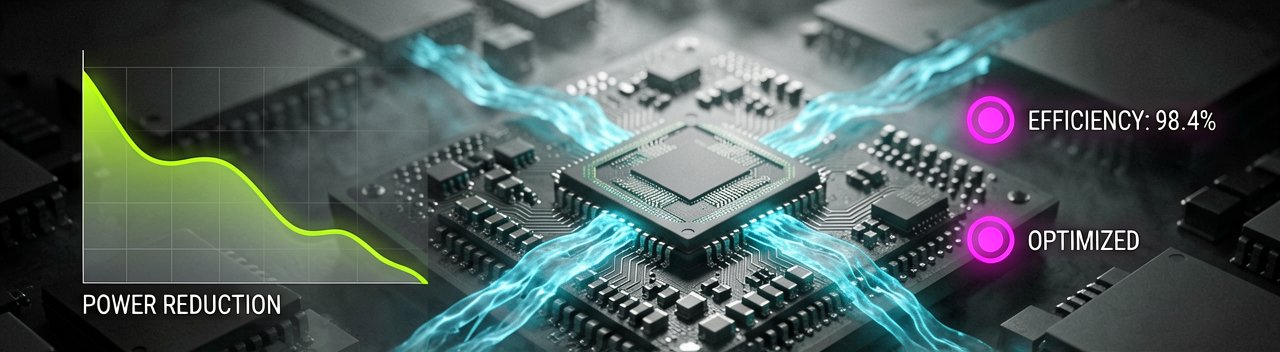
From a technical standpoint, the sensors leverage ST’s proprietary manufacturing processes. This vertical integration allows them to fine-tune the interaction between the light-capturing pixels and the logic circuits. The result is a compact footprint that fits easily into sleek consumer electronics, from smart doorbells to AR/VR headsets that require lightweight components for user comfort.
Expanding the AI Ecosystem
The timing of this launch is no coincidence. As artificial intelligence moves from massive cloud servers to tiny microcontrollers, the demand for "AI-ready" data has skyrocketed. These sensors are designed to provide clean, high-contrast images that machine learning models can easily interpret, even in challenging lighting conditions like high-glare environments or dim hallways.
ST is also making it easier for developers to jump in. The sensors are supported by a robust suite of software tools and evaluation kits. This ecosystem approach is vital because, in the world of embedded systems, hardware is only as good as the code running on it. By lowering the barrier to entry, ST is positioning itself as a primary partner for startups and tech giants alike.
Industrial automation stands to gain significantly from this tech. In a factory setting, sensors that can operate wirelessly for extended periods allow for more flexible monitoring of production lines. Instead of expensive rewiring projects, engineers can simply "stick and click" these vision modules wherever they are needed to monitor safety protocols or equipment health.

Market Impact and Future Outlook
Market analysts see this as a direct challenge to other major players in the CMOS image sensor space. While companies like Sony and Samsung dominate the smartphone market, the specialized niche of ultralow-power IoT vision is still up for grabs. ST’s focus on power-per-pixel gives them a distinct advantage in the burgeoning "green tech" and sustainable electronics sectors.
Privacy is another subtle benefit of this low-power, edge-centric design. Because the sensors are designed to process data locally rather than streaming constant video to the cloud, they naturally align with "Privacy by Design" principles. Users are increasingly wary of always-on cameras; a sensor that only wakes up to identify a specific gesture or person locally is a much easier sell.
Looking ahead, we can expect this technology to trickle down into even more mundane objects. We might see smart mirrors that adjust lighting based on presence, or retail shelves that track stock levels in real-time without complex wiring. The goal is a world where technology "sees" and reacts to our needs without being a burden on our energy grids or our privacy.
Ultimately, STMicroelectronics isn't just releasing a new part number; they are enabling a new class of "silent" intelligence. These sensors represent a shift toward ambient computing, where devices are aware of their surroundings but remain invisible in terms of their physical and electrical footprint. It is a sophisticated leap forward for the vision-enabled IoT.
As we move deeper into the decade, the success of the IoT will depend on these types of incremental yet foundational hardware improvements. By solving the power paradox, ST is ensuring that the future of tech is not just smarter, but significantly more sustainable and versatile than the generation that came before it.
Behind the Silicon: The recent launch of STMicroelectronics’ VD55G4 and VD65G4 sensors marks a pivotal expansion of the STMicroelectronics BrightSense portfolio, specifically targeting the burgeoning demand for "always-on" vision in ultra-compact devices. These sensors are produced using a sophisticated 3D-stacked architecture on 300-mm wafers, combining a 65-nm optical sensor layer with a 40-nm logic layer. This vertical integration allows for a tiny die footprint of just 2.73 x 2.16 mm², making them ideal for integration into space-constrained hardware like smart glasses and medical wearables.
One of the most significant technical leaps is the reduction in power consumption to roughly one-tenth that of conventional global-shutter solutions. When operating at a resolution of approximately 800x700 at 10 frames per second, these sensors maintain extreme efficiency, which is vital for devices relying on small batteries or energy harvesting. The monochrome VD55G4 is optimized for visible and near-infrared spectrums, while the VD65G4 introduces an RGB Bayer color filter to support standard color imaging for consumer electronics.
The Architecture of Autonomous Awareness
At the heart of these new sensors is a dedicated "detect-and-wake" architecture. This feature allows the sensor to autonomously monitor a scene for movement or specific triggers without needing the main application processor to remain active. By shifting from continuous video streaming to event-driven operation, the system can stay in a deep-sleep mode, consuming as little as 600 microwatts until an interrupt signal is sent to the microprocessor. This capability is a game-changer for smart home appliances and security systems that must remain vigilant without draining power.
STMicroelectronics has also focused heavily on image quality through the implementation of Backside Illumination (BSI) and Capacitive Deep Trench Isolation (CDTI). These technologies work together to enhance pixel sensitivity and sharpness while reducing crosstalk between pixels, even in low-light environments. Furthermore, the inclusion of single-frame on-chip High Dynamic Range (HDR) ensures that the sensors can capture clear details in scenes with both deep shadows and bright highlights, a common challenge for outdoor edge AI applications.
The company is not just delivering hardware but is also providing a comprehensive development ecosystem to accelerate time-to-market for its partners. This includes plug-and-play evaluation camera modules, Linux drivers, and a PC-based GUI designed to work seamlessly with STMicroelectronics popular STM32 microcontroller and microprocessor platforms. This ease of integration allows developers—from startups to established tech giants—to prototype and deploy responsive, AI-ready vision features with minimal friction.
Strategic Market Positioning
The launch reflects ST’s broader strategy to dominate the "Edge AI" and industrial automation sectors. By offering a 10-year longevity commitment, the company is signaling its reliability to industrial and medical manufacturers who require stable supply chains for long-term product lifecycles. This move positions ST as a direct competitor in niches where high-volume smartphone sensor manufacturers often lack the specialized focus on extreme power efficiency and long-term industrial support.
Furthermore, the manufacturing of these sensors at ST’s own foundries in France underscores the company’s commitment to mastering the entire semiconductor supply chain. This internal control over production allows for tighter quality management and the ability to pivot quickly to meet the evolving needs of the 200,000+ customers that ST serves globally. The vertical integration is a critical component of their goal to reach carbon neutrality by 2027 while maintaining market leadership in optical sensing.
As personal electronics transition toward more immersive AR/VR experiences, the VD65G4’s color capabilities provide the necessary data for lip and eye tracking, as well as environment analysis. These applications require the sensor to be lightweight and efficient enough to not add heat or bulk to a headset. By solving these engineering hurdles, ST is effectively providing the foundational technology that will power the next generation of interactive, hands-free computing.
In summary, the introduction of the VD55G4 and VD65G4 is less about a simple product update and more about enabling a shift toward ambient, intelligent environments. As vision sensors become more efficient and autonomous, they will move from being passive recording tools to active, low-power participants in our daily technology, reacting to our presence and needs without the need for constant human intervention or frequent recharging cycles.
The Strategic Inversion of Moore’s Law: STMicroelectronics is effectively signaling a departure from the "more pixels at any cost" race that has defined the imaging industry for decades, pivoting instead toward a "more intelligence for less energy" paradigm. By focusing on sensors like the VD55G4 and VD65G4, the company is targeting a massive, underserved gap in the market: the trillions of edge devices that need to see but cannot afford the thermal or electrical baggage of a smartphone-grade processor. This isn't just about incremental power savings; it is about enabling a new category of "silent" electronics that function as autonomous observers rather than passive peripherals.
From a competitive standpoint, STMicroelectronics is carving out a defensive moat in the specialized industrial and wearable sectors. While giants like Sony and Samsung continue to dominate high-resolution mobile imaging, their architectures are often over-engineered for the specific, lean requirements of industrial condition monitoring or basic gesture recognition. ST’s decision to integrate advanced global-shutter technology into such a low-power envelope allows them to capture high-speed motion—critical for robotics and smart factory lines—where rolling-shutter alternatives from competitors would fail due to image distortion.
Market Displacement and the "Always-On" Economy
The move to event-driven vision represents a significant shift in the value chain of the Internet of Things. Traditionally, the sensor was a "dumb" pipe, feeding raw data to a power-hungry application processor (AP). By moving the initial detection logic—what ST calls the "detect-and-wake" architecture—into the sensor itself, they are effectively demoting the AP to a secondary role. This shift drastically reduces the total cost of ownership (TCO) for enterprise customers, as it allows for smaller batteries and simpler thermal management, which are often the most expensive components in a device’s Bill of Materials (BOM).
Analytically, this product launch is also a direct play for the "Green IoT" market. As global regulations on electronic waste and energy efficiency tighten, manufacturers are under increasing pressure to extend the life of battery-operated devices. A sensor that consumes one-tenth the power of its predecessors isn't just a technical achievement; it’s a compliance tool. Companies that adopt these sensors can market significantly longer product lifecycles, reducing the frequency of battery replacements and the environmental impact of their hardware deployments.
The addition of the color VD65G4 variant specifically addresses the rising demand in the consumer "spatial computing" sector. As AR and VR headsets move from niche gamer gear to everyday productivity tools, user comfort is dictated by weight and heat. By providing a sensor that can handle eye-tracking or spatial mapping while operating within a milliwatt budget, ST is positioning itself as a primary supplier for the next generation of wearable displays, where every gram of battery saved directly translates to a better user experience.
Navigating the Silicon Supply Chain
ST’s 10-year longevity commitment is perhaps the most understated part of this announcement. In a semiconductor world plagued by rapid obsolescence, this guarantee is a major draw for the medical and industrial sectors. For a developer of a smart insulin pump or an automated warehouse sorter, the assurance that the core vision component won't disappear in two years is as valuable as the hardware's power efficiency. This long-term stability is a key differentiator that builds deep institutional loyalty, something consumer-focused silicon vendors often struggle to maintain.
Furthermore, the manufacturing of these sensors on 300-mm wafers in ST's European facilities highlights a strategic move toward regional supply chain resilience. As geopolitical tensions continue to influence chip availability, STMicroelectronics is leveraging its status as a vertically integrated device manufacturer (IDM) to provide a stable, "Made in Europe" alternative. This internal control over the silicon recipe—from pixel design to final packaging—allows for rapid iterative improvements that fabless competitors simply cannot match.
We are also seeing the early stages of a "Vision-to-Action" ecosystem. By tightly coupling these sensors with their STM32 microcontroller family, ST is creating a "walled garden" that is actually helpful to the developer. Providing pre-optimized drivers and AI tools reduces the "time-to-first-image" from months to weeks. This ecosystem play is designed to capture the developer's mindshare early, ensuring that when they scale from a prototype to a million-unit production run, they stay within the ST hardware environment.
Ultimately, the success of the BrightSense line will depend on how quickly the software side of Edge AI catches up. While the hardware is now capable of running on a "milliwatt budget," the machine learning models must also be lean enough to fit on the microcontrollers these sensors feed. However, by providing the "eyes" today, ST is forcing the rest of the industry to accelerate its development of efficient "brains," setting the stage for a world where our devices finally see us coming without needing to be plugged into the wall.
"It turns out that teaching a gadget to 'see' shouldn't require it to eat like a hungry server farm. With these new sensors, your smart home might finally stop acting like a paranoid puppy that’s always out of breath and start acting like a zen master—quietly aware, perfectly efficient, and hopefully, not judging your 3 A.M. fridge raids too harshly."
Artūras Malašauskas is an AI Systems Integrator with 20+ years of production-grade web engineering experience. He has designed, shipped, and scaled enterprise Python/PHP systems for logistics, SaaS, and public-sector clients. For the past year, he has focused exclusively on AI integrations: deploying open-source LLMs, building generative media pipelines (image, audio, video), and engineering multi-agent workflows for real production environments. His standard: reproducibility, security, cost-efficient inference—no vaporware. He documents and evaluates emerging AI tooling, separating verified capabilities from marketing noise. Technical editor at: muza-ai.eu, ai-verslas.lt, ai-naujinos.lt Connect on LinkedIn
Comments