AI Screens Premature Babies for Blindness in Mongolia
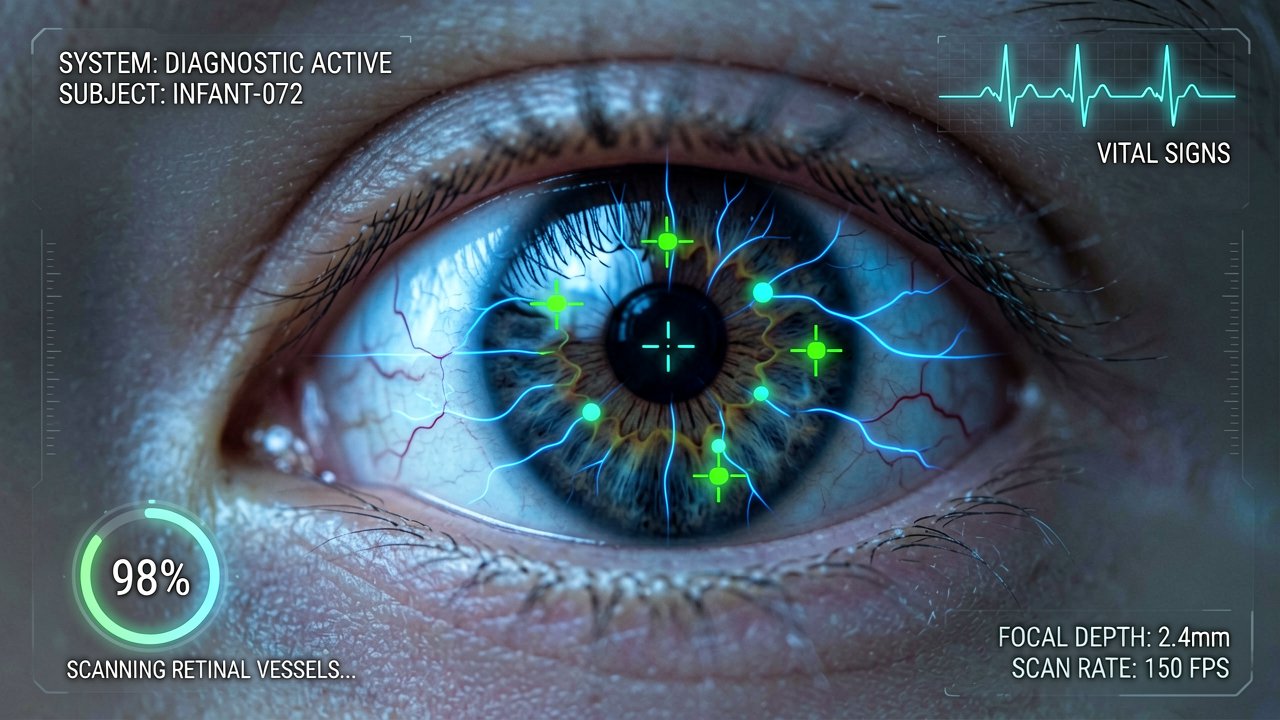
For the first time, artificial intelligence is being used to screen premature infants for retinopathy of prematurity in a low-resource setting. The deployment took place in Ulaanbaatar, Mongolia, where eye care nonprofit Orbis International and technology partner Siloam Vision launched a program to detect the leading cause of childhood blindness worldwide.
The screening occurred at the National Center for Maternal and Child Health neonatal intensive care unit. Among the first patients were twins named Ariunbaatar and Ariunnandin, whose mother Otgonchimeg had previously worked at the same hospital. She understood the stakes: retinopathy of prematurity can progress quickly and cause permanent blindness if not caught early.
According to the official press release, the partnership launched in 2023 pairs proprietary AI technology with Orbis's health systems-strengthening model. Siloam's AI for retinopathy of prematurity is the first AI system to receive breakthrough status by the U.S. Food and Drug Administration.
The physical workflow is straightforward. Doctors from remote provinces use specialized cameras that attach to a cell phone, capturing retinal images that transmit through Siloam's telemedicine platform, iTelegen. At NCMCH, the AI analyzes these images and provides guidance to ophthalmologists. The system doesn't replace specialists—it supports their clinical decision-making (which is actually how most medical AI should work, honestly).

Results come back within seconds rather than days. Otgonchimeg noted that under the old system, a highly skilled ophthalmologist needed days to review images while balancing other patients. Now, mothers receive immediate results and can schedule follow-up care without losing precious time.
Retinopathy of prematurity damages the retina and can lead to irreversible blindness. The condition is entirely preventable, yet an estimated 32,000 pre-term babies worldwide become permanently blind or visually impaired from ROP every year. Early detection is the only reliable way to save a baby's sight.
The technology builds on a decade of validation studies in India, Mongolia, and Nepal. The i-ROP DL system combines an AI algorithm with cloud-based telemedicine and vision cameras. It effectively identifies severe ROP in digital images taken on commercially available cameras.
Dr. Chimgee Chuluunkhuu, Orbis Mongolia Country Director, emphasized the geographic challenge. Mongolia's vast territory and low population density create both the greatest need and the greatest opportunity for telemedicine and AI to support doctors in rural areas. The program aims to ensure babies everywhere, not just in the capital, have access to early care.

Orbis-trained eye care professionals in Mongolia have conducted more than 270 exams on more than 170 newborn babies since the AI program launched. The partnership is expanding to Bangladesh, where the first babies are scheduled to be screened in Dhaka.
This deployment follows earlier work by Orbis. A 2023 study showed Cybersight AI accurately detects diabetic retinopathy in children in low- and middle-income countries. The current ROP program represents another step in their mission to build stronger, more resilient eye care systems.
Dr. Tsengelmaa Chuluunbat, head of pediatric ophthalmology at NCMCH, called it a combined effort of national and international teams addressing ROP in Mongolia while contributing to the scientific field of pediatric ophthalmology.
The real test comes when scaling beyond demonstration sites. Mongolia's geography makes it an ideal proving ground, but whether the model works in densely populated, infrastructure-challenged regions remains unproven. The technology is ready. The question is whether health systems can absorb it.
Whether users actually pay for it remains the real question.
Artūras Malašauskas is an AI Systems Integrator with 20+ years of production-grade web engineering experience. He has designed, shipped, and scaled enterprise Python/PHP systems for logistics, SaaS, and public-sector clients. For the past year, he has focused exclusively on AI integrations: deploying open-source LLMs, building generative media pipelines (image, audio, video), and engineering multi-agent workflows for real production environments. His standard: reproducibility, security, cost-efficient inference—no vaporware. He documents and evaluates emerging AI tooling, separating verified capabilities from marketing noise. Technical editor at: muza-ai.eu, ai-verslas.lt, ai-naujinos.lt Connect on LinkedIn
Comments