Global Digital Policy Roundup: April 2026 - Tech Policy Press

The digital policy landscape shifted decisively in April 2026 as regulators moved from drafting frameworks to active enforcement. The European Commission issued preliminary findings against Meta for Digital Services Act violations while simultaneously pursuing Google under the Digital Markets Act. Across the Atlantic, House Republicans introduced competing federal privacy legislation that would preempt existing state laws. These developments signal a transition from regulatory theory to practical implementation (a shift that has been years in the making, frankly).
According to the Global Digital Policy Roundup: April 2026, enforcement actions dominated the month. The EU Commission's preliminary findings against Meta for DSA violations represent one of the first major enforcement actions under the landmark regulation. Similarly, the Commission's investigation into Google's search and advertising practices under the DMA demonstrates the bloc's commitment to enforcing its competition rules.
Content Moderation and Online Safety
Content moderation remained a priority across multiple jurisdictions. The UK Crime and Policing Act received Royal Assent, establishing new requirements for platforms to remove illegal content. In Turkey, authorities banned social media use for individuals under 15, while the European Parliament adopted a resolution on cyberbullying that calls for stronger protections for minors online.
The Council of Europe issued a recommendation on online safety that emphasizes the need for age-appropriate design and stronger protections for children. These developments reflect growing concern about the impact of digital platforms on young users and the need for coordinated international action.
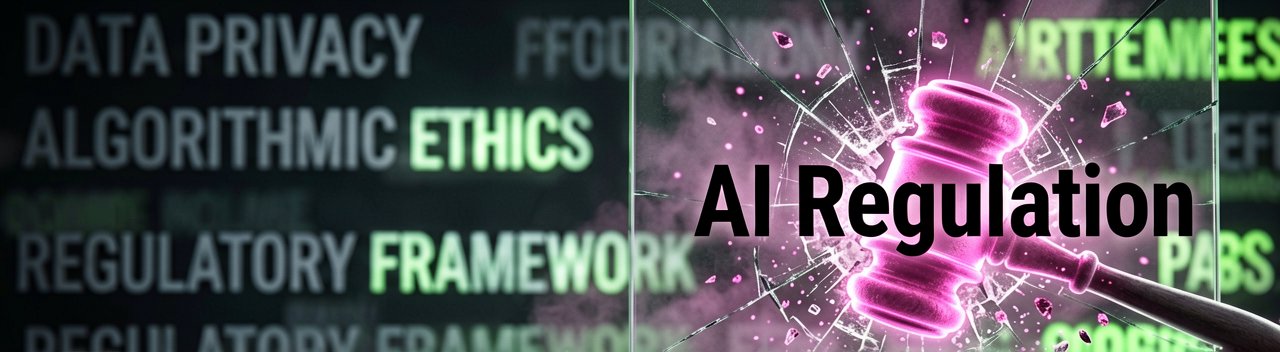
AI Regulation and Enforcement
April 2026 marked a critical juncture for AI regulation. The EU AI Act transparency rules became effective in August 2026, with the EU Age Verification App launching on April 15, 2026. The European Commission published draft guidelines clarifying key provisions applicable to General Purpose AI (GPAI) models, providing interpretive guidance on the definition and scope of these systems.
In the United States, the White House released its National Policy Framework for Artificial Intelligence on March 20, 2026. The Framework recommends federal preemption of state AI laws that "impose undue burdens," with the stated goal of establishing a single, minimally burdensome national standard. This recommendation has significant implications for state-level AI regulations, including Colorado's AI Act and California's amendments to the California Consumer Privacy Act.
Internationally, China introduced new measures on anthropomorphic AI, while Saudi Arabia published a draft AI policy and Mexico advanced its AI law. These developments demonstrate the global nature of AI regulation and the need for international coordination.
Competition Policy and Market Regulation
Competition enforcement intensified across major jurisdictions. The EU Commission pursued enforcement actions against both Google and Meta under the DMA, while the UK Competition and Markets Authority received commitments from Google and Apple to address competition concerns. In China, regulators blocked the Meta-Manus acquisition, citing competition concerns.

These enforcement actions demonstrate regulators' commitment to addressing market concentration and ensuring fair competition in digital markets. The coordinated approach across jurisdictions suggests a growing consensus on the need for robust competition policy in the digital economy.
Data Governance and Privacy
Data governance developments included France's cloud data decree, which establishes new requirements for cloud service providers. The Irish Data Protection Commission launched an investigation into Shein, while the Italian DPA fined Poste Italiane for data protection violations. In Argentina, a new data bill advanced through the legislative process.
In the United States, House Republicans introduced the SECURE Data Act (H.R. 8413) and the GUARD Financial Data Act (H.R. 8398). These bills would establish a single federal standard for data privacy, preempting existing state laws. The legislation received broad support from industry groups but faced criticism from consumer advocates and state lawmakers concerned about reduced protections.
Enforcement and Compliance
The FBI's 2025 IC3 Annual Report, released April 6, 2026, documented the growing use of AI by cybercriminals to conduct fraud schemes. The report noted more than 22,000 complaints referencing AI, with adjusted losses exceeding $893 million. This data underscores the need for robust cybersecurity measures and the challenges posed by AI-enabled cybercrime.
The Department of Justice extended ADA web accessibility compliance dates, effective April 20, 2026. This extension provides additional time for businesses to achieve compliance with web accessibility requirements while maintaining the goal of ensuring equal access to digital services.
Looking Ahead
As we move into May 2026, the focus will shift to implementation and enforcement. The EU AI Act compliance deadline of August 2, 2026, looms large for businesses operating in the EU market. The US federal privacy legislation will continue to be debated in Congress, with significant implications for state-level privacy laws.
Regulators across jurisdictions are demonstrating a commitment to enforcing digital regulations and addressing emerging challenges. The coordinated approach suggests a growing consensus on the need for robust digital governance frameworks that balance innovation with consumer protection.
For businesses operating in multiple jurisdictions, the key takeaway is clear: compliance with digital regulations is no longer optional. The transition from regulatory theory to practical implementation requires proactive engagement with regulatory frameworks and a commitment to responsible digital practices.
Stay tuned for our May 2026 roundup, which will cover the latest developments in digital policy and their implications for businesses and consumers alike.
Artūras Malašauskas is an AI Systems Integrator with 20+ years of production-grade web engineering experience. He has designed, shipped, and scaled enterprise Python/PHP systems for logistics, SaaS, and public-sector clients. For the past year, he has focused exclusively on AI integrations: deploying open-source LLMs, building generative media pipelines (image, audio, video), and engineering multi-agent workflows for real production environments. His standard: reproducibility, security, cost-efficient inference—no vaporware. He documents and evaluates emerging AI tooling, separating verified capabilities from marketing noise. Technical editor at: muza-ai.eu, ai-verslas.lt, ai-naujinos.lt Connect on LinkedIn
Comments