iPhone 18 Pro Launches September 2026, Base Model Pushed to 2027
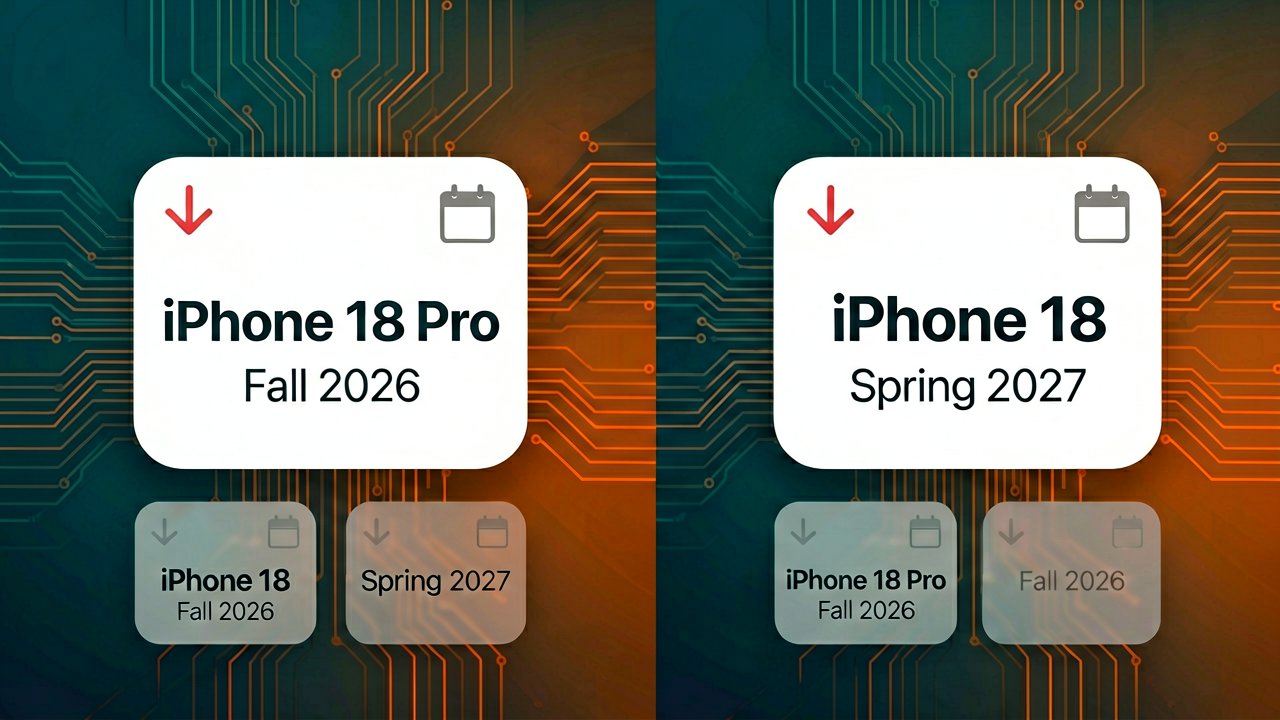
The iPhone 18 Pro and iPhone 18 Pro Max are expected to launch in September 2026, but the standard iPhone 18 could be delayed until spring 2027. This represents a significant departure from Apple's traditional annual release cycle, where all models arrive simultaneously.
Industry analysts and supply chain reports point to a split launch strategy. The premium Pro models will debut alongside Apple's first foldable iPhone—rumored to be called the iPhone Ultra—while the more affordable base model gets pushed to the following year. Customers wanting an upgrade during the standard fall timeline will need to opt for the more expensive options.
According to Forbes reporting from May 5, 2026, the keynote is likely to occur on Wednesday, September 9, 2026. Apple avoids scheduling events the day after Labor Day, which eliminates September 8 as a possibility. Pre-orders would open Friday, September 11, with official sales commencing September 18.
The foldable iPhone Ultra may not arrive simultaneously with the Pro models. Production complexities around foldable displays often create supply chain bottlenecks. Apple could stagger the release by a week or two to manage inventory and manufacturing constraints (a problem that has plagued users for years, frankly).

Design changes for the iPhone 18 Pro are expected to be incremental. The Dynamic Island could shrink by approximately 35%, though under-display Face ID technology reportedly isn't ready for this generation. The rear camera plateau may grow slightly thicker on the Pro Max, pushing the device weight over 240 grams. Holding the phone for extended periods will feel noticeably heavier than the 233-gram iPhone 17 Pro Max.
Color options are rumored to include a deep red or dark cherry finish, alongside light blue, dark gray, and silver. The two-tone aesthetic of the iPhone 17 Pro may give way to a more unified design with minimal color difference between the glass back and aluminum frame.
Technical upgrades include Apple's first 2-nanometer chip, which should deliver performance and efficiency improvements. The main camera could feature a variable aperture, giving users manual control over light intake. Battery life might improve, though some components face potential downgrades due to memory chip shortages.
MacRumors' comprehensive roundup notes that the iPhone 18 and iPhone 18e models won't appear until spring 2027. This split strategy effectively creates a two-tier upgrade path: premium buyers get immediate access while budget-conscious consumers wait another six months.

None of this has been officially confirmed by Apple. The company has not announced any iPhone 18 details publicly. All dates, features, and specifications remain speculative based on supply chain leaks, analyst projections, and industry patterns.
The real question isn't whether Apple will launch the Pro models in September. It's whether consumers will accept paying premium prices for incremental upgrades while waiting months for the base model. Whether users actually pay for it remains the real question.
Time will tell if this staggered approach works or if it just frustrates people who wanted a cheaper option. Either way, the September 2026 keynote will be crowded with announcements, and the foldable iPhone Ultra will likely dominate headlines regardless of its actual release timing.
Artūras Malašauskas is an AI Systems Integrator with 20+ years of production-grade web engineering experience. He has designed, shipped, and scaled enterprise Python/PHP systems for logistics, SaaS, and public-sector clients. For the past year, he has focused exclusively on AI integrations: deploying open-source LLMs, building generative media pipelines (image, audio, video), and engineering multi-agent workflows for real production environments. His standard: reproducibility, security, cost-efficient inference—no vaporware. He documents and evaluates emerging AI tooling, separating verified capabilities from marketing noise. Technical editor at: muza-ai.eu, ai-verslas.lt, ai-naujinos.lt Connect on LinkedIn
Comments