HP Enters Tablet Market with OmniPad 12, Expands AI PC Portfolio in India
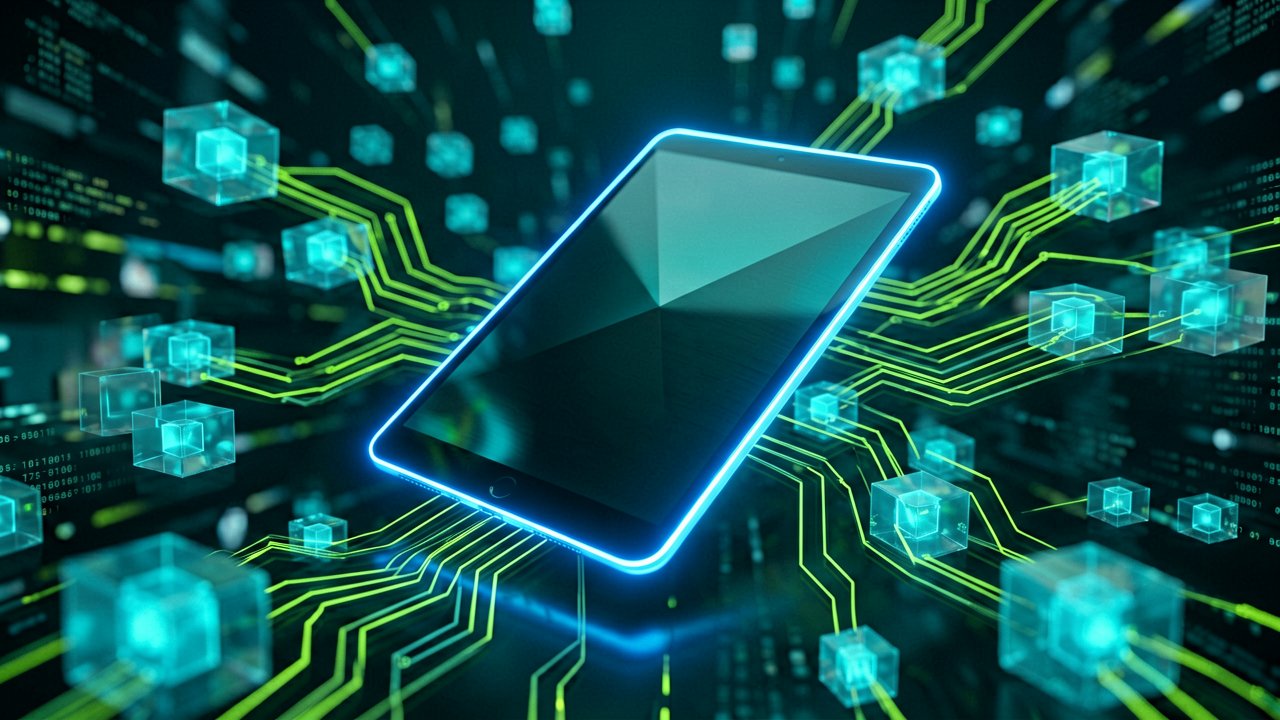
On Monday, HP officially entered the tablet category with the OmniPad 12, while simultaneously unveiling more than 20 new products across its personal systems, print, and workforce solutions portfolio in India. The announcement, made on May 11, 2026, represents the company's first foray into Android-based tablets after years of focusing exclusively on laptops and desktops.
The OmniPad 12 features a 12-inch touch display, detachable keyboard, and runs on Qualcomm Snapdragon processors. HP claims up to 18 hours of battery life, positioning it between traditional PCs and consumer tablets. The device targets students, first-time users, and professionals seeking portability without sacrificing productivity. Pricing starts at ₹48,999 with availability scheduled for June 2026 across HP online stores, Amazon, Reliance, and HP World retail locations.
More technically interesting is the HP EliteBoard G1a, which HP describes as the world's first full AI PC built into a keyboard. The device runs Windows 11 Pro for Business and integrates computing hardware directly into a 12mm-thick, 750-gram keyboard form factor. Powered by AMD Ryzen AI 300 Series processors with up to 50 TOPS of NPU performance, it includes dual microphones, speakers, and a fingerprint sensor. However, the absence of a trackpad means users must pair it with a wireless mouse—a friction point that may limit adoption for some.
According to The Hindu's coverage, the EliteBoard G1a is priced at ₹89,900 and available immediately on HP's online store. The device was first unveiled at CES 2026 in Las Vegas before making its India debut alongside the broader product refresh.
HP's enterprise portfolio expansion includes updated EliteBook, ProBook, and OmniBook series spanning Intel, AMD, and Qualcomm processors. The EliteBook X G2 series starts at ₹2,50,000 and now comes in three colour options—Eclipse Grey, Atmospheric Blue, and Glacier Silver. The ProBook 4 G2 series begins at ₹1,35,000, while the consumer-focused OmniBook range spans from ₹1,24,999 for the OmniBook 5 to ₹2,14,999 for the OmniBook Ultra 14 with Intel Ultra processors.
These systems deliver AI performance ranging from 50 to 85 TOPS, depending on configuration. They include HP Wolf Security, HP Sure View privacy screens, and HP GaN chargers. The company also announced HP IQ, its new on-device AI framework featuring contextual assistance, meeting note capture, and document analysis. HP IQ will debut in select AI PCs later this year, keeping processing local to the device rather than relying on cloud infrastructure (which drastically reduces latency, a problem that has plagued users for years, frankly).
Independent reporting from The Indian Express confirms the EliteBoard G1a specifications and notes the device's 32W built-in battery. The outlet also highlights HP Smart Sense and AMD's Auto State Management for dynamic performance adaptation, though it points out the keyboard requires a separate display connection via USB-C.
The workstation segment received updates with the HP Z8 Fury G6i, HP ZGX Nano G1n AI Station, HP Z4 G6i, and HP ZBook X G2i 16 series. These systems target engineers, developers, and designers working with graphics-intensive AI workloads. HP also expanded its collaboration portfolio with Poly Mission 400 Series headsets featuring AI-powered noise-cancelling microphones and the Poly G62 Video Conferencing Solution.

HP India Managing Director Ipsita Dasgupta stated the launch addresses varying technology adoption levels across India, from students to enterprises modernizing workplace infrastructure. The company identified India as the world's fastest-growing market for global brands, making it the strategic launch point for the OmniPad 12 before potential international expansion.
Physical interaction with these devices reveals the practical reality of HP's AI ambitions. The EliteBoard G1a's keyboard-sized form factor feels more like a peripheral than a computer until you connect it to a monitor and watch Windows load from a device that weighs less than half a traditional notebook. The OmniPad 12's detachable keyboard attachment has a satisfying magnetic click, but the 12-inch screen will feel cramped for anyone used to 14-inch laptops.
Whether enterprise buyers actually need a keyboard PC or whether students will prefer the OmniPad over cheaper Android tablets remains the real question. HP's pricing positions these products firmly in the premium segment, which may limit mass adoption despite the AI features. The technology works, but the market fit is still being tested.
Time will tell if HP's tablet entry changes the competitive landscape or simply adds another option to an already crowded category. For now, the OmniPad 12 and EliteBoard G1a represent HP's attempt to diversify beyond laptops—a move that makes sense strategically but faces stiff competition from established tablet makers. Whether users actually pay for these AI capabilities remains the real question, especially when cheaper alternatives exist without the premium price tag.
Artūras Malašauskas is an AI Systems Integrator with 20+ years of production-grade web engineering experience. He has designed, shipped, and scaled enterprise Python/PHP systems for logistics, SaaS, and public-sector clients. For the past year, he has focused exclusively on AI integrations: deploying open-source LLMs, building generative media pipelines (image, audio, video), and engineering multi-agent workflows for real production environments. His standard: reproducibility, security, cost-efficient inference—no vaporware. He documents and evaluates emerging AI tooling, separating verified capabilities from marketing noise. Technical editor at: muza-ai.eu, ai-verslas.lt, ai-naujinos.lt Connect on LinkedIn
Comments