Alibaba Integrates Qwen AI with Taobao for Agentic Shopping

Alibaba is preparing to integrate its Qwen AI platform directly with Taobao and Tmall, the company's two largest consumer marketplaces, in what amounts to the most ambitious test yet of agentic shopping at scale.
The integration enables consumers to browse, compare, and purchase items via the Qwen app by chatting with an artificial intelligence agent rather than manually navigating product listings. The Qwen app will have access to the entire Taobao and Tmall catalog of over 4 billion products, backed by a "skills library" capable of managing logistics and after-sales services.
According to The Times of India, the move seeks to drive shopping with conversations rather than keyword searches. Inside Taobao, Alibaba will launch a Qwen-powered AI shopping assistant that includes tools for virtual try-ons and 30-day price tracking.
Independent reporting from The Next Web corroborates the timeline and scope, noting the Qwen app gains access to Alipay-native checkout. The transaction itself completes through Alipay, with the AI agent stepping back only for the final user confirmation.
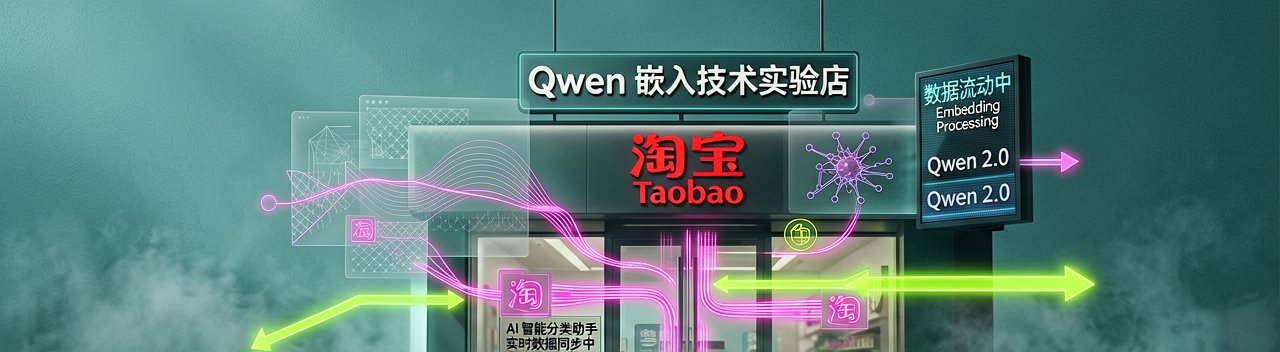
This architecture represents a notable break from how most Western e-commerce platforms have approached generative AI. ChatGPT's shopping integration with Shopify and Amazon's Rufus assistant largely produce search-style answers; the buy-flow happens in the underlying retailer's app or website, with payment, delivery, and returns handled by separate systems.
Alibaba's design treats the entire purchase, including payment and post-sale interactions, as something the AI agent can complete end-to-end. The four-billion-item catalogue is a meaningful difference too. Even an aggressive Western comparison falls short by an order of magnitude.
Wu Jia, Alibaba Group VP, told a launch event that the strategy was about moving "from intelligence to agency." In a live demo, Qwen took a request for forty cups of bubble tea from a local chain, placed the order through Taobao Instant Commerce, applied loyalty discounts, and completed the Alipay checkout, with delivery a short time later.
CEO Eddie Wu has positioned the spend behind this push as part of the more than $53 billion AI commitment Alibaba announced last year, framing AGI as a central group strategic goal. Earlier in 2026, Qwen reached 300 million monthly active users across Taobao, Tmall, Alipay, and other consumer surfaces, with about 140 million first-time AI shopping experiences logged during the Chinese New Year campaign.
The launch lands inside a fast-moving Chinese agentic-commerce market. Tencent's ClawPro enterprise agent launch positioned ClawPro at enterprise customers; ByteDance's Doubao has integrated similar capabilities into WeChat-adjacent surfaces. Alibaba has been the most vocal of the three about consumer-side agentic flows, and the Qwen-Taobao integration is its largest move so far.
There are competitive and regulatory caveats. Alibaba's e-commerce business has been losing share to PDD Holdings (parent of Pinduoduo and Temu) and to Douyin's commerce surfaces, which is part of why the company is willing to gamble on a UI shift this large. The push into AI-as-checkout-layer also depends on Beijing not deciding to regulate it differently from existing e-commerce regimes, a risk that the more guarded relationship Alibaba has had with Beijing since the 2021 antitrust fine is meant to remind investors of.
Strategically, the integration also fits Alibaba's broader split-out strategy of recent years. Alibaba has been reorganising its consumer-internet, cloud, and logistics arms into separately governed units; the Qwen-Taobao tie reverses that direction, pulling cloud-side AI capability into a consumer surface to defend the marketplace business. The implicit bet is that AI-native commerce is a sufficient step change that owning both halves matters more than the structural separation that has otherwise been progressing.
There are gaps that the launch does not address. Cross-border commerce, where Alibaba's growth ambitions sit, is harder; Qwen's integration with overseas Alibaba surfaces has been considerably more cautious. Western retailers and platforms watching this launch will want to know whether the agentic checkout works for casual buyers as well as the enthusiast users who tend to test new commerce surfaces first.
Conversion data, average order value, and return rates are the metrics that will determine whether this becomes more than a flagship demo. The company has not committed to disclosing those metrics. For now, the proposition is clear and the scale unmatched. China's largest e-commerce platform is asking its users to talk to an AI rather than tap through a product grid.
Whether that becomes the default flow or shoppers prefer the muscle memory of the familiar app will be visible in the second-half retail-festival numbers. Whether users actually pay for it remains the real question (though at this point, the real question is whether anyone remembers how to use a search bar anymore).
Artūras Malašauskas is an AI Systems Integrator with 20+ years of production-grade web engineering experience. He has designed, shipped, and scaled enterprise Python/PHP systems for logistics, SaaS, and public-sector clients. For the past year, he has focused exclusively on AI integrations: deploying open-source LLMs, building generative media pipelines (image, audio, video), and engineering multi-agent workflows for real production environments. His standard: reproducibility, security, cost-efficient inference—no vaporware. He documents and evaluates emerging AI tooling, separating verified capabilities from marketing noise. Technical editor at: muza-ai.eu, ai-verslas.lt, ai-naujinos.lt Connect on LinkedIn
Comments