Perplexity Brings Personal Computer AI Agents to Mac

AI search company Perplexity has officially launched its Personal Computer feature for macOS, marking a significant shift from cloud-only AI agents to local device integration. The announcement, made on Thursday, May 7, 2026, means the company's agentic capabilities are now accessible to all Mac users with a Pro or Max subscription.
This isn't just another chatbot interface. Personal Computer represents Perplexity's direct response to OpenClaw and similar local AI agent platforms that have gained traction in the past month. The key differentiator: Perplexity is attempting to deliver comparable functionality while addressing the security concerns that have plagued competitors.
According to TechCrunch's coverage, the Personal Computer takes the company's existing "Perplexity Computer" — a general-purpose, multi-model digital worker — and moves it from the cloud onto the user's actual device. The company describes this as bringing AI capabilities "to the device where most of your real work already takes place."
The practical implications are substantial. Unlike cloud-only AI assistants that require uploading documents to external servers, Personal Computer can directly access local files, native Mac applications, and web resources. It orchestrates tools using over 400 connectors while maintaining what Perplexity calls a "secure development environment" on their servers.

Here's where it gets interesting for power users: the system is designed to run autonomously on always-on devices like a Mac Mini. You can initiate tasks or approve requests remotely from an iPhone, which means the agent keeps working even when you're not at your desk. (This is the kind of functionality that actually matters, not just another chat interface.)
For those who've been following the rollout, this isn't entirely new. Perplexity first introduced Personal Computer last month with limited access restricted to Max subscribers on a waitlist. The May 7th announcement expands availability to all Pro and Max subscribers through the new Perplexity Mac app.
Anyone can download the app, but the Personal Computer feature itself requires a paid subscription. The app is currently available via direct download only — it's not listed in the Mac App Store, which may raise eyebrows among users who prefer official distribution channels.
Integration with Perplexity's Comet AI-powered web browser adds another layer of functionality. When paired, the system can operate web-based tools without requiring direct connectors, streamlining workflows that span local and web applications.
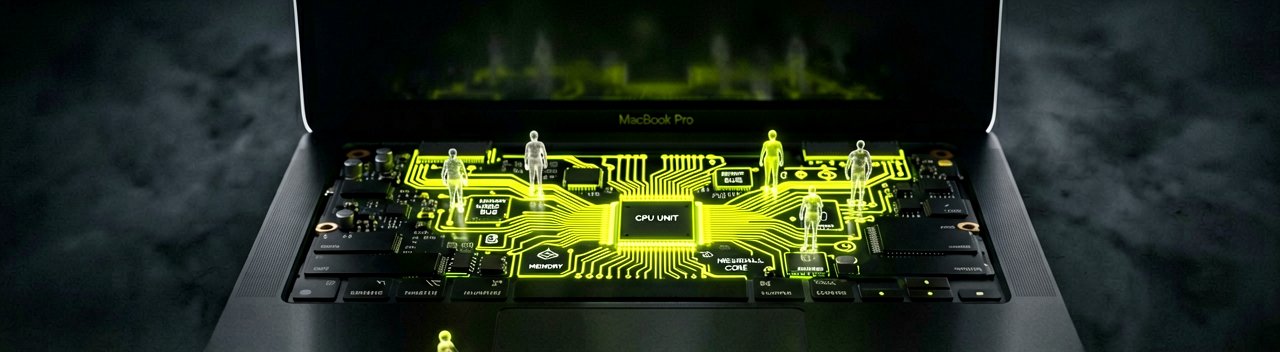
The use cases Perplexity highlights are specific enough to be useful: processing spreadsheets, managing documents, and handling projects with multiple materials. Because the tool works across applications, agents can compare files from different programs or pull notes from one app to create a draft in another. This cross-app orchestration is where local AI agents actually differentiate themselves from standard chatbots.
As a result of this general availability, Perplexity is deprecating its older Mac app in the coming weeks. The company says this allows the team to focus development resources on the Personal Computer app exclusively. Existing users will need to transition to the new version.
Security remains the elephant in the room. While OpenClaw demonstrated certain risks due to its elevated permissions, Perplexity's approach aims to offer a safer environment. The company emphasizes that the secure development environment runs on their servers, though the exact architecture of how local access is sandboxed remains unclear from public documentation.
9to5Mac reported additional details about the new Mac app's interface, including a universal keyboard shortcut (pressing both Command keys) to invoke the new Command Bar. The app launches with an intro video explaining how Personal Computer works on Mac, suggesting the company is investing in user education alongside the technical rollout.
The subscription requirement creates a clear barrier to entry. Free users can download the app but cannot access Personal Computer features. This positions the tool as a premium productivity enhancement rather than a general consumer product.
Whether this actually delivers on the security promises remains to be seen. Local AI agents with file and app access inherently create new attack surfaces, regardless of the vendor's claims. Users will need to evaluate whether the convenience of automated workflows outweighs the potential risks of granting AI agents broad system permissions.
For now, the technology is available. The real question is whether users will trust their AI agents with access to their local files and applications, or if the security concerns will limit adoption to early adopters willing to accept the trade-offs.
Artūras Malašauskas is an AI Systems Integrator with 20+ years of production-grade web engineering experience. He has designed, shipped, and scaled enterprise Python/PHP systems for logistics, SaaS, and public-sector clients. For the past year, he has focused exclusively on AI integrations: deploying open-source LLMs, building generative media pipelines (image, audio, video), and engineering multi-agent workflows for real production environments. His standard: reproducibility, security, cost-efficient inference—no vaporware. He documents and evaluates emerging AI tooling, separating verified capabilities from marketing noise. Technical editor at: muza-ai.eu, ai-verslas.lt, ai-naujinos.lt Connect on LinkedIn
Comments