Building Trust in AI Agents: SRE Teams' Critical Requirements for Adoption

The enterprise software ecosystem is experiencing a structural paradigm shift as task-specific automation gives way to agentic infrastructure. Market forecasts indicate that the global AI agents market is growing from $10.9 billion in 2026 toward an expected $182.9 billion by 2033, driven by an urgent organizational mandate to lower operational overhead, according to data from Grand View Research . However, this massive influx of capital faces an immediate roadblock within Site Reliability Engineering (SRE) departments. While technical executives view autonomous agents as a definitive solution to on-call burnout and repetitive toil, the practitioners responsible for maintaining zero-downtime infrastructure remain deeply skeptical. SRE teams are refusing to grant autonomous write-access to live environments without verifiable proof of safety.
This resistance stems from a widening trust gap. Although nearly 40% of enterprise applications are projected to feature autonomous agents by the end of the year, corporate confidence in these systems has dropped significantly, falling from 43% to just 27%, as reported by Nevermined. For an SRE team, an unverified AI agent represents a dangerous expansion of the operational blast radius. Traditional automated scripts execute strictly bounded if-then code logic. In contrast, agentic AI operates via continuous reasoning loops, making dynamic tool selections that can inadvertently trigger systemic outages or exacerbate active incidents. To bridge this gap, SRE leaders are mandating strict architectural guardrails that move AI agents away from opaque, black-box decision-making and push them into highly audited frameworks.
Consequently, the path to production deployment requires a total restructuring of agent governance. SRE organizations are shifting away from pre-deployment validation models toward rigorous real-time runtime monitoring. According to a market analysis by McKinsey, cybersecurity and systemic inaccuracy remain the single largest barriers to scaling agentic AI across enterprise workflows. For SREs to confidently surrender primary on-call duties to an AI agent, platforms must provide native explainability, explicit radius containment, and hard technical controls that match established infrastructure-as-code principles.
Deterministic Safety Over Autonomy
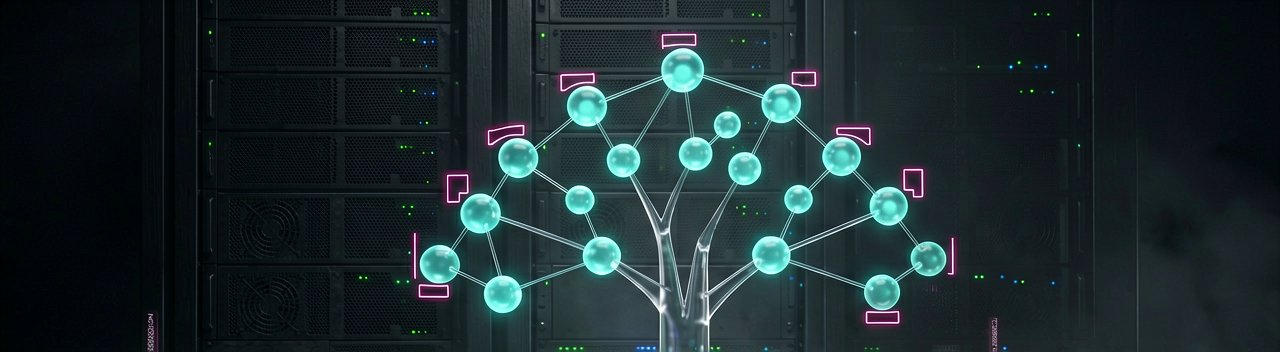
SRE teams demand that autonomous agents operate within deterministic safety parameters rather than relying purely on probabilistic model outputs. To enforce this, engineering organizations are building multi-layered runtime guardrails that validate an agent's intended action before it can hit production APIs. This architectural approach introduces an "autonomy budget" that acts similarly to an error budget. If an AI agent attempts to execute commands that violate predefined organization policies or access thresholds, the system burns its autonomy allocation and instantly triggers a behavioral circuit breaker, shifting control back to a human engineer. SREs are adapting their reliability concepts to account for autonomous behavior, ensuring that correctness of action takes precedence over the sheer speed of response.
Explainable AI and Immutable Audit Logs
During a high-severity incident, black-box recommendations are entirely useless to an incident commander. SRE teams require complete visibility into an agent's step-by-step reasoning tree, including the specific telemetry data correlated, the hypotheses tested, and the exact confidence intervals calculated. Every decision made by an agent must be accompanied by a clear natural language justification alongside a strict trace of its data inputs. Furthermore, enterprise compliance demands that these action logs remain completely immutable. To safely align agent workflows with standard industry frameworks like SOC2, ISO 27001, and the NIST AI Risk Management Framework, companies must maintain comprehensive audit trails that record exactly what happened, why it happened, and which specific cryptographic credentials allowed the agent to act.
Granular Authorization and Blast Radius Isolation
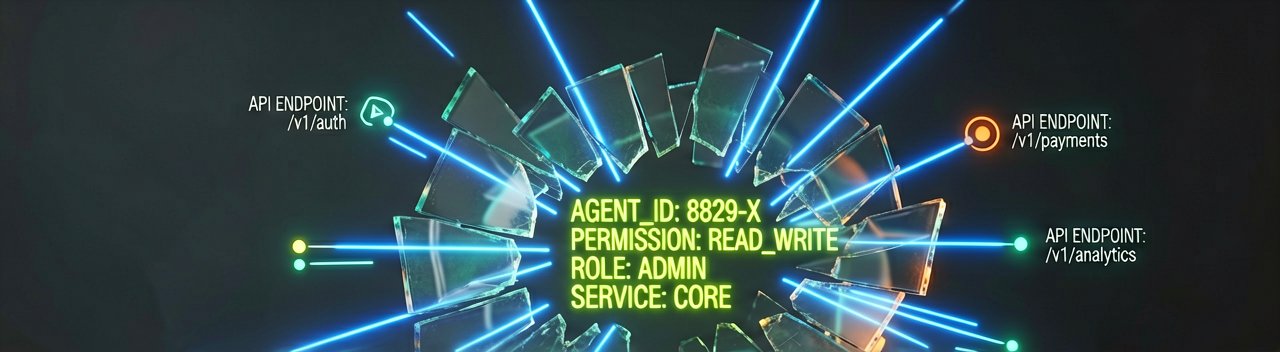
Granting an AI agent broad administrative credentials is an immediate deal-breaker for modern engineering teams. SREs are enforcing zero-trust principles at the agent level by implementing strict role-based access controls and contextual sandboxing. Agents must execute tasks using restricted API keys that limit their operations to specific microservices or read-only environments. This isolation ensures that if an agent suffers from indirect prompt injection, an algorithmic loop, or a compromised supply chain dependency, the malicious behavior cannot cascade across the wider corporate cluster. System engineers are building isolated sandboxes where agents can test remediation scripts before deployment, protecting core production systems from unverified code execution.
Behind the Scenes: The primary battleground for AI agent adoption is no longer found within the controlled environments of corporate innovation labs, but deep inside the active incident command centers of production infrastructure. While software engineers can comfortably tolerate a generative copilot offering broken syntax or hallucinated code blocks during a standard development sprint, Site Reliability Engineers enjoy no such luxury. For an SRE, a single misplaced API call or an incorrectly calibrated configuration script could easily trigger a cascading database freeze, instantly wiping out millions of dollars in transaction revenue and destroying hard-earned consumer goodwill. This severe asymmetry of consequences explains why engineering practitioners have historically viewed autonomous automation with intense suspicion, treating unverified system agents as high-risk liabilities rather than labor-saving assets.
This widespread engineering reluctance is actively verified by comprehensive market studies analyzing the real-world operational challenges of the agentic era. According to the recent McKinsey State of AI Trust Report, cybersecurity liabilities and systemic model inaccuracies remain the single most significant roadblocks preventing organizations from safely scaling autonomous systems across their production environments. The research highlights an alarming systemic gap: while a vast majority of global enterprise teams are actively deploying or piloting automated tools, a meager 30% of those organizations have implemented mature, production-ready agentic AI governance models. This severe disparity indicates that while technical capabilities have advanced rapidly, foundational runtime control mechanisms have failed to keep pace, forcing SRE leaders to freeze deployment pipelines to protect systemic integrity.
The core architectural friction point lies in how traditional automation handles runtime failure compared to how a continuous reasoning agent behaves. Standard automation tools rely entirely on strict, deterministic execution scripts; when an unexpected infrastructure state occurs, the script encounters an explicit error and immediately aborts its execution loop. Conversely, an autonomous AI agent is explicitly designed to solve problems dynamically by analyzing live telemetry, synthesizing potential fixes, and retrying alternative actions when an initial execution path fails. While this continuous adaptability is highly effective in simulated training environments, it introduces a dangerous level of unpredictability into production clusters, where an uncontrolled agent can rapidly chain incorrect remediation decisions together and trigger an unresolvable failure loop before human engineers can safely intervene.
To safely operationalize these technologies within high-stakes, heavily regulated environments, enterprise platforms are moving away from ad-hoc agent permissions and converging on standardized structural layers. This major shift is clearly demonstrated by the recent launch of advanced tools like the Snowflake Horizon Catalog, which aims to enforce built-in governance, semantic business context, and explicit data access controls directly across autonomous systems. Rather than allowing an agent to dynamically query raw cloud infrastructure and construct arbitrary database statements on the fly, these modern architectures force agents to interact exclusively through a tightly governed semantic layer. By anchoring autonomous systems to immutable definitions of enterprise data, SRE organizations can ensure that every AI-driven command undergoes strict validation before it can touch critical operational layers.
The Autonomy Paradox
Reading Between the Lines: The tech industry’s rush toward fully autonomous operational infrastructure exposes a deep logical contradiction. Vendors frequently pitch AI agents as the ultimate remedy for engineering burnout, promising to liberate humans from the grueling grind of 3:00 AM on-call alerts. Yet, the architectural reality reveals that the introduction of autonomous systems does not eliminate human cognitive load; it merely delays and intensifies it. When an automated agent attempts to remediate an infrastructure anomaly and fails, it leaves behind a highly complex, non-deterministic trail of actions. Human engineers are then forced to jump into a worsening crisis and rapidly decode a machine's convoluted reasoning tree under intense time pressure, transforming routine troubleshooting into an expensive forensic exercise.
This dynamic creates a dangerous erosion of human institutional knowledge. As junior engineers increasingly delegate low-level diagnostic tasks to autonomous agents, they miss out on the critical, hands-on debugging experiences that build deep system intuition. Over time, an engineering organization risks becoming entirely dependent on the very models it is supposed to oversee, leaving fewer human experts capable of intervening when an agent encounters an edge case that falls outside its training data. The industry is effectively trading predictable, easily fixable software bugs for unpredictable, emergent behavioral anomalies, all while eroding the core engineering talent pool required to maintain systemic resilience.
Furthermore, the economic justification for deploying these agents remains highly suspect when calculated against actual enterprise risk profiles. Tech executives are eagerly pricing in the efficiency gains of automated incident response, but they consistently fail to account for the massive computation costs of continuous reasoning loops, the engineering hours spent building validation frameworks, and the existential threat of a catastrophic outage. For any high-volume digital business, saving ten minutes on an average incident response time is completely negated if an unhinged agent triggers a single multi-hour regional blackout. Until AI systems can natively demonstrate true deterministic predictability, the most reliable approach to automated SRE will not look like a completely uninhibited agent, but rather an incremental, heavily constrained extension of classic human-in-the-loop automation.
"We were promised AI agents that would gracefully manage our infrastructure while we slept, but instead we built a highly caffeinated, infinitely fast intern with cluster-admin privileges and a penchant for rewriting history in production."
Artūras Malašauskas is an AI Systems Integrator with 20+ years of production-grade web engineering experience. He has designed, shipped, and scaled enterprise Python/PHP systems for logistics, SaaS, and public-sector clients. For the past year, he has focused exclusively on AI integrations: deploying open-source LLMs, building generative media pipelines (image, audio, video), and engineering multi-agent workflows for real production environments. His standard: reproducibility, security, cost-efficient inference—no vaporware. He documents and evaluates emerging AI tooling, separating verified capabilities from marketing noise. Technical editor at: muza-ai.eu, ai-verslas.lt, ai-naujinos.lt Connect on LinkedIn
Comments