Mastercard's AI Agent Payments and Pepeto's Crypto Surge Signal New Era in Digital Finance

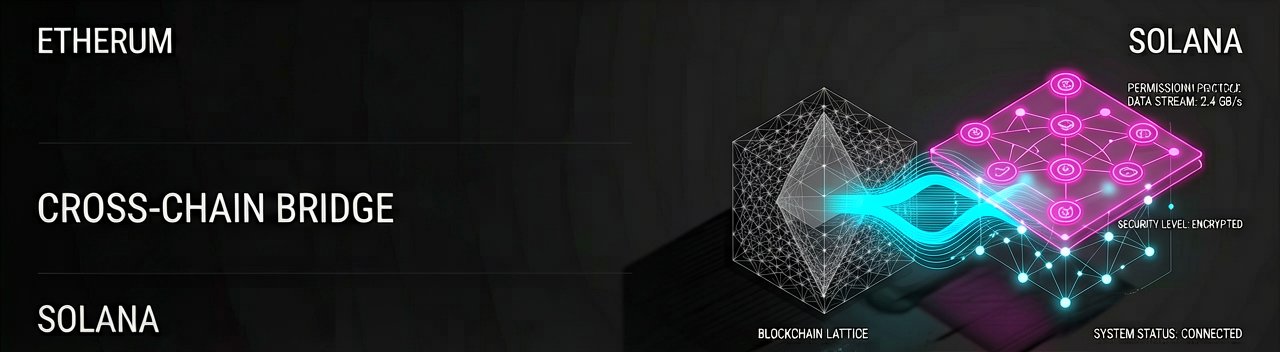
The landscape of global commerce is undergoing a structural paradigm shift as autonomous software engines emerge as direct economic actors. This transformation is highlighted by the launch of Agent Pay for Machines (AP4M), a multi-rail infrastructure unveiled by Mastercard to facilitate, permission, and guarantee microtransactions executed entirely by artificial intelligence agents. By coordinating with over 30 foundational Web3 and fintech partners—including digital asset giants like Coinbase, RippleX, and the Solana Foundation—the legacy payment processor is actively positioning its card rails to interface with decentralized ledger technologies, validating the growing demand for machine-to-machine financial infrastructure.
Simultaneously, retail and institutional interest in autonomous utility is accelerating within the cryptocurrency ecosystem itself. The presale for Pepeto, an Ethereum-based decentralized finance project utilizing integrated AI scanners and cross-chain bridging engines, has surged past $10.2 million, according to data monitored by Markets Insider. The confluence of a legacy credit giant standardizing machine-driven protocols alongside a high-momentum capital inflow into automated DeFi protocols emphasizes that the future of digital asset adoption will likely be dictated by systemic utility rather than manual human intervention.
The Architecture of Machine-to-Machine Commerce
Traditional transaction architectures are fundamentally ill-equipped to handle the operational profiles of autonomous software. Standard banking rails rely on discrete, human-initiated events with rigid identity verification checks and high relative overhead cost structures. Conversely, the AP4M framework introduced by Mastercard addresses high-frequency, sub-cent microtransactions by organizing the settlement process into four distinct layers: authentication, permissioning, transaction routing, and guaranteed settlement. To guarantee security without sacrificing transaction latency, the payment provider logs agent authorizations across public blockchains such as Base, Polygon, and Solana, building an immutable, cross-border ledger that lets external systems verify a bot's spending limits instantly.
Synergies in Decentralized Automation
While institutional frameworks focus heavily on regulatory compliance and governance, native Web3 initiatives are driving competitive pressure via zero-cost transaction models and decentralized infrastructure. Projects like Pepeto illustrate a broader market transition where capital is shifting away from purely speculative meme-centric assets toward systems offering functional utility, such as cross-chain bridges and real-time smart contract auditing. This suggests that as AI bots assume the role of independent market participants, they will naturally migrate toward ecosystems capable of clearing swaps across isolated networks with negligible friction, bridging the gap between legacy corporate networks and open-source finance.
Strategic Imperatives for the Five-Year Horizon
The aggressive positioning by global payment processors and the corresponding capital concentration in automated crypto presales mark a clear long-term macro trend. Financial networks are transitionally morphing from user-facing applications into deep backend infrastructure designed to be crawled and utilized by independent algorithmic systems. For financial institutions and tech enterprises alike, the immediate imperative centers on developing protocol-agnostic compliance engines capable of executing "Know Your Agent" validations. Organizations that fail to establish open, machine-readable commercial nodes risk complete disintermediation as agentic workflows increasingly dictate the distribution and settlement of digital capital.
Behind the Blockchain Architecture: The Fight for Machine-Identity Hegemony
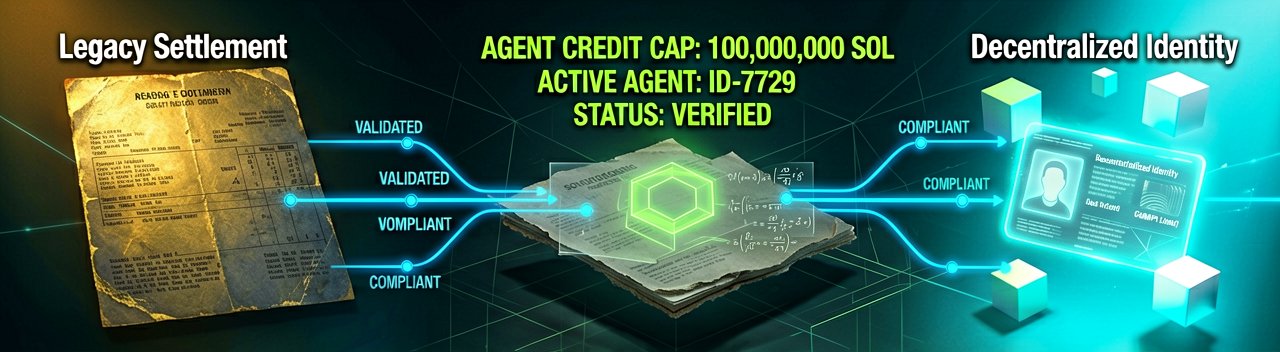
What Most Reports Miss: The true battleground emerging from Mastercard's alliance with Web3 networks is not the movement of capital itself, but the ownership of the identities underlying machine commerce. In traditional systems, identity is tied to a legal human entity or an enterprise through strict Know Your Customer protocols. Autonomous AI agents, however, exist in a regulatory gray area without legal personhood. By embedding identity verification data onto public ledgers like Solana and Base, financial networks are effectively establishing a new cryptographic standard for machine-identity governance. This allows an AI agent to prove its operational boundaries, creditworthiness, and compliance status to an external server in a fraction of a second, completely bypassing standard banking friction.
This paradigm shift exposes a critical strategic tension between decentralized Web3 purists and institutional networks. For years, the crypto ecosystem has built permissionless, trustless infrastructure designed to operate independently of central gatekeepers. Yet, the explosive capital inflows seen in automated platforms like Pepeto demonstrate that decentralized protocols urgently require liquidity rails to scale beyond speculative bubbles. Mastercard's entry into the space provides a necessary bridge, but it also forces a compromise. Web3 developers are increasingly choosing to integrate hybrid frameworks that pair the self-custodial transparency of blockchain with the settlement guarantees and dispute-resolution layers of established payment corporations.
From the perspective of enterprise risk management, the deployment of "Agent Pay" mechanisms addresses a long-standing engineering vulnerability: the risk of runaway algorithmic spend. Traditional API access tokens grant broad database or payment access, meaning a malfunctioning software loop could theoretically deplete a corporate treasury overnight. The new architectural standard resolves this by treating AI agents like corporate credit cards, utilizing real-time smart contracts to enforce hard programmatic caps on microtransactions. If an autonomous procurement agent attempts to purchase cloud computing assets or data feeds that exceed its daily allowance, the blockchain ledger denies the permission layer instantly, insulating the organization from catastrophic software failure.
Looking at historical precedents, this transition mirrors the early days of electronic data interchange in the late twentieth century, which transformed supply chain communication from paper to digital files. However, whereas that shift merely accelerated the transmission of human-penned logistical orders, the current evolution removes human oversight from the execution loop entirely. As machine-to-machine commerce matures over the next decade, the financial sector will see the volume of automated microtransactions surpass manual human retail payments by several orders of magnitude. The entities that control the routing protocols for these autonomous agents will effectively control the distribution network of the digital economy.
The Friction of Trust: Deconstructing the Machine Economy
Reading Between the Lines: The enthusiastic positioning of agentic commerce by industry leaders obscures a foundational contradiction between traditional financial frameworks and autonomous execution. Corporate messaging frequently champions a friction-free marketplace where software agents seamlessly exchange micro-payments for data and digital services. Yet, the realities of institutional liability and corporate risk mitigation rarely align with completely uninhibited, high-frequency machine activity. While recording transactional permissions on public networks like Base and Solana satisfies the demand for transparent logging, it exposes a deeper systemic vulnerabilities regarding ultimate accountability. If an AI agent executes thousands of rapid contracts that technically satisfy its pre-programmed boundaries but yield catastrophic real-world business losses, the legal and financial frameworks to allocate fault remain entirely unmapped.
Furthermore, the structural integration of legacy card networks with decentralized Web3 partners reveals a transactional paradox. Blockchain infrastructure was originally built to circumvent centralized intermediate clearers, relying on trustless code rather than corporate institutions. By placing its global settlement infrastructure over these networks, is essentially reclaiming its position as an indispensable central authority within a supposedly decentralized paradigm. This dynamic suggests that despite the impressive momentum behind decentralized protocols, the burgeoning machine economy cannot scale safely without relying on the exact legacy clearing structures that cryptocurrency initially set out to replace.
Ultimately, the current enthusiasm surrounding high-valuation presales and innovative payment rollouts must be weighed against engineering pragmatism. While programmatic spending limits can insulate a treasury against simple infinite loops, they cannot prevent complex systemic manipulation by adversarial algorithms operating across isolated networks. As automated agents become the primary spenders of digital capital, the financial sector may simply be shifting the point of failure away from human operational errors and toward structural software logic and integration exploits. The emerging digital economy will likely be defined less by frictionless autonomy and more by a persistent, highly technical oversight battle over who controls the kill switches of automated corporate finance.
"We have spent decades trying to teach humans how to manage their money responsibly, only to hand the entire financial system over to autonomous software bots that can spend our life savings in less than a millisecond—but at least they will do so with institutional governance and guaranteed cross-chain settlement."
Artūras Malašauskas is an AI Systems Integrator with 20+ years of production-grade web engineering experience. He has designed, shipped, and scaled enterprise Python/PHP systems for logistics, SaaS, and public-sector clients. For the past year, he has focused exclusively on AI integrations: deploying open-source LLMs, building generative media pipelines (image, audio, video), and engineering multi-agent workflows for real production environments. His standard: reproducibility, security, cost-efficient inference—no vaporware. He documents and evaluates emerging AI tooling, separating verified capabilities from marketing noise. Technical editor at: muza-ai.eu, ai-verslas.lt, ai-naujinos.lt Connect on LinkedIn
Comments