Temenos Embeds AI Into Core Banking Workflows at TCF 2026
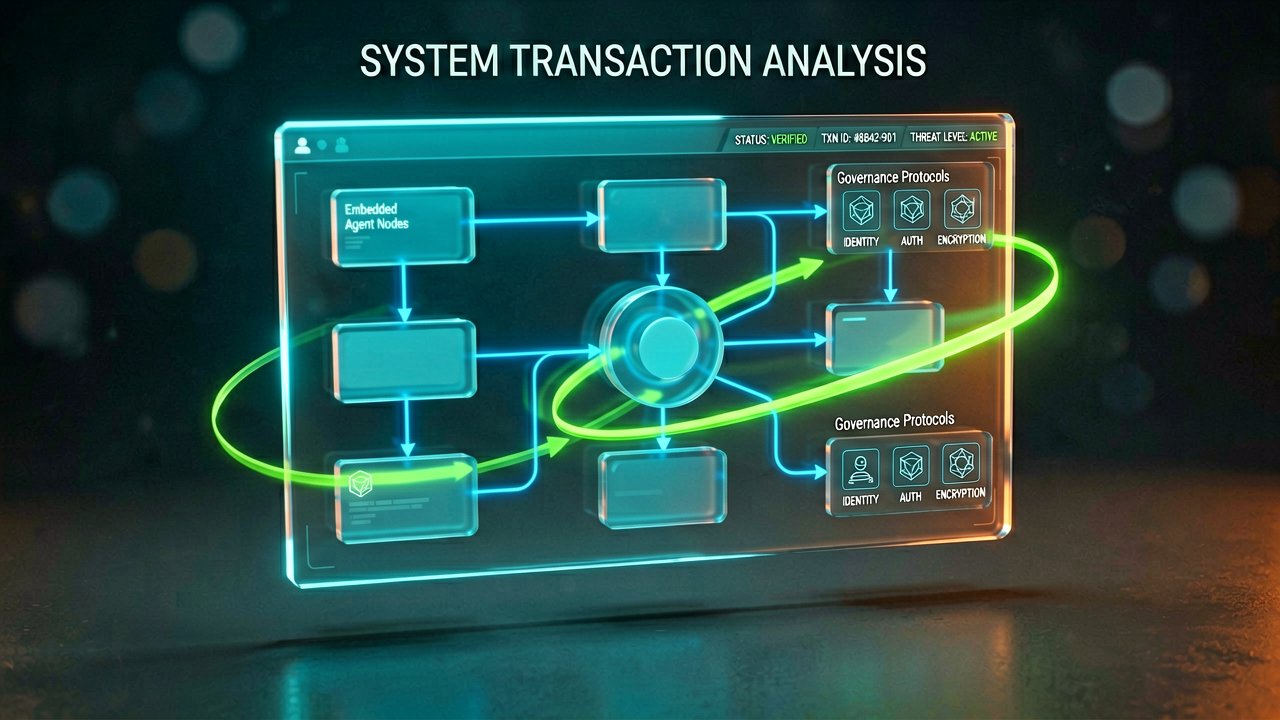
Banking technology vendor Temenos announced a suite of embedded AI capabilities at the Temenos Community Forum (TCF) 2026 on May 7, 2026. Rather than layering intelligence on top of existing systems, the company is integrating AI agents, copilots, and conversational tools directly into its Core and Digital Banking products, as well as its Financial Crime Mitigation (FCM) solution.
The announcement comes from Temenos's official press release, which details four primary product launches. These include Conversational Studio for Digital, Temenos Copilot for Workbench, Temenos Copilot for Core with Branch Manager and Branch Officer personas, and the Temenos FCM AI Agent for Instant Payments.
Barb Morgan, Chief Product and Technology Officer at Temenos, framed the strategy as a rejection of bolt-on AI solutions. "Banks do not need AI added on top of critical systems," Morgan stated. "They need intelligence built into the products and workflows they already trust." The company's approach embeds AI responsibly so banks can automate operations without compromising reliability or regulatory obligations.
This isn't Temenos's first foray into conversational banking tools. In 2025, the firm launched Temenos Copilot for Core, allowing users to engage with the system using natural language to accelerate decision-making. The 2026 releases extend that capability to developers, branch staff, and real-time payment flows.

Conversational Studio for Digital provides a natural-language environment for building end-to-end digital banking journeys. Developers can design and deploy new experiences through text-based commands rather than navigating complex UI hierarchies. This reduces the friction of clicking through multiple menus to configure workflows (a problem that has plagued users for years, frankly).
Temenos Copilot for Workbench targets the developer experience. It helps teams build, plan, and execute custom platform extensions using AI agents. The tool sits within the existing development environment, meaning engineers don't need to context-switch between their IDE and a separate AI interface.
The Copilot for Core extension adds conversational support for branch managers and officers. These personas can query the system, retrieve customer information, and execute standard operations through natural language. The physical reality of this change is significant: branch staff spend less time navigating nested menus and more time handling customer interactions.
Perhaps the most operationally critical launch is the Temenos FCM AI Agent for Instant Payments. This extends financial crime controls to real-time payment flows, where traditional batch processing is no longer viable. A Tier 1 bank using the FCM AI Agent (launched in 2025) now processes hundreds of thousands of sanctions screening cases and automates more than twenty percent of alerts.

That automation rate allows compliance teams to focus on higher-complexity work rather than manually reviewing every flagged transaction. The agent maintains auditability and human oversight, which is non-negotiable in regulated environments.
Sam Abadir, Research Director for Risk, Financial Crime, and Compliance at IDC, noted that the critical question in banking is no longer whether AI can be applied, but whether it can be governed across data lineage, model behavior, and operational controls. Platforms embedding intelligence directly into core banking workflows with clear audit trails reflect the architecture production deployments actually require.
The industry context matters here. Many fintech vendors have been selling standalone AI tools that sit outside core banking systems. These create data silos, complicate audit trails, and introduce integration friction. Temenos's embedded approach keeps intelligence within the trusted platform banks already rely on for critical operations.
From a technical standpoint, embedding AI into core banking workflows means the intelligence has direct access to transactional data without requiring external APIs or data replication. This reduces latency and eliminates the need for banks to maintain parallel data pipelines for AI processing.
However, the embedded model also means banks are more dependent on Temenos's AI governance framework. If the vendor's model behavior or data lineage tracking fails, the impact is more direct than with a standalone tool that can be disconnected.
Competitors in the banking technology space will likely respond with similar embedded strategies, particularly around developer tooling and conversational interfaces for back-office staff. The real differentiator will be deployment speed and demonstrable gains in operational efficiency.
Whether banks actually pay for these capabilities remains the real question. The embedded AI features require integration into existing workflows, which means implementation costs and change management overhead. Some institutions may prefer to keep AI separate from their core systems, even if that creates more friction.
For now, Temenos has positioned itself as a vendor prioritizing governance and auditability over flashy standalone AI demos. The market will judge whether that approach delivers measurable value or simply adds another layer of complexity to already intricate banking systems.
Artūras Malašauskas is an AI Systems Integrator with 20+ years of production-grade web engineering experience. He has designed, shipped, and scaled enterprise Python/PHP systems for logistics, SaaS, and public-sector clients. For the past year, he has focused exclusively on AI integrations: deploying open-source LLMs, building generative media pipelines (image, audio, video), and engineering multi-agent workflows for real production environments. His standard: reproducibility, security, cost-efficient inference—no vaporware. He documents and evaluates emerging AI tooling, separating verified capabilities from marketing noise. Technical editor at: muza-ai.eu, ai-verslas.lt, ai-naujinos.lt Connect on LinkedIn
Comments