Anthropic Launches 'Dreaming' AI Agents for Self-Improvement
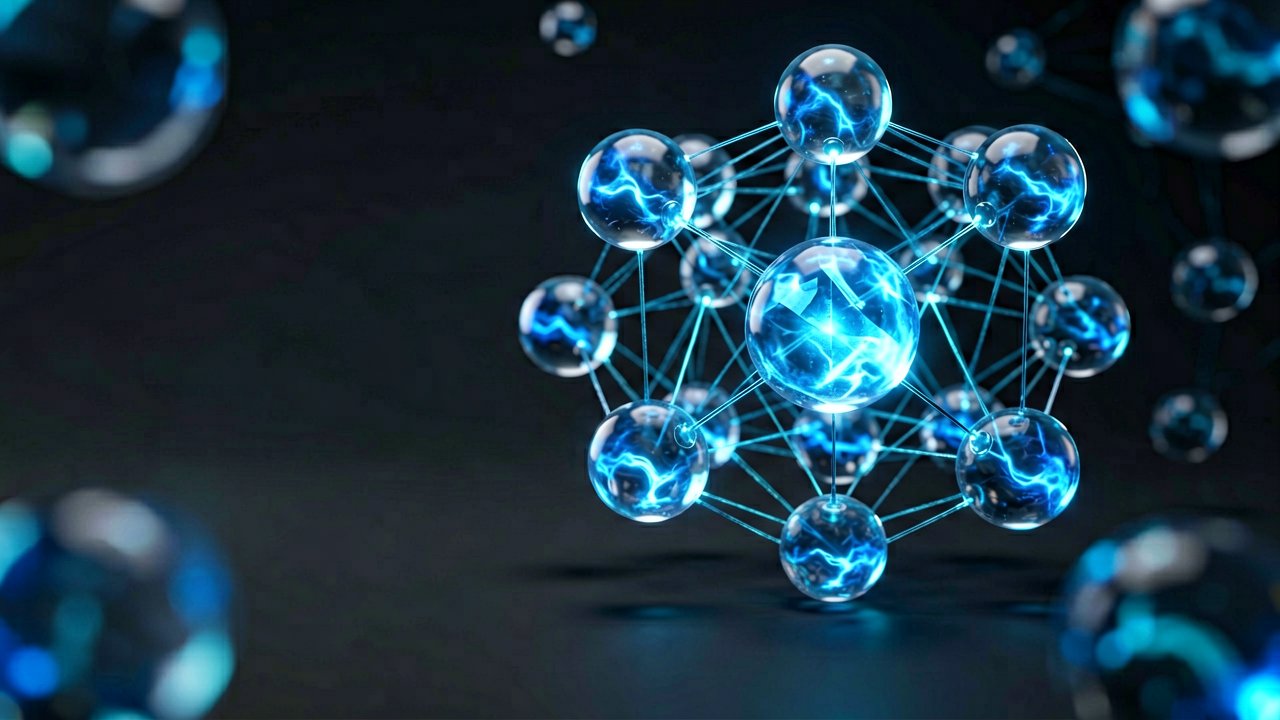
At its developer conference in San Francisco, Anthropic introduced a new capability for its Claude AI platform that the company is calling "dreaming." The feature allows AI agents to pause between sessions, review their previous interactions, and identify patterns worth storing in memory for future tasks. This represents a shift from traditional chatbot architecture, where each conversation starts fresh without carrying forward lessons from prior work.
The announcement came during the Code with Claude event, positioning the technology as part of Anthropic's broader Claude Managed Agents product line. Unlike standard API calls that treat each request independently, Managed Agents are designed to handle multi-step projects over extended periods. The dreaming process runs as a scheduled review cycle, analyzing completed sessions and curating which information should persist in the agent's memory stores.
According to Ars Technica's coverage, this addresses a fundamental limitation in large language models: context windows are finite, and important details can be lost during lengthy projects. The dreaming mechanism attempts to solve this by periodically reviewing what happened, determining what matters, and compressing that into retrievable memory. It's essentially automated housekeeping for AI work sessions (a problem that has plagued developers for years, frankly).
Anthropic describes the process as reflective learning designed to improve efficiency and consistency over time. Agents can revisit completed assignments before taking on new tasks, reducing the need for repetitive instructions. For enterprise users managing long-running workflows, this could mean fewer errors and more accurate outcomes as the system learns from its own mistakes rather than repeating them.
The capability is currently available only as a research preview. Developers must apply for access rather than receiving immediate availability. This controlled rollout suggests Anthropic is still refining the technology before broader deployment. The company has been aggressive in expanding enterprise AI services, with recent announcements including finance-focused agents for banks and insurance firms handling auditing, credit analysis, and pitchbook preparation.
Business Insider reported that the dreaming technique plugs directly into Claude Managed Agents, which Anthropic describes as a pre-built, configurable agent harness running in managed infrastructure. The product is intended for situations requiring multiple agents to coordinate on tasks spanning minutes or hours. Two additional Managed Agents tools also moved out of research preview and into public beta during the same announcement: one uses rubric-style outcomes to guide agents, while the other enables delegation to multiple sub-agents.
The terminology has drawn scrutiny from some quarters. Critics argue that AI companies increasingly use human-centered language to market machine-learning capabilities, potentially overstating what the systems actually do. Researchers note that dreaming does not imply consciousness or human-style cognition. Instead, it refers to automated review and optimization processes carried out by algorithms using stored data. The word choice is marketing, not neuroscience.
This development aligns with a broader industry shift toward what's being called "agentic AI" — systems designed to operate with greater autonomy while coordinating multiple subtasks simultaneously. Leading companies in AI development are now working hard to develop autonomous systems to manage workflows, analyze data, and make independent decisions. The competitive pressure is mounting as firms race to capture corporate adoption.

Anthropic co-founder and policy head Jack Clark published an essay on his Import AI newsletter around the same time, positing a 60% chance that frontier AI models will be able to autonomously train their successors by the end of 2028. He cited the current wave of research and new product rollouts from frontier labs. Clark didn't mention dreaming specifically, but it falls under the company's effort to turn AI models into agentic workhorses that partially manage themselves.
Getting agents to remember and learn from their previous work could make Anthropic agents more accurate and productive over time, increasing their value to paying customers. The startup is trying to expand these capabilities beyond software engineering to sectors like finance and law. Revenue has surged in recent months as software engineers embrace Claude Code service and related offerings that help developers fire up agents to pursue long-running coding projects.
Physical interaction with these systems reveals the friction points. Developers still need to configure memory parameters, set review schedules, and define what constitutes important information worth storing. The dreaming process doesn't eliminate human oversight — it just shifts where that oversight occurs. Instead of micromanaging each step, engineers now architect the learning boundaries.
Anthropic also announced a computing infrastructure partnership with SpaceX to support rising demand for Claude AI products. The company reportedly bet $200B on Google Cloud and AI chips for Claude growth, according to industry reports. These infrastructure investments suggest the company expects significant scaling of agent-based workloads.
The technology's real-world impact depends on whether the memory curation actually improves task performance or just adds computational overhead. Some developers worry that automated memory systems could introduce new failure modes — storing the wrong information, forgetting critical context, or creating feedback loops that amplify errors. The research preview period will likely surface these issues before wider adoption.
Whether users actually pay for it remains the real question. The feature requires additional compute resources for the review cycles, and enterprise customers will need to weigh the cost against measurable productivity gains. Time will tell if the dreaming capability delivers on its promise or becomes another marketing term for incremental optimization.
Artūras Malašauskas is an AI Systems Integrator with 20+ years of production-grade web engineering experience. He has designed, shipped, and scaled enterprise Python/PHP systems for logistics, SaaS, and public-sector clients. For the past year, he has focused exclusively on AI integrations: deploying open-source LLMs, building generative media pipelines (image, audio, video), and engineering multi-agent workflows for real production environments. His standard: reproducibility, security, cost-efficient inference—no vaporware. He documents and evaluates emerging AI tooling, separating verified capabilities from marketing noise. Technical editor at: muza-ai.eu, ai-verslas.lt, ai-naujinos.lt Connect on LinkedIn
Comments