Netskope Launches AgentSkope AI Agents for SOC and NOC Automation
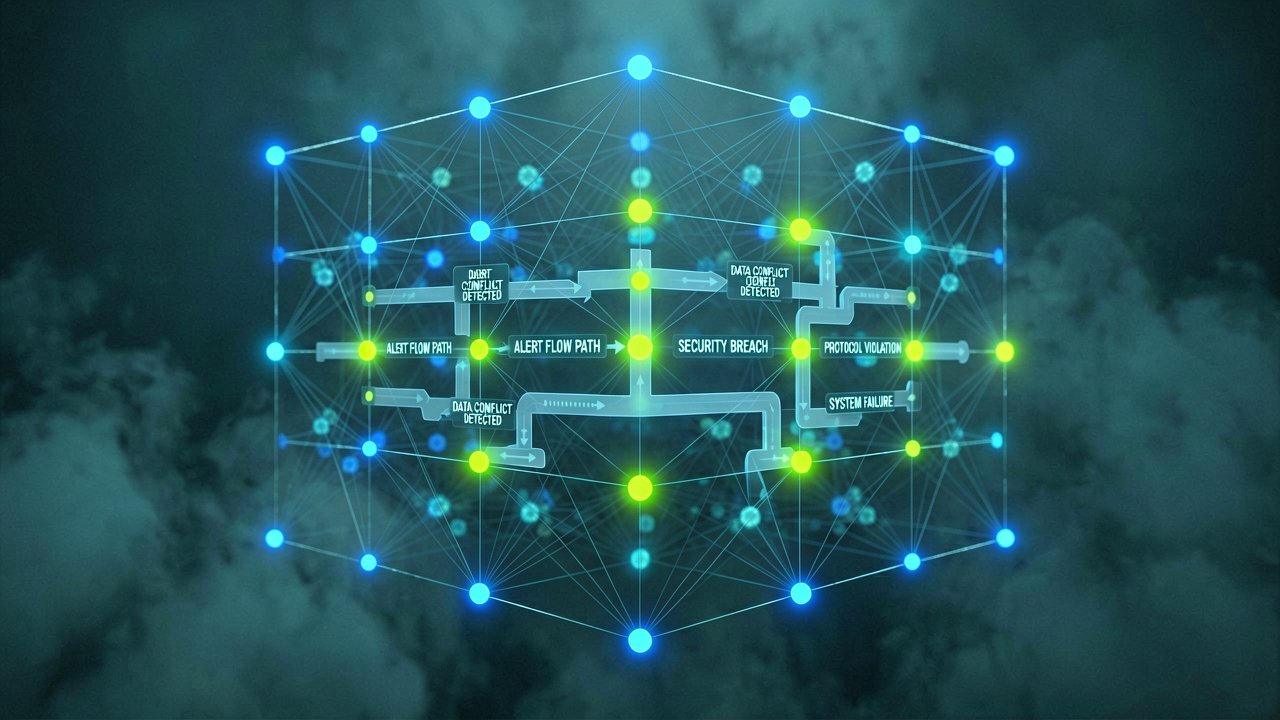
The security vendor Netskope announced AgentSkope, an AI-driven platform layer designed to automate security and network operations workflows within its SASE infrastructure. The release addresses a documented operational bottleneck: according to the company, 40% of alerts go uninvestigated in security and network operations centers due to resource constraints.
AgentSkope embeds AI agents directly into Netskope One's data layer, enabling them to analyze and act on information without exporting data to external systems. This architectural choice reduces the need to move large volumes of telemetry to SIEM or SOAR platforms, which can significantly cut ingestion costs (a problem that has plagued users for years, frankly).
Sanjay Beri, co-founder and CEO at Netskope, described the framework as an "autonomous force multiplier" in the company's official announcement. The platform provides a shared architectural foundation that allows organizations to deploy AI agents capable of executing end-to-end workflows, from investigation through remediation recommendations.
With this release, Netskope is launching six distinct agents:

- DLP AISecOps Agent: Automates data loss prevention alert triage, reducing false positives and surfacing priority cases
- Insider Threat AISecOps Agent: Correlates user behavior and DLP data to identify insider risks (currently in private preview)
- Private Access AIOps Agent: Audits access settings and generates policies based on usage patterns
- DEM Data Intelligence Agent: Converts telemetry data into actionable troubleshooting insights
- DEM Insights Agent: Highlights performance issues and trends across digital environments
- CCI Insights Agent: Enables natural language queries of cloud and SaaS risk data across more than 85,000 applications
The agents use natural language interfaces and are designed to execute multi-step workflows. However, Netskope is emphasizing human oversight alongside automation. Agents can autonomously gather data, triage risks, and even initiate workflows such as creating IT service tickets or notifying analysts, but they will not take final action.
"Once the investigation is complete, the agent will wait for a member of the security team to review its findings and direct it to take action," Rich Davis, director of product and solutions marketing at Netskope, told Network World. "This provides the balance between time savings and human control."
This design decision reflects a pragmatic acknowledgment of liability and trust concerns. Security teams cannot afford to have AI agents autonomously block legitimate traffic or escalate false positives without human review. The agents handle the repetitive triage and investigation work so human analysts can focus on higher-value decisions.
According to the official press release, one large beta customer—a global professional services organization—is using the DLP AISecOps Agent to analyze millions of alerts, convert them into dozens of cases that are automatically investigated in minutes, and free up team members to focus on the most important cases requiring human attention.
Pete Finalle, research manager for security and trust at IDC, noted that security and network operations teams shoulder an incredible burden as AI adoption exacerbates their workload. "In the face of a rapidly expanding, AI-fueled threat landscape, CIOs and CISOs must invest in agentic security automation as a force multiplier to enhance skilled human resources," Finalle said in a statement.
The timing of this launch is notable. Agentic AI is quickly moving into managed security service provider operations. Last week at Kaseya Connect Global, Kaseya introduced a platform to help MSPs automate more IT, security, and cyber resilience work. Netskope is now addressing similar operational pressures from the security and networking side.
Rich Davis explained the main difference between AgentSkope and existing automation in SOAR, DLP, or AIOps tools is the level of context the agents can bring to the work. "AgentSkope is that, plus an intense level of critical thinking that learns an organization's unique business requirements, situations and context at scale to solve problems and find answers."
AgentSkope and five of the six agents are generally available as of May 5, 2026. The Insider Threat AISecOps Agent remains in private preview. Netskope said it plans to expand its agent portfolio on a monthly basis.
For partners and MSPs, AgentSkope could become part of a managed service around DLP, insider threat, access management, troubleshooting, and risk review. Many customers do not have large internal teams. They need help cutting noise, reviewing cases, and keeping policies clean without adding more tools for their staff to manage.
The physical reality of using these agents involves clicking through fewer dashboards and spending less time manually correlating logs across disparate systems. Instead of opening five different tabs to investigate a single alert, analysts can query the agent in natural language and receive consolidated findings. The friction of tool switching decreases, but the cognitive load of verifying AI conclusions remains.
Whether organizations actually pay for this automation—or whether it becomes a table-stakes feature that competitors quickly replicate—remains the real question. The technology addresses a genuine pain point, but the market will decide if the value proposition justifies the investment.
Artūras Malašauskas is an AI Systems Integrator with 20+ years of production-grade web engineering experience. He has designed, shipped, and scaled enterprise Python/PHP systems for logistics, SaaS, and public-sector clients. For the past year, he has focused exclusively on AI integrations: deploying open-source LLMs, building generative media pipelines (image, audio, video), and engineering multi-agent workflows for real production environments. His standard: reproducibility, security, cost-efficient inference—no vaporware. He documents and evaluates emerging AI tooling, separating verified capabilities from marketing noise. Technical editor at: muza-ai.eu, ai-verslas.lt, ai-naujinos.lt Connect on LinkedIn
Comments