Sinopec Unveils "Fenghuo" Industrial AI Agent for Petrochemical Operations

China Petroleum & Chemical Corporation, known as Sinopec, has announced the launch of "Fenghuo," an industrial AI agent designed to function as a digital employee within petrochemical operations. The press release, distributed through PR Newswire, frames this as the first AI system capable of actively participating in production operations within the petrochemical sector.
The announcement carries significant weight given Sinopec's position as one of China's three largest oil companies. This isn't a chatbot that answers questions. The system is described as being able to analyze production data, invoke industrial software, and generate research and engineering outputs autonomously.
Fenghuo is built on Sinopec's proprietary "Great Wall" large model. The company claims three technical breakthroughs: deep domain knowledge accumulation integrating over one billion expert insights, precise utilization of specialized toolchains and enterprise data, and stable execution of complex tasks over extended periods lasting several hours. That last point matters—most AI systems struggle with multi-step processes that require sustained attention.
The first deployment spans four distinct roles: Fenghuo Scientist, Fenghuo Engineer, Fenghuo Programmer, and Fenghuo Assistant. The Scientist and Engineer roles handle core productivity tasks like dynamic oilfield development analysis and refining process optimization. The Assistant role focuses on data organization and report writing. This segmentation suggests Sinopec is thinking about workflow integration, not just raw capability.
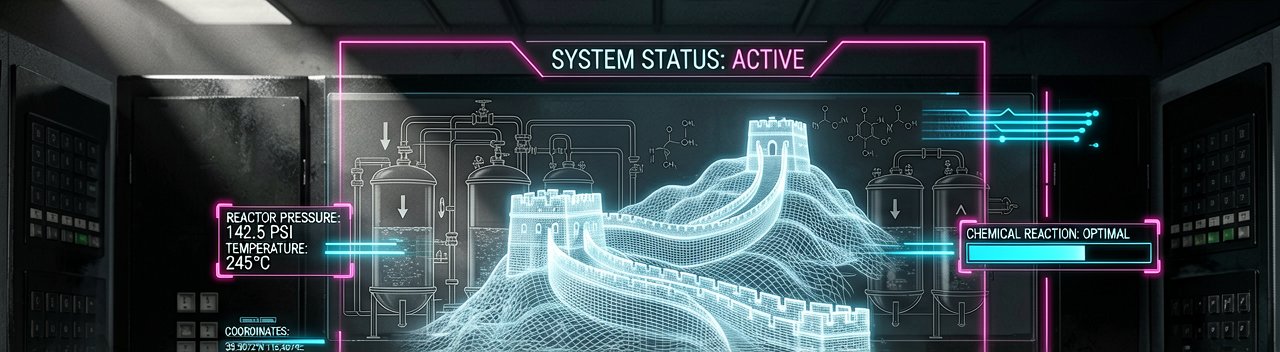
Secondary reporting from Bastille Post corroborates the core claims about Fenghuo's capabilities and deployment scope. The outlet notes the agent is designed to expand AI applications across the petrochemical value chain, including operational and engineering workflows.
What makes this technically interesting is the claim of "independent operational capability." Most industrial AI today functions as a decision-support tool—humans still make the final call. Fenghuo, according to Sinopec, can autonomously break down multi-step industrial processes and maintain reliable performance during continuous operations. That's a meaningful distinction, though the actual implementation details remain vague.
The physical reality of this deployment is worth considering. Petrochemical operations involve high-stakes environments where errors can have serious consequences. An AI agent operating industrial simulation and process modeling systems needs to handle the friction of real-world constraints—sensor latency, network interruptions, the occasional rogue data point that doesn't fit the model. (This is where most AI promises meet reality, and often fall short.)
Sinopec positions Fenghuo as part of its broader "Digital and Intelligent Sinopec" vision. The company states it will use this agent as a springboard to promote integrated AI application across the petrochemical industry chain. Whether this translates to measurable productivity gains or remains a proof-of-concept exercise remains to be seen.
The "industry first" claim warrants scrutiny. Other energy companies have deployed AI for predictive maintenance, process optimization, and safety monitoring. What distinguishes Fenghuo appears to be the autonomous execution capability rather than the underlying technology itself. The difference between analyzing data and acting on it autonomously is substantial.
For developers and industry observers, the key question isn't whether Fenghuo works in controlled conditions. It's whether it can handle the messy, unpredictable nature of actual industrial operations. The press release mentions "continuous learning and autonomous iteration," which suggests the system will evolve over time. That's promising, but also introduces new variables into an already complex equation.
The four-role structure hints at a modular approach. Rather than one monolithic AI, Sinopec appears to be deploying specialized agents for different functions. This aligns with emerging best practices in AI deployment, where narrow, well-defined tasks often outperform general-purpose systems.
Whether petrochemical operators actually trust these digital colleagues with critical decisions remains the real question. The technology may be ready, but organizational adoption is a different challenge entirely.
Artūras Malašauskas is an AI Systems Integrator with 20+ years of production-grade web engineering experience. He has designed, shipped, and scaled enterprise Python/PHP systems for logistics, SaaS, and public-sector clients. For the past year, he has focused exclusively on AI integrations: deploying open-source LLMs, building generative media pipelines (image, audio, video), and engineering multi-agent workflows for real production environments. His standard: reproducibility, security, cost-efficient inference—no vaporware. He documents and evaluates emerging AI tooling, separating verified capabilities from marketing noise. Technical editor at: muza-ai.eu, ai-verslas.lt, ai-naujinos.lt Connect on LinkedIn
Comments