Novaworks.ai Launches AI-Native Core HR OS Built on ServiceNow
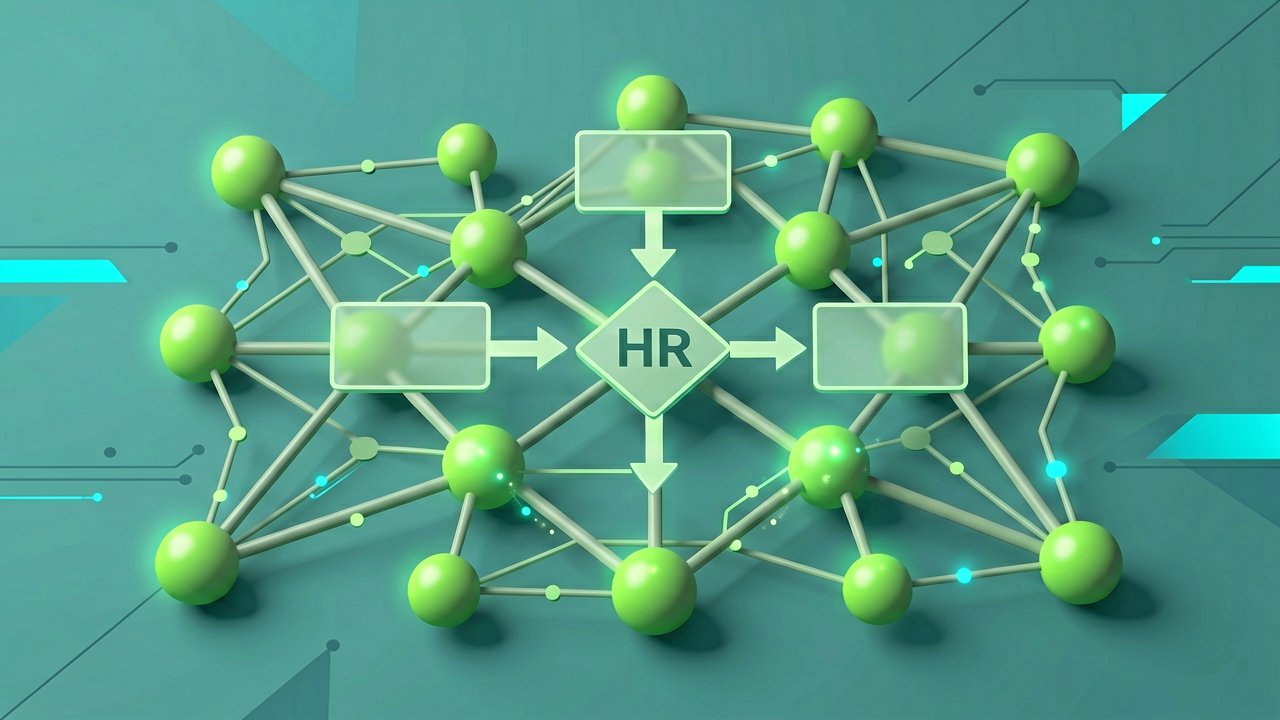
The enterprise HR software landscape received a new contender this week when Novaworks announced the launch of its AI-native Core HR operating system. The platform, built directly on ServiceNow's enterprise infrastructure, aims to unify employees, contractors, and AI agents within a single management layer. The announcement came during ServiceNow's annual Knowledge 2026 conference in Las Vegas, marking the company's first major public demonstration since its March 2026 founding.
At the core of the launch are three distinct product components: the Core HR SuperAgent, Special Agents, and Policy Advisor. These tools are designed to handle workforce processes that have traditionally required coordination across multiple teams. Onboarding, performance reviews, benefits administration, and workforce transitions are now delivered through agentic workflows with built-in guardrails. The system maintains visibility through ServiceNow's AI Control Tower, which manages agent governance and provides audit trails for compliance teams.
The architecture is deliberate in its design. ServiceNow provides the enterprise workflow infrastructure and AI platform; Novaworks provides the HR intelligence layer on top of it. This is not a replacement strategy for existing ServiceNow investments. The platform is additive, which matters for IT leaders who have already sunk significant resources into their current ServiceNow implementations. (Nobody wants to rip out a working system just because a new vendor promises magic.)
According to the official press release, Novaworks chose ServiceNow's platform for its scalability, reliability, security, and AI extensibility. The company's founding team previously built and sold Hitch Works to ServiceNow, giving them insider knowledge of the platform's capabilities and limitations. This background likely informed their decision to build on ServiceNow rather than create a standalone infrastructure.
Kelley Steven-Waiss, CEO and Co-Founder of Novaworks, framed the product as enabling a new operating model. When you can derive context from every aspect of your workforce, you can scale hyper-personalization across the enterprise. HR stops managing transactions and starts orchestrating outcomes. The language is aspirational, but the technical implementation appears grounded in existing ServiceNow capabilities rather than speculative AI promises.
The Nova HR Concierge converts HR centers of excellence into agentic workflows. Functions that have historically required coordination across teams are now delivered by agents with built-in guardrails. Organizations maintain governance without sacrificing speed. The Nova Special Agents deliver a hyper-personalized experience at the individual level. Where legacy systems offered the same experience to all workers, Novaworks delivers a tailored experience for each worker, whether they are a full-time employee, a contractor, or a deskless worker who has never had meaningful access to enterprise HR services.
The Nova Policy Advisor transforms compliance from a reactive function into a proactive one. As policies change, the system updates workforce records in real time across employees, contractors, and AI agents without manual intervention. HR organizations receive continuous compliance as a service, not a periodic audit. This matters for regulated industries where policy changes cascade through thousands of records and non-compliance carries financial penalties.
Early customer adoption includes Ateko, a ServiceNow Elite Partner and Bell Canada company serving enterprise organizations across financial services, telecommunications, and government. Ateko serves as a priority co-designer, co-developer, and tester across Novaworks product development initiatives. Lukas Lhotsky, President of Ateko, noted that managing a workforce that now includes employees, contractors, and AI agents is a real operational challenge at enterprise scale. Most of the systems organizations rely on were not built for it.

The implementation process surfaced workforce complexity in Ateko's own operations that they had not previously quantified. For a ServiceNow partner working inside some of the most regulated industries, this kind of visibility is valuable. The platform is currently in a Design Partner Program, a co-development model for organizations ready to implement and help shape the platform as it moves toward general availability.
Novaworks raised $8 million in seed funding in March 2026, led by Stalwart Ventures with strategic participation from ServiceNow Ventures and Bell Ventures. Former President of SAP SuccessFactors Meg Bear joined the Board of Directors shortly after the company's founding. The backing from ServiceNow Ventures signals ecosystem alignment, which matters for enterprise software buyers who want assurance that the platform will integrate cleanly with their existing infrastructure.
The platform is built to serve both HR leaders and IT leaders. HR needs compliance, employee experience, and operational efficiency. IT needs security, governance, and technology consolidation. AI is routed through Now Assist. Agent governance and visibility are managed through ServiceNow's AI Control Tower. For the CEO and CFO, the result is a credible AI transformation story, one that can be defended at the board level because the governance infrastructure is already in place.
Visitors to Knowledge 2026 could see the platform in action at the AI Innovation Zone, Kiosk #109. The Novaworks and Ateko teams were also present at Bell–Ateko booth #3607. Steven-Waiss delivered a speaking session on the future of work titled "Nova on Now" on Thursday, May 7, at 2:15 PM. These conference appearances serve as both marketing and validation, putting the product in front of the ServiceNow partner community that will ultimately drive adoption.
The physical reality of using this system differs from legacy HR platforms. Instead of navigating through multiple screens to complete a workflow, users interact with agents that take action rather than recommend next steps. The interface is consistent, contextual, and driven by what the worker actually needs. This reduces the friction that comes from clicking through menus, finding the right form, and waiting for approval chains to complete.
Whether enterprise organizations actually pay for this remains the real question. The HR software market is crowded with established players who have decades of customer relationships and deep feature sets. Novaworks is betting that the AI-native architecture and ServiceNow integration will be enough to displace incumbents. The Design Partner Program suggests they're still refining the product before general availability.
For now, the platform represents a specific vision of how HR should operate in an AI-augmented enterprise. Whether that vision becomes mainstream depends on execution, pricing, and whether customers find the agentic workflows actually reduce friction rather than add complexity. The technology exists. The market reaction will determine if it matters.
Artūras Malašauskas is an AI Systems Integrator with 20+ years of production-grade web engineering experience. He has designed, shipped, and scaled enterprise Python/PHP systems for logistics, SaaS, and public-sector clients. For the past year, he has focused exclusively on AI integrations: deploying open-source LLMs, building generative media pipelines (image, audio, video), and engineering multi-agent workflows for real production environments. His standard: reproducibility, security, cost-efficient inference—no vaporware. He documents and evaluates emerging AI tooling, separating verified capabilities from marketing noise. Technical editor at: muza-ai.eu, ai-verslas.lt, ai-naujinos.lt Connect on LinkedIn
Comments