Image AI Models Drive 6.5x More App Downloads Than Chatbot Upgrades
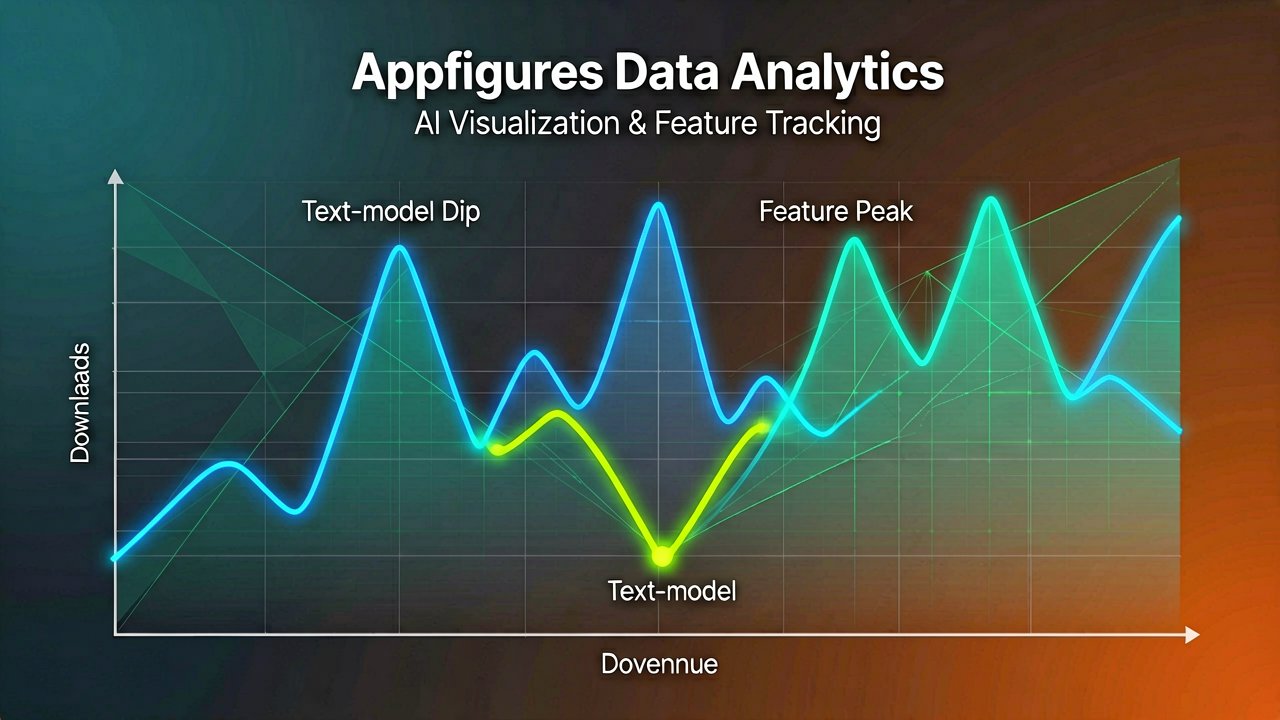
Image-focused artificial intelligence releases are outperforming traditional chatbot upgrades in mobile app growth, according to new data from app intelligence firm Appfigures. The analysis shows visual AI launches produced 6.5 times more downloads than routine text-model updates during 2025, marking a clear shift in what drives consumer acquisition.
The pattern emerged across multiple major platforms. Google's Gemini app added more than 22 million downloads in the 28 days following its Nano Banana image model release last August. That launch lifted the app's downloads by more than four times over the baseline period. OpenAI's ChatGPT saw a similar effect when it introduced GPT-4o image generation in March 2025, gaining more than 12 million installs in the first month.
What makes this data notable is the comparison within the same app. ChatGPT's image-generation feature drove roughly 4.5 times more downloads than its GPT-4.5 and GPT-5 text-model updates. The side-by-side result keeps the comparison inside one product while also spanning rival platforms. Meta's Vibes AI video feed showed a smaller but similar install effect, adding 2.6 million downloads in the 28 days after its September 2025 release.
The mechanism is straightforward. Image tools give users an immediately visible feature to test. You tap a button, wait a few seconds, and see something rendered on screen. Text-model upgrades often improve capability without giving casual users the same instant visual payoff (which is frustrating when you're trying to show someone what the app actually does).
Monetization tells a different story entirely. Appfigures estimated Nano Banana generated only $181,000 in 28-day consumer spending despite the massive download spike. Meta's Vibes launch produced additional downloads without meaningful revenue. Among the three major releases, only ChatGPT turned the increased attention into actual dollars, with an estimated $70 million in gross consumer spending over the 28 days after its image model launch.
OpenAI's ChatGPT generated $8 billion in revenue for the company in 2025. That background helps explain why a visual feature could produce a much bigger spending result inside ChatGPT than inside rivals that also posted sharp download spikes. The app has a built-in payment habit and broader installed base that newer products lack.
DeepSeek R1 worked as a useful control case, adding 28 million downloads after its January 2025 debut and marking the largest non-visual burst in the dataset. This was DeepSeek's breakout moment when it went from relatively unknown to an overnight sensation. The interest wasn't tied to an image model, but rather to the techniques it used to train AI models at a fraction of the cost of competitors.
The comparison separates acquisition from monetization. Image releases look stronger for pulling users in, but the data does not make every visual feature a business win. Product teams now have to judge install spikes and payment outcomes separately before funding another visual feature. A launch that boosts rankings for a month can still leave subscription demand unresolved once the novelty fades.
Appfigures' next 28-day consumer spending estimate for Google's next visual release will measure the gap between an install spike and a paid-use engine. Whether users actually pay for it remains the real question.
Independent reporting from TechCrunch corroborates the Appfigures data and timeline. The original analysis was first published by WinBuzzer, which detailed the full comparison across platforms and revenue outcomes.
The surfaced material did not include an independently published Appfigures methodology post to test the estimates line by line. Product teams should treat the figures as directional rather than precise. The core finding holds regardless: visible AI features can attract users quickly, but scale and payment habits still shape whether that attention turns into money.
Artūras Malašauskas is an AI Systems Integrator with 20+ years of production-grade web engineering experience. He has designed, shipped, and scaled enterprise Python/PHP systems for logistics, SaaS, and public-sector clients. For the past year, he has focused exclusively on AI integrations: deploying open-source LLMs, building generative media pipelines (image, audio, video), and engineering multi-agent workflows for real production environments. His standard: reproducibility, security, cost-efficient inference—no vaporware. He documents and evaluates emerging AI tooling, separating verified capabilities from marketing noise. Technical editor at: muza-ai.eu, ai-verslas.lt, ai-naujinos.lt Connect on LinkedIn
Comments