IBM Stock Rises After Think 2026 AI Platform Announcements

Shares of IBM registered gains during pre-market hours following the company's announcement of expanded enterprise AI capabilities and hybrid cloud solutions at its annual Think conference. The stock reached $231.10, representing a 0.68% increase from the prior close of $229.48. Market participants responded to IBM's strategic emphasis on software automation and enterprise cloud infrastructure.
The announcements occurred at IBM's Think conference, an annual gathering that serves as the company's primary showcase for software innovations and cloud computing strategies. The timing aligned market attention with concrete product developments rather than vague promises (a problem that has plagued users for years, frankly).
According to the official PRNewswire release from May 5, 2026, IBM unveiled multiple solutions designed to assist organizations in deploying and managing AI systems throughout complex business ecosystems. The product rollout emphasized agent coordination, live data processing, intelligent infrastructure oversight, and compliant cloud frameworks.
Arvind Krishna, Chairman and CEO of IBM, framed the strategy around evolving corporate AI requirements. "The enterprises pulling ahead are not deploying more AI – they're redesigning how their business operates," Krishna stated. "Running AI in the enterprise requires a new operating model, and IBM is enabling organizations to manage AI-driven systems with the same rigor, governance, and scale as their most critical infrastructure."

The technology giant framed these offerings around the gap between experimentation and production. While numerous organizations have experimented with artificial intelligence applications, measurable returns at enterprise scale remain elusive for many. IBM addresses this gap by prioritizing governance frameworks, process automation, and dependable infrastructure foundations.
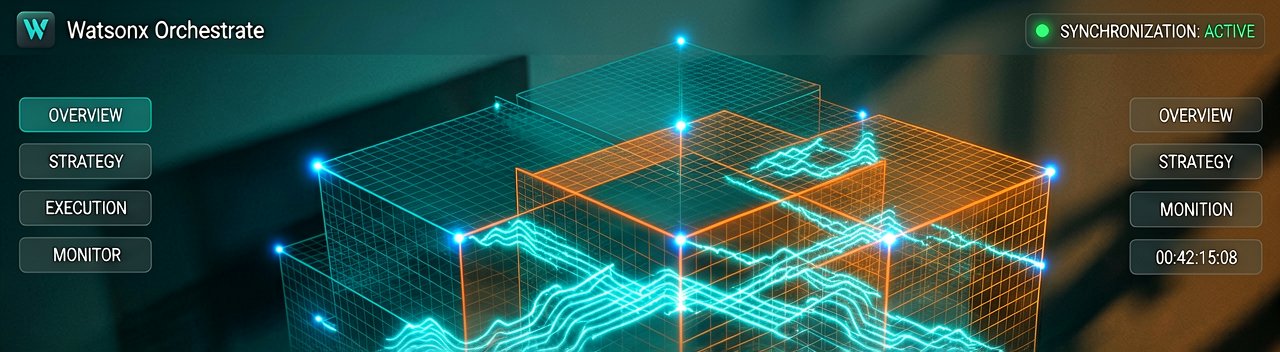
IBM revealed the upcoming iteration of watsonx Orchestrate through a private preview program. This solution enables organizations to coordinate numerous AI agents originating from diverse platforms. It incorporates policy enforcement mechanisms, comprehensive audit logging, and responsibility frameworks spanning agent-driven processes. The company further promoted IBM Bob, which has reached general availability for enterprise development teams. This resource assists programmers in constructing agents with integrated security protocols and budget management features.
Independent reporting from Blockonomi corroborates the timeline and scope of the changes. The outlet noted that IBM characterized agent coordination as an escalating operational priority. Organizations can no longer effectively manage sophisticated systems through disconnected utilities and manual oversight methods.
The company outlined additional data management features through partnerships with Confluent and improvements to watsonx.data. Plans include merging live data streaming with batch processing operations throughout hybrid computing environments. This integration leverages Kafka and Flink frameworks to establish AI-compatible data infrastructure.
According to IBM, watsonx.data equipped with GPU-accelerated Presto demonstrated notable performance in collaborative tests with NVIDIA. A proof-of-concept implementation with Nestlé yielded reduced expenses and improved processing speeds. The validation encompassed a worldwide data repository covering 186 nations, with the engine delivering 83% cost savings and a 30x price-performance improvement.
The organization also launched the IBM Concert platform as a public preview offering. This system enables infrastructure teams to correlate information across software applications, computing resources, and network components. IBM Concert Secure Coder integrates security validation directly within development environments. Users will experience this through dashboard interfaces that surface anomalies in real-time, rather than waiting for overnight reports.
IBM declared the full commercial availability of IBM Sovereign Core. This framework embeds compliance policies at the infrastructure execution layer for regulated and confidential computing tasks. Therefore, it delivers governance capabilities, workload mobility, and operational authority across hybrid deployments.
IBM constructed Sovereign Core utilizing Red Hat OpenShift and Red Hat AI foundations. The offering includes a collaborative partner network featuring AMD, Dell, Intel, Mistral, MongoDB, and additional technology providers. Furthermore, the company stated that enterprises can establish curated service catalogs for authorized internal consumption.
IBM's current product wave underscores its concentration on enterprise AI infrastructure versus consumer-oriented applications. The organization now unifies AI agents, streaming data, automation capabilities, and sovereignty requirements within a cohesive operational framework. The modest pre-market stock appreciation reflected measured investor acknowledgment of this strategic direction.
However, the stock's broader trajectory remains concerning. IBM shares remain down 22.57% year-to-date despite the positive flow from the Think 2026 announcements. The 1.6% pop from the IBM Bob launch appears to be a flow event, not a fundamental shift. For the positive momentum to be sustainable, the market must see evidence that this internal efficiency translates into commercial traction and measurable financial impact.
The internal rollout of IBM Bob is a massive, low-cost experiment in efficiency. With over 80,000 IBM employees already using the platform, the company has a real-world testbed to refine its capabilities before a commercial launch. Surveyed users cite an average 45% productivity gain, while specific teams like IBM Instana saw a 70% reduction in time spent on selected tasks.
The biggest risk to sustained flow is competitive erosion in IBM's core consulting business. The stock's sharp drop following Q1 earnings was driven by a 1% growth rate in Consulting, a business where 80% of its generative AI book is concentrated. If AI-native development tools gain significant share, they could undercut IBM's consulting revenue, which is its highest-margin segment.
Whether users actually pay for these platforms remains the real question. The company's ability to monetize IBM Bob and its sovereign/data partnerships will be judged against this backdrop of vulnerability. Time will tell if the Think 2026 announcements translate into sustained financial improvement or merely temporary market noise.
Artūras Malašauskas is an AI Systems Integrator with 20+ years of production-grade web engineering experience. He has designed, shipped, and scaled enterprise Python/PHP systems for logistics, SaaS, and public-sector clients. For the past year, he has focused exclusively on AI integrations: deploying open-source LLMs, building generative media pipelines (image, audio, video), and engineering multi-agent workflows for real production environments. His standard: reproducibility, security, cost-efficient inference—no vaporware. He documents and evaluates emerging AI tooling, separating verified capabilities from marketing noise. Technical editor at: muza-ai.eu, ai-verslas.lt, ai-naujinos.lt Connect on LinkedIn
Comments