Cisco Launches Limited-Time Galaxy Mode for AI Assistant
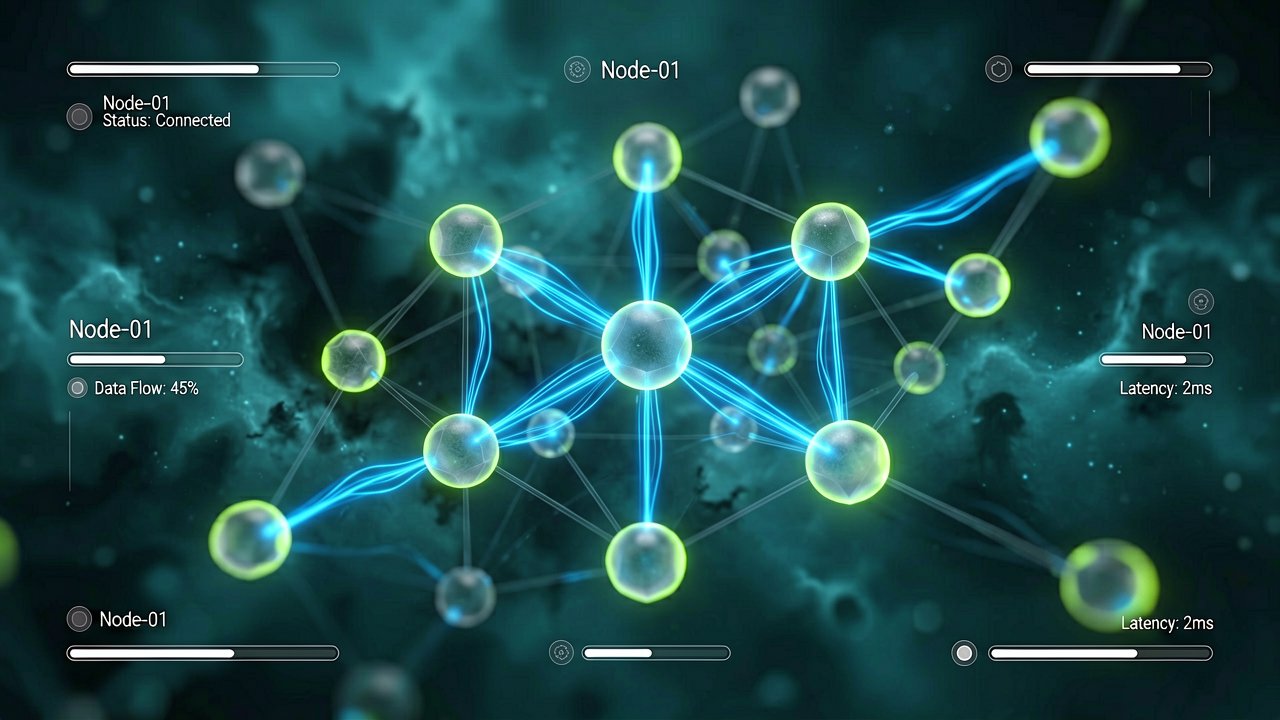
The network infrastructure giant Cisco has activated Galaxy Mode within its AI Assistant platform, a limited-time experience running from May 4 through June 4, 2026. The feature launches across Meraki and ThousandEyes management interfaces with a Star Wars-inspired aesthetic and a new persona named C-C1E. Underneath the themed UI, however, the release showcases what Cisco calls "AgenticOps" capabilities—agentic workflows that can analyze network issues, create automation playbooks, and execute remediation steps through conversational commands.
According to the official announcement from Cisco's corporate blog, the mode layers a starfield visual effect behind the assistant prompt while maintaining full access to existing functionality. The company frames this as both a celebratory nod to network operations teams and a hands-on demonstration of capabilities that have been quietly shipping for months. The persona speaks in a manner familiar to anyone who has ever watched a certain space opera franchise—though the actual work remains serious.
Network World's coverage includes quotes from Aruna Ravichandran, senior vice president of marketing for Cisco AI networking and collaboration, who describes the release as keeping "the force with network operators protecting the realm." The outlet confirms the one-month window and notes that while Galaxy Mode itself expires June 4, the underlying agentic features will persist in the platform.
What actually changes for users? The most tangible shift is in how network operators interact with troubleshooting workflows. Instead of tabbing between fourteen browser windows to correlate packet captures with BGP routes and firewall rules—a common scenario that has exhausted NOC teams for decades—operators can now describe problems conversationally. The assistant walks through the alert-to-resolution path in a single window, pointing, narrating, and executing when given approval. The physical experience shifts from clicking through nested menus to typing natural language commands.
Three core capabilities define the technical substance beneath the themed wrapper. First, Deep Reasoning mode analyzes signals across network domains the way a veteran engineer does, tracking how a misconfigured policy in one corner sends ripples three hops away. The chain of reasoning is visible, so teams can see why conclusions were reached. This feature remains in beta, which matters for production environments where hallucinations can cascade into outages.
Second, Agentic Workflows functions as a cross-domain, low-code automation tool built directly into the Meraki Dashboard. Users describe what they want—say, "generate workflow to expand the DHCP pool for my network"—and the system drafts a plan, hands it back for approval, then builds the executable workflow. The output is auditable, deterministic, and reusable. Intent becomes execution automatically (a problem that has plagued teams for years, frankly).
Third, image-aware troubleshooting allows operators to upload screenshots of dashboards, whiteboard photos, or architecture diagrams. The assistant reads what it sees and helps act on it. For field engineers building labs or junior admins debugging networks, this translates visual chaos into actionable insights. The friction of describing a problem verbally or transcribing error codes disappears.
Other capabilities—AI RRM, intelligent packet analysis, AI config recommendations—have been quietly powerful inside the platform but buried one menu too deep to find on a busy Wednesday. Galaxy Mode pulls them up to eye level, activated simply by asking. Hidden firepower, finally in the open.
The timing is deliberate. May 4th is unofficial Star Wars Day, and Cisco leveraged the cultural moment to surface features that might otherwise get lost in a standard product update. Companies demonstrating themed or time-limited releases often use them to gather user feedback without committing to full productization. The pattern shows early adoption among NOC and SRE teams where reducing mean-time-to-resolution is the primary ROI driver.
Industry observers should watch three vectors. First, whether the selected agentic features move from demo to persistent, supported capabilities in Meraki and ThousandEyes. Second, integration depth: availability of connectors for device configuration APIs, change management hooks, and logging auditability for automated actions. Third, safety and governance: model provenance, guardrails for automation, and incident rollback mechanics are critical for operator acceptance.
The blog post does not include independent benchmarks or external validation of accuracy or safety. Cisco acknowledged in a 2025 blog that generative AI can make mistakes, noting that expert-level IT professionals are well-equipped to evaluate output for accuracy and detect hallucinations. That caveat remains relevant for Deep Reasoning's beta status.
Whether network operators actually adopt these workflows at scale depends on whether the automation feels reliable enough to trust during an outage. The themed UI will expire in a month. The real test is whether the agentic capabilities survive the novelty and become standard tools in the operator's arsenal. Time will tell if this works—or if it's just another feature that gets buried one menu too deep.
Artūras Malašauskas is an AI Systems Integrator with 20+ years of production-grade web engineering experience. He has designed, shipped, and scaled enterprise Python/PHP systems for logistics, SaaS, and public-sector clients. For the past year, he has focused exclusively on AI integrations: deploying open-source LLMs, building generative media pipelines (image, audio, video), and engineering multi-agent workflows for real production environments. His standard: reproducibility, security, cost-efficient inference—no vaporware. He documents and evaluates emerging AI tooling, separating verified capabilities from marketing noise. Technical editor at: muza-ai.eu, ai-verslas.lt, ai-naujinos.lt Connect on LinkedIn
Comments