Kamiwaza AI Launches Kamiwaza 1.0 for Regulated Industries

The enterprise AI landscape has a persistent problem: organizations want to deploy intelligent systems, but their data lives in silos that security policies forbid moving. Kamiwaza AI announced the general availability of Kamiwaza 1.0 on May 1, 2026, positioning the platform as a solution for highly regulated industries that need AI without compromising data sovereignty. The release introduces three core features: governed collaboration environments, hardened container infrastructure, and an upgraded AI agent capable of multi-modal analysis.
According to the official press release, the platform connects enterprise data securely across distributed environments without moving or centralizing it. This architectural choice addresses a fundamental friction point in enterprise AI deployment. Most platforms require data replication or reformatting, which creates compliance exposure. Kamiwaza's approach keeps data where it lives while enabling AI to query and act on it.
Luke Norris, CEO and co-founder of Kamiwaza, stated that regulated industries have been explicit about their requirements: keep data where it is, respect security boundaries, and provide full visibility into AI operations. The distributed data foundation that enterprise and government customers already rely on now receives hardened infrastructure, governed team collaboration, and a more capable agent that works across all of it. This isn't a theoretical improvement. It's a response to documented customer constraints.
Kamiwaza Workrooms represents the collaboration layer. Enterprise and government teams regularly work in cross-functional groups where sensitive data must be shared within a project but not universally. The usual options are either restricting access so broadly that collaboration suffers, or opening it up in ways that create security and compliance risk. Neither is acceptable in regulated environments. Workrooms solve this by creating secure, policy-bounded spaces where team members and their AI agents operate within their individual access rights. Each Workroom contains its own data and tools, accessible only to those with appropriate permissions.
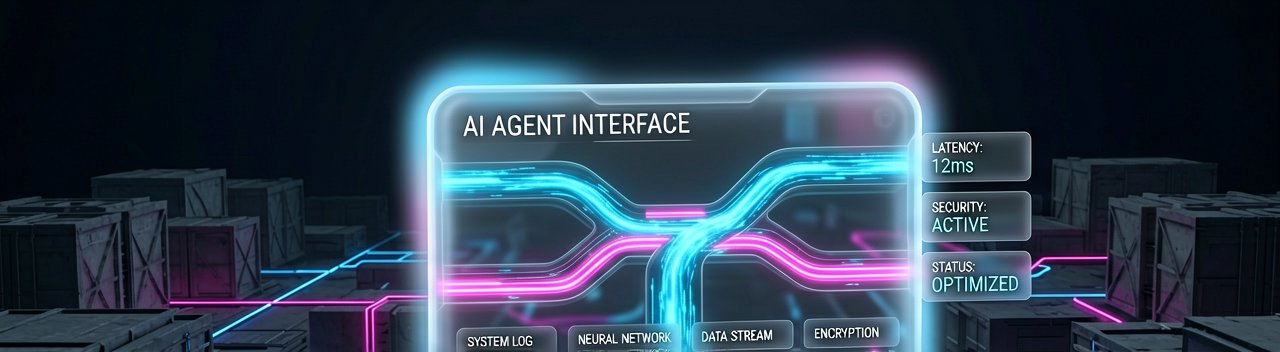
The platform enforces these boundaries at the architecture level, not through manual policy exceptions or agent-level filters. Every action is fully auditable. This matters because security teams cannot manually track every AI interaction across distributed systems. The enforcement happens automatically, which reduces the cognitive load on administrators (a problem that has plagued users for years, frankly).
Infrastructure security receives attention through Chainguard Containers. Most enterprise AI platforms are built on standard open-source container images that accumulate vulnerabilities over time. Security teams are left to identify, triage, and patch those vulnerabilities in infrastructure they didn't build and don't control. This becomes an unsustainable model as AI workloads move into production. Kamiwaza 1.0 addresses this by leveraging Chainguard Containers, hardened container images purpose-built for security and compliance.
Unlike standard open source images, Chainguard's container images are minimal by design and rebuilt continuously, delivering zero known vulnerabilities, high-quality SBOMs, and verifiable signatures. FIPS-ready versions are also available for federal deployments. The physical reality here is that security teams no longer need to manually scan and patch container layers before deployment. The images arrive hardened. This reduces the time between development and production deployment, which is critical when AI workloads need to respond to emerging threats.
Kaizen, the platform's flagship AI agent, connects to internal data sources across an organization's systems through the Kamiwaza Context Manager. The agent's outputs are informed by the full data landscape rather than a single silo. A new skills library lets enterprise teams define which capabilities are available to the agent and under what conditions. This addresses a common failure mode in enterprise AI: agents making decisions based on incomplete or fragmented data.
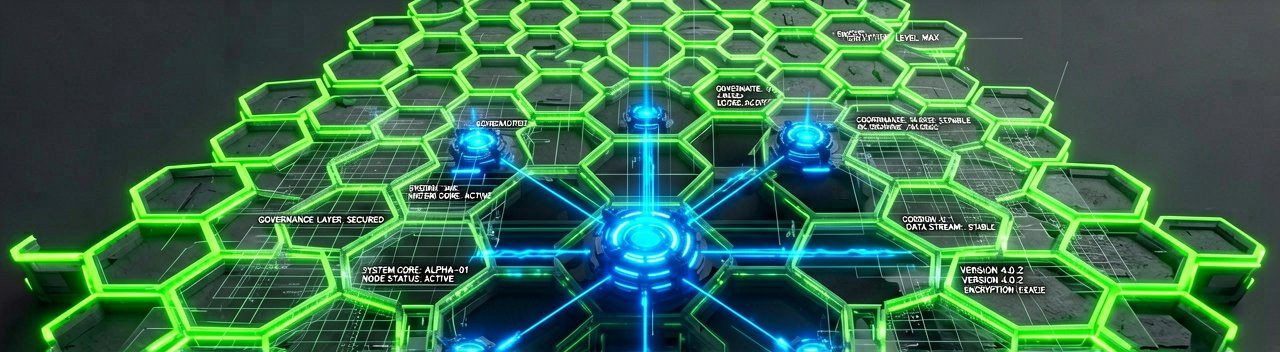
Matt Wallace, CTO and co-founder of Kamiwaza, noted that Workroom, Chainguard, and Kaizen each solve a distinct problem, but they add up to something bigger. Teams can collaborate with AI across sensitive data without anyone—human or agent—seeing more than they should. The infrastructure they're running on has zero known vulnerabilities from day one. And the agent connecting it all understands the full context of their data as opposed to its fragments. That combination doesn't exist anywhere else.
Independent coverage from AiThority corroborates the feature set and executive quotes. The platform is generally available as of the announcement date. Enterprises, government agencies, system integrators, and technology partners interested in deploying or building on the platform are encouraged to request a demonstration or briefing at the company website.
The market context matters here. Enterprise AI has largely been stuck at the pilot stage. Most organizations have run proofs of concept that never scale because security and compliance requirements block production deployment. Kamiwaza's distributed inference platform makes AI deployment safe, governable, and scalable across any environment—cloud, on-prem, or edge. Its orchestration engine enables intelligent agents to run where data lives, with built-in contextual authorization that ensures security and compliance from day one.
By unifying model deployment, agent tooling, and enterprise governance, Kamiwaza helps organizations accelerate AI transformation while maintaining full data sovereignty and control. The company's website documents several use cases, including accessibility remediation intelligence with HPE and NVIDIA, real-time quote generation, and emergency response intelligence from weather data. These examples show the platform operating across different data types and environments.
The pricing model remains unclear from available materials. Enterprise platforms of this complexity typically require custom quotes based on deployment scale, data volume, and compliance requirements. Organizations evaluating the platform should expect a sales-led engagement rather than self-service provisioning. This is standard for regulated industry solutions, but it adds friction to the evaluation process.
Whether enterprises actually adopt this architecture at scale depends on whether the security benefits outweigh the operational complexity. The platform solves real problems, but it also introduces new infrastructure to manage. Organizations need to weigh the value of distributed AI against the cost of maintaining another orchestration layer. Time will tell if this works, but the technical foundation appears sound. Whether users actually pay for it remains the real question.
Artūras Malašauskas is an AI Systems Integrator with 20+ years of production-grade web engineering experience. He has designed, shipped, and scaled enterprise Python/PHP systems for logistics, SaaS, and public-sector clients. For the past year, he has focused exclusively on AI integrations: deploying open-source LLMs, building generative media pipelines (image, audio, video), and engineering multi-agent workflows for real production environments. His standard: reproducibility, security, cost-efficient inference—no vaporware. He documents and evaluates emerging AI tooling, separating verified capabilities from marketing noise. Technical editor at: muza-ai.eu, ai-verslas.lt, ai-naujinos.lt Connect on LinkedIn
Comments