SS&C Blue Prism Launches WorkHQ for Governed AI Agents

SS&C Blue Prism has launched WorkHQ, an agentic automation platform aimed at enterprises that need tighter governance over AI deployment. The announcement came on April 29, 2026, during a live event at Nasdaq in New York City. The platform is designed to coordinate people, AI agents, digital workers, APIs, and enterprise systems through a single control plane.
Most organizations deploying AI today are navigating hundreds of systems, legacy infrastructure, and compliance requirements that don't bend to accommodate new technology. SS&C built WorkHQ for that reality from the ground up. The company acted as what it described as "Customer Zero," using the product within its own financial services operation to refine it under day-to-day operational conditions before selling to outside customers.
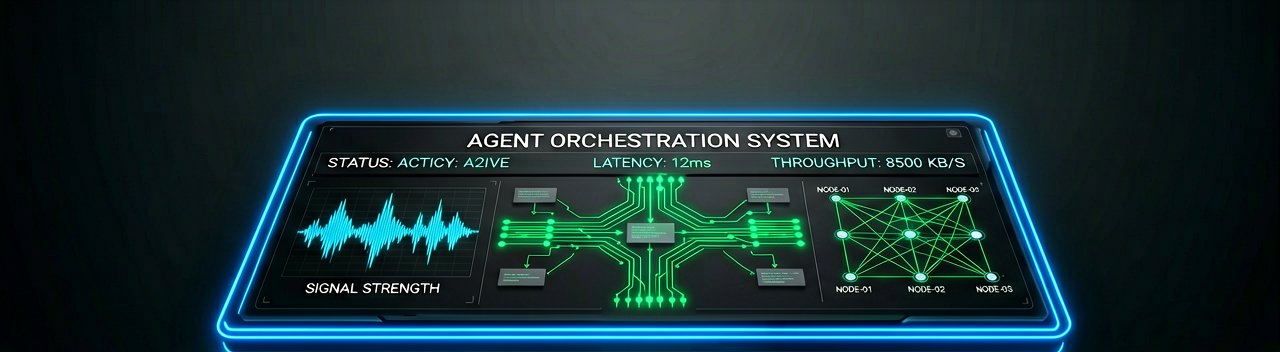
According to the official press release from SS&C Blue Prism, the platform introduces a unified control plane orchestrating people, AI agents, APIs, and digital workers into a single governed environment. This approach addresses the fragmentation problem many enterprises face when AI agents, digital workers, and humans all do work but not always together.
The platform includes several core features. Policy enforcement, audit trails, explainability, and role-based controls are built in as core features rather than add-ons. WorkHQ integrates with SS&C AI Gateway, which manages access to generative AI models and large language models within compliance rules set by users. The platform can be deployed in hybrid and cloud environments and is intended to work alongside existing automation systems rather than replace them.
Human oversight remains central to the design. WorkHQ supports human-in-the-loop workflows, allowing staff to intervene in tasks or decisions when firms want additional review before an automated process proceeds. This matters in regulated industries where showing how decisions were made, who approved them, and whether internal policies were followed creates a challenge for newer AI systems introduced at speed.
SS&C supports more than 23,000 customers globally with the help of 4,000+ digital workers and more than 50 AI agents. These efforts have enabled SS&C to significantly improve operational efficiency in key processes, reducing processing times by up to 95% in key workflows. That internal deployment is a notable part of its pitch to clients in regulated sectors, where proof of operational use can carry more weight than demonstrations or pilot projects.
The blog post from Blue Prism's official resources notes that WorkHQ has been generally available since March 2026. The April 28 global broadcast from Nasdaq brought together strategy, live demonstrations, and real-world perspectives to show how organizations can put agentic operations into practice.
Technical capabilities include a lightweight orchestration engine purpose-built for designing and running business workflows that combine system integrations, digital worker tasks, AI agents, and human input. The Automation Orchestrator unlocks WorkHQ for existing SS&C Blue Prism Enterprise users, providing the intelligent command layer that enables enterprises to run a hybrid workforce with full analytics visibility at scale.

Digital worker resilience features include fully automated incident detection with self-healing machine restarts. Digital workers can now recover from failures without any human intervention (which drastically reduces latency, a problem that has plagued users for years, frankly). Digital worker swarming enables a single automation flow task to trigger multiple concurrent process executions across digital workers, allowing parallel execution of process chains for high-volume workloads.
Marketplace provides instance access to pre-built assets at scale. Rather than building everything from first principles, developers can use Marketplace as a centralised hub to discover, deploy, and integrate automation assets into their existing environments. BP Assistant generates validated forms instantly from natural language prompts, with output that's copy/paste ready for the Forms JSON editor.
Research cited from Salesforce found that 69% of UK organisations report broad adoption of AI agents across teams and functions, raising questions about how those systems are supervised once they move beyond testing. IDC research indicates that over the coming year, organizations expect to roughly double the number of types of AI agents they deploy into production.
The platform is intended for use across financial services, healthcare, insurance, manufacturing, telecommunications, and the public sector. Those industries often rely on a mix of older core systems and newer cloud software, making orchestration between tools a significant practical issue. By combining AI agents, robotic process automation, and human task management in one environment, SS&C Blue Prism is trying to address that operational complexity.
WorkHQ enters a crowded market as software providers add AI agent features to existing automation, customer relationship management, and workflow products. Much of the competition centres on promises of greater autonomy for software agents, but governance and control are becoming more prominent as companies move from experimentation to live deployment. SS&C Blue Prism has framed the product around those concerns rather than AI novelty alone.
The emphasis on observability, central management, and secure deployment options reflects a wider shift among enterprise software buyers, who are increasingly asking how AI tools will be monitored after adoption rather than only how quickly they can be introduced. Whether customers adopt the system at scale is likely to depend on how well it integrates with existing estates and how convincingly it meets demands for traceability and control in real production settings.
Independent reporting from IT Brief Australia corroborates the launch timeline and scope of the changes. The coverage notes that governance and control are becoming more prominent as companies move from experimentation to live deployment, with the emphasis on observability and secure deployment options reflecting a wider shift among enterprise software buyers.
Whether users actually pay for it remains the real question. The platform promises to solve coordination problems that many enterprises face, but the market is already crowded with competing solutions. SS&C Blue Prism's advantage lies in its internal testing and proven use in a compliance-heavy environment, but that doesn't guarantee widespread adoption across different industries and use cases.
Artūras Malašauskas is an AI Systems Integrator with 20+ years of production-grade web engineering experience. He has designed, shipped, and scaled enterprise Python/PHP systems for logistics, SaaS, and public-sector clients. For the past year, he has focused exclusively on AI integrations: deploying open-source LLMs, building generative media pipelines (image, audio, video), and engineering multi-agent workflows for real production environments. His standard: reproducibility, security, cost-efficient inference—no vaporware. He documents and evaluates emerging AI tooling, separating verified capabilities from marketing noise. Technical editor at: muza-ai.eu, ai-verslas.lt, ai-naujinos.lt Connect on LinkedIn
Comments