GROWMARK Deploys AI Agent in myFS Agronomy Platform
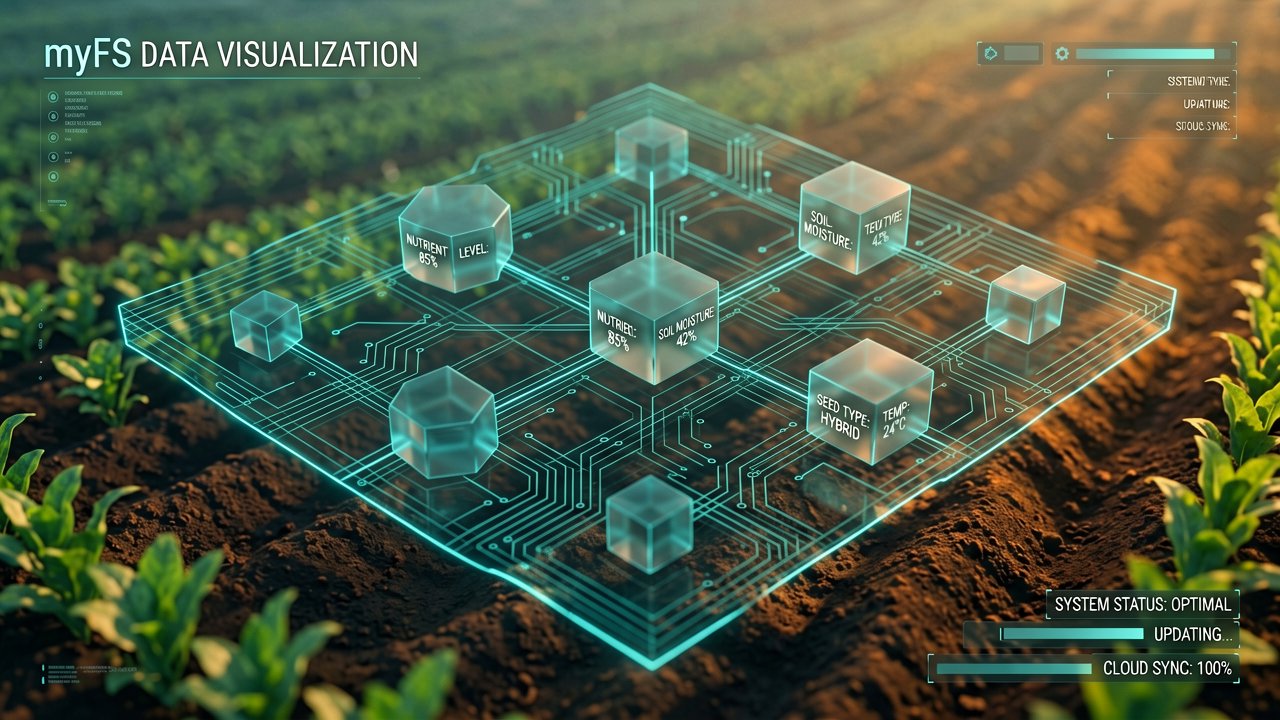
GROWMARK has deployed an artificial intelligence agent inside its myFS Agronomy app for the 2026 crop season. The agricultural cooperative, based in Bloomington, Illinois, announced the tool through an official press release distributed via Business Wire. The move represents a significant integration of machine learning into farm advisory workflows, targeting crop specialists who work directly with growers across the FS System.
Independent coverage from High Plains Journal confirms the timeline and technical scope of the launch. The AI agent combines real-time data analysis with historical agronomic expertise from GROWMARK's crop specialists. This is not a standalone chatbot or generic recommendation engine. It's built specifically on existing data already present in the myFS Agronomy platform.
The system ingests crop plans, soil data, field boundaries, product applications, imagery, and historical outcomes. When a crop specialist opens the app on a tablet in the field, the AI can cross-reference these datasets without requiring manual uploads or external integrations. That's a critical distinction from many ag-tech tools that demand farmers feed new data into separate systems (a friction point that has frustrated users for years).
Developed through a collaboration between GROWMARK and Intelinair, the agent merges the FS System's agronomic expertise with Intelinair's artificial intelligence and data analytics capabilities. Intelinair, headquartered in Indianapolis, Indiana, specializes in agricultural technology solutions. The partnership structure suggests GROWMARK is leveraging external AI infrastructure rather than building proprietary models from scratch.

Brendan Bachman, FS agronomy director, stated the new AI agent elevates recommendations by surfacing insights that weren't possible when analysis relied on manual, time-intensive processes. The language here is telling. "Time-intensive processes" refers to the physical reality of crop specialists manually compiling yield data, soil test results, and weather records across multiple spreadsheets and platforms. The AI agent automates that aggregation.
Three primary use cases define the tool's current functionality. First, hybrid performance analysis allows specialists to determine which hybrids perform best in a specific county and understand placement strategies for the following year. Second, in-season decision support analyzes past performance alongside current crop and weather conditions. Third, breakeven and profitability analysis calculates yield thresholds by field or hybrid, factoring in land cost, machinery, seed, chemical, and fertility inputs.
These aren't abstract capabilities. A crop specialist standing in a cornfield can pull up the myFS app, query the AI agent about hybrid performance in that county, and receive recommendations grounded in actual field data from the FS System. The physical interaction involves tapping through a mobile interface rather than flipping through paper records or navigating disconnected software systems.
Conner Schmidt, commercial leader of Intelinair, emphasized that artificial intelligence should make agronomy simpler and more actionable—not more complicated. This statement addresses a real concern in the ag-tech sector. Many AI tools add complexity by requiring new data entry, additional logins, or unfamiliar interfaces. GROWMARK's approach embeds the AI within an existing platform that crop specialists already use daily.
The tool is designed to help crop specialists quickly access knowledge and field insights needed to better support growers. When advisors spend less time searching for information and more time working alongside farmers, everyone benefits. That's the stated value proposition. Whether it translates to measurable time savings in practice remains to be seen.
GROWMARK serves nearly 400,000 farmers and customers across the United States and Canada. The cooperative provides agronomy services including seed, crop protection, crop nutrients, energy products, facility engineering, logistics, grain marketing, and agricultural risk management solutions. The AI agent rollout represents a digital layer added to this existing service infrastructure.
The company owns the FS trademark, used by member-owned cooperatives throughout the Midwest and beyond. This distribution network matters for adoption. Crop specialists working with FS member cooperatives will have access to the tool through their existing myFS Agronomy accounts. No separate subscription or hardware purchase is required.
Technical implementation details remain sparse in public documentation. The press release doesn't specify the underlying AI architecture, model training data, or accuracy metrics. It also doesn't address how the system handles edge cases—unusual soil conditions, extreme weather events, or data gaps in historical records. These are practical concerns for users relying on the tool for critical decisions.
The AI agent delivers faster, more precise agronomic insights according to GROWMARK's claims. "Faster" is measurable. "More precise" requires validation. Without independent benchmarking or third-party testing, these assertions remain unverified marketing language. The agricultural sector has seen numerous AI tools promise precision that doesn't materialize in real-world conditions.
GROWMARK said it will continue to develop digital agronomy tools through artificial intelligence enhancements to the myFS Agronomy app. The company aims to help FS crop specialists and agronomists make data-focused recommendations that support on-farm decision-making and profitability. Future updates may expand capabilities beyond the three current use cases.
The timing aligns with the 2026 crop season. Farmers planting in spring 2026 will have access to the tool during critical decision windows. That's when hybrid selection, nitrogen application rates, and fungicide timing matter most. The AI agent's value depends on whether it can deliver actionable insights during these narrow windows without introducing latency or confusion.
Industry context matters here. Agricultural cooperatives have historically been slower to adopt AI compared to commercial seed companies or precision ag startups. GROWMARK's move signals a shift toward digital-first advisory services. Whether this becomes an industry standard or remains a competitive differentiator depends on adoption rates and user satisfaction.
The tool's success hinges on crop specialists trusting the AI's recommendations. If the system suggests hybrid placements that underperform or profitability calculations that don't match actual results, adoption will stall. Trust in ag-tech tools is earned through consistent accuracy, not marketing claims.
Whether farmers actually see improved profitability from using the AI agent remains the real question. The technology may save time for crop specialists, but that doesn't guarantee better outcomes for growers. Time will tell if the data-driven value translates to bottom-line results across diverse farming operations.
Artūras Malašauskas is an AI Systems Integrator with 20+ years of production-grade web engineering experience. He has designed, shipped, and scaled enterprise Python/PHP systems for logistics, SaaS, and public-sector clients. For the past year, he has focused exclusively on AI integrations: deploying open-source LLMs, building generative media pipelines (image, audio, video), and engineering multi-agent workflows for real production environments. His standard: reproducibility, security, cost-efficient inference—no vaporware. He documents and evaluates emerging AI tooling, separating verified capabilities from marketing noise. Technical editor at: muza-ai.eu, ai-verslas.lt, ai-naujinos.lt Connect on LinkedIn
Comments