Lloyds Banking Group Unveils Envoy AI Agent Platform

Lloyds Banking Group has officially launched Envoy, an internal platform designed to enable employees across the organisation to build and deploy AI agents with built-in governance and safety controls. The announcement comes as financial institutions increasingly seek to scale artificial intelligence while maintaining strict regulatory compliance and risk management.
According to the official press release from Lloyds Banking Group, Envoy provides a secure, governed framework for creating AI agents that can be reused and shared across business units. The platform connects directly to the bank's existing large language model infrastructure, ensuring that all agents operate within established safety parameters and follow predefined rules.
What makes this deployment notable is the emphasis on standardisation. Rather than allowing individual teams to build AI tools from scratch, Envoy offers ready-to-use templates that reduce duplication and encourage a more consistent approach to AI adoption throughout the organisation. This is a practical move (banks have been drowning in redundant AI projects for years, frankly).
The platform is built on Google Cloud, which provides the underlying infrastructure for scaling AI agents across the organisation. This choice aligns with Lloyds' broader technology strategy and leverages established cloud capabilities for enterprise AI workloads. The integration with Google Cloud means teams can deploy agents without managing the underlying compute infrastructure themselves.

From a technical perspective, Envoy includes several key features that address common enterprise AI challenges. The platform incorporates built-in safety and risk checks that retain human oversight in critical decision-making processes. This ensures that AI agents consistently meet required standards before being deployed more widely across the bank.
Once agents are live, teams can monitor their behaviour and performance in real time. The platform maintains full visibility into agent activity with a complete audit trail. This level of transparency supports accountability and ongoing confidence in how AI is being used within the organisation. For a regulated industry like banking, this audit capability is non-negotiable.
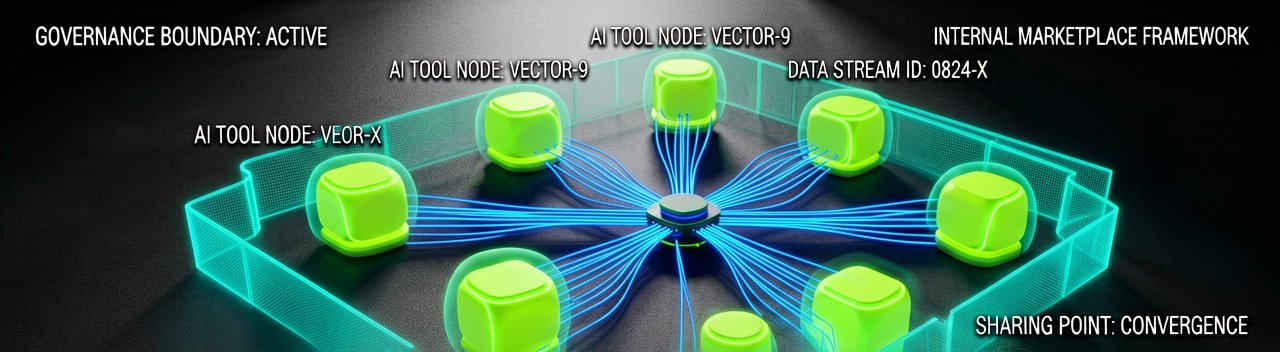
Envoy also features an internal Agent Marketplace where teams can publish, discover, and reuse proven AI solutions. This marketplace approach accelerates innovation by enabling colleagues to build on existing use cases rather than duplicating work. The physical experience of using this system means employees can browse available agents, test them in sandbox environments, and deploy them to production with a few clicks rather than weeks of development.
Customer-facing functionality includes the ability for agents to remember important details during conversations while following strict rules about data privacy and retention periods. This helps support customer journeys by reducing the need for customers to repeat information when returning to the same enquiry. The friction of explaining your situation multiple times to different representatives is a genuine pain point that this addresses.
Ron van Kemenade, Chief Operating Officer at Lloyds Banking Group, stated that Envoy helps employees become more productive, improve customer journeys, and launch potentially disruptive business models. The quote appears in both the official press release and independent reporting from FSTech, which corroborates the core details of the launch.
The platform forms part of Lloyds' wider AI ecosystem and complements other tools already in use. This ensures the right technology is used for the right purpose rather than forcing AI solutions where simpler approaches would suffice. The bank has indicated that functionality will evolve through 2026 to further support colleagues and customers.
Industry context matters here. Financial services firms face unique challenges when deploying AI at scale. Regulatory requirements, data privacy concerns, and the need for explainable decisions create a complex environment. Envoy's governance-first approach reflects this reality. The platform doesn't just enable AI deployment; it constrains it within acceptable boundaries.
Comparing this to other banking AI initiatives, Lloyds' approach emphasises internal tooling over customer-facing products. While competitors may be racing to launch AI chatbots for customers, Lloyds is focusing on empowering employees to build AI tools for internal processes. This is a more conservative but potentially more sustainable strategy.
The timing of this launch is significant. As of April 2026, the financial services sector is grappling with how to integrate generative AI while maintaining trust and compliance. Lloyds' announcement positions the bank as taking a measured approach to AI adoption. The emphasis on governance and audit trails suggests the bank prioritises risk management over speed of deployment.
For employees using the platform, the experience involves selecting templates, configuring agents for specific use cases, and deploying them through the marketplace. The interface likely includes drag-and-drop functionality for building agent workflows, though specific UI details remain undisclosed. The focus on templates means less coding is required, which lowers the barrier to entry for non-technical staff.
Whether this platform actually delivers on its promises remains to be seen. Internal AI tools often struggle with adoption even when technically sound. The real test will be whether employees find Envoy useful enough to build and share agents regularly, or whether it becomes another corporate initiative that sits unused. The marketplace concept is sound in theory, but success depends on critical mass of quality agents.
From a competitive standpoint, this move doesn't immediately change Lloyds' market position. The platform is internal-facing, so customers won't directly experience it. However, improved internal productivity and better customer journey management could eventually translate to competitive advantages. The question is whether these improvements materialise quickly enough to matter in a rapidly evolving market.
The bank's commitment to evolving the platform through 2026 suggests this is just the beginning. Future updates may include enhanced capabilities, additional templates, or expanded marketplace features. Whether users actually pay for it remains the real question—though in this case, the "users" are employees, and the currency is productivity gains rather than direct revenue.
Artūras Malašauskas is an AI Systems Integrator with 20+ years of production-grade web engineering experience. He has designed, shipped, and scaled enterprise Python/PHP systems for logistics, SaaS, and public-sector clients. For the past year, he has focused exclusively on AI integrations: deploying open-source LLMs, building generative media pipelines (image, audio, video), and engineering multi-agent workflows for real production environments. His standard: reproducibility, security, cost-efficient inference—no vaporware. He documents and evaluates emerging AI tooling, separating verified capabilities from marketing noise. Technical editor at: muza-ai.eu, ai-verslas.lt, ai-naujinos.lt Connect on LinkedIn
Comments