Stripe Launches AI-Ready Link Wallet for Agent Commerce
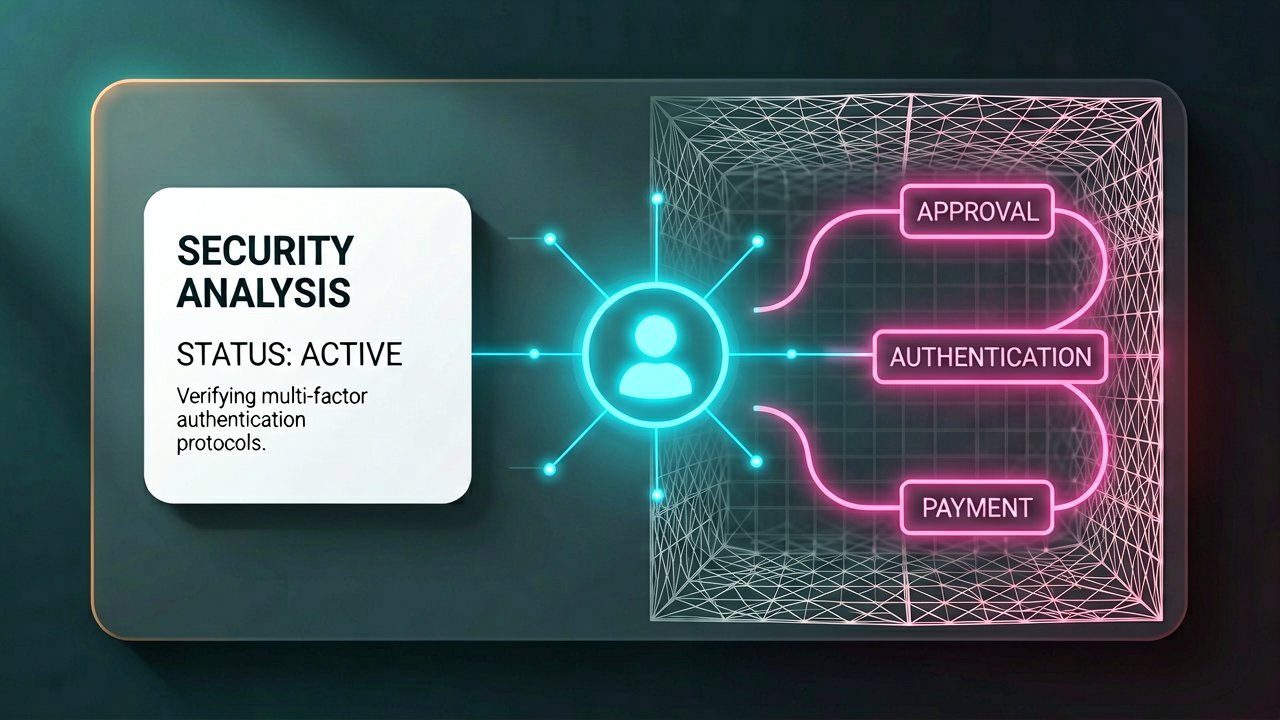
Payments infrastructure company Stripe announced a major expansion of its Link digital wallet at Sessions 2026, positioning the product for an era where autonomous AI agents handle transactions on behalf of users. The update allows consumers to grant AI assistants permission to make purchases without exposing sensitive payment credentials directly.
The announcement came during the company's annual conference, where Stripe revealed 288 new products and features focused on building economic infrastructure for AI. Link now supports agent wallets that operate through controlled approval processes rather than handing over raw payment data to autonomous systems.
According to the official Stripe Sessions 2026 blog post, users can connect their AI agents to Link via OAuth authentication flows. The agent generates a payment request with context, then waits for user approval before any transaction completes. This creates a friction point—users must physically tap their phone or click through a notification to authorize spending.
That physical interaction matters. Unlike traditional payment systems where credentials sit exposed in agent code, Link issues one-time-use virtual cards or Shared Payment Tokens for each transaction. The user's actual card number never leaves the secure environment. It's a small detail, but it changes the entire security model for AI commerce.

TechCrunch reported that the wallet is available on web, iOS, and Android platforms, supporting cards, bank accounts, crypto wallets, and buy-now-pay-later services. The publication noted that Link also tracks spending and monitors recurring subscriptions, with the ability to update payment details across services when required.
What makes this different from existing digital wallets is the agent integration layer. Users can grant agents permission to pay without exposing credentials. The system operates through a controlled approval process where the AI agent generates a payment request with context, and the user must review and approve the transaction before it completes.
Stripe's president of product and business, Will Gaybrick, framed the launch around a simple observation: "If AI can solve Nobel level physics problems but can't buy a domain, something's gone wrong." The company's mantra is to empower agents, though the practical reality involves more friction than the marketing suggests.
Independent reporting from TechCrunch corroborates the timeline and scope of the changes. The outlet noted that Link offers 90 days of protection on eligible purchases from select merchants, and that support for agentic tokens and stablecoins is coming soon.
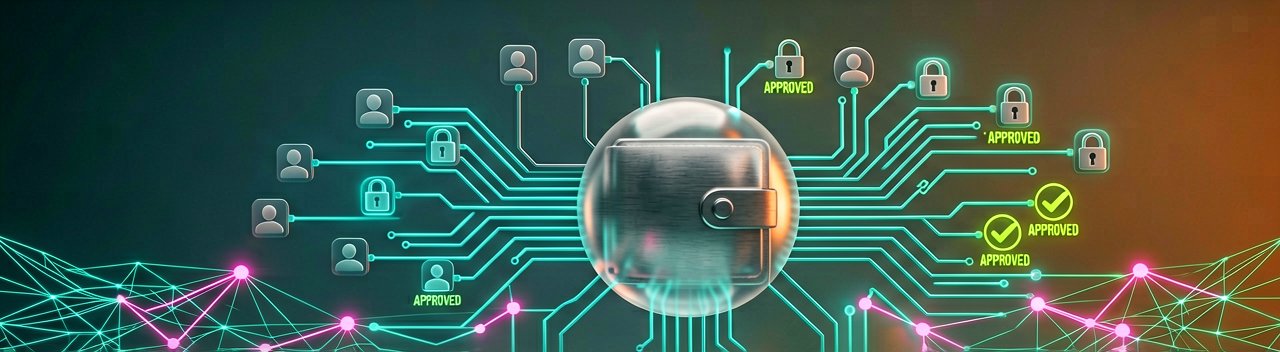
The technical implementation relies on Stripe's Issuing for agents infrastructure. This lets users issue virtual cards for agents to make purchases autonomously, with real-time authorization, spending controls, and full transaction visibility. Developers building AI personal assistants can use Link's wallet instead of building payment systems from scratch.
Currently, the approval workflow requires manual intervention for each transaction. Users receive notifications on mobile or web to approve spend requests, which requires reviewing the transaction before the payment credential is shared with the AI agent. In the future, Stripe says it will expand controls so users can set spending limits or choose when agents can act without approval.
That future automation is the real product here. The current version is more of a bridge than a destination—useful for testing, but not yet ready for hands-off commerce. (Though some users might appreciate the friction, honestly.)
The launch coincides with broader industry momentum around AI-led commerce. Stripe partnered with Meta to enable native checkout inside ads on Facebook, and announced a partnership with Google allowing businesses to sell inside AI Mode and the Gemini app via the Universal Commerce Protocol.
These partnerships matter because they create distribution channels for agent commerce. Instead of building standalone AI shopping experiences, businesses can integrate with existing platforms where users already interact with AI assistants. The friction of discovery disappears when the purchase happens in the same interface where the agent operates.
Stripe also introduced the Machine Payments Protocol, co-authored with Tempo, which allows agents to programmatically transact with businesses via microtransactions and recurring payments. The protocol supports both stablecoins and fiat through cards, Klarna, and Affirm via Shared Payment Tokens.
The physical experience of using Link with agents differs from traditional checkout flows. Instead of typing card numbers into forms or clicking through multiple pages, users receive a notification with transaction details. They review the amount, merchant, and context, then tap to approve. The entire interaction takes seconds, but it requires conscious attention.
This design choice reflects a fundamental tension in AI commerce. Convenience demands automation, but security demands oversight. Link attempts to balance both by making approval fast without making it invisible. The notification appears on the user's device, requiring them to look at their phone and make a decision.
For developers, the agent wallet integration removes the need to build payment infrastructure from scratch. Stripe's documentation shows how to integrate wallet functionality directly into AI assistants, handling authentication, token generation, and transaction approval workflows through a single API.
The company also expanded fraud protection to cover token theft. Radar now evaluates sign-ups and usage in real time, drawing on signals from across the Stripe network. For eight high-growth AI businesses, Radar blocked more than 3.3 million risky sign-ups in the last month alone.
Token abuse has become a significant problem for AI services. Fraudsters create millions of fake accounts to drain sign-up credits, burn inference costs by abusing free trials, and rack up usage bills they never intend to pay. Across AI services running on Stripe, one in six attempted sign-ups is made by a bad actor.
Link's agent wallet addresses a different problem: how to enable legitimate AI commerce without creating new attack vectors. By keeping payment credentials secure and requiring user approval, the system prevents agents from being weaponized for unauthorized transactions. The trade-off is that fully autonomous spending remains limited.
Stripe's CEO and co-founder Patrick Collison stated that AI is the biggest platform shift for the economy since the internet, and that agents will account for most transactions online in the not-too-distant future. The 288 products and features announced at Sessions 2026 reflect the company's bet on this transformation.
The Link agent wallet represents a pragmatic approach to this future. Rather than rushing toward fully autonomous transactions, Stripe built a system that requires user oversight while still enabling AI agents to handle purchasing tasks. It's a middle ground that prioritizes security over convenience.
Whether users actually adopt agent-driven shopping at scale remains the real question. The technology works, but consumer behavior around AI spending is still unproven. Link provides the infrastructure, but market demand will determine whether this becomes a standard feature or a niche capability.
Artūras Malašauskas is an AI Systems Integrator with 20+ years of production-grade web engineering experience. He has designed, shipped, and scaled enterprise Python/PHP systems for logistics, SaaS, and public-sector clients. For the past year, he has focused exclusively on AI integrations: deploying open-source LLMs, building generative media pipelines (image, audio, video), and engineering multi-agent workflows for real production environments. His standard: reproducibility, security, cost-efficient inference—no vaporware. He documents and evaluates emerging AI tooling, separating verified capabilities from marketing noise. Technical editor at: muza-ai.eu, ai-verslas.lt, ai-naujinos.lt Connect on LinkedIn
Comments