Adobe Named to TIME100 Most Influential Companies 2026
For 43 years, Adobe has managed to stay relevant in an industry that typically eats its own young. The company's inclusion on TIME Magazine's 2026 TIME100 Most Influential Companies list isn't just a trophy—it's a validation of a survival strategy that has kept the software giant from becoming another CorelDRAW or QuarkXPress footnote.
The official TIME profile outlines the trajectory: from creating a foundational programming language for rendering text and graphics, to producing a suite of creative tools, to standardizing document sharing with the PDF format, to deploying an industry-leading subscription model. "This company is good at reinventing itself," says Anil Chakravarthy, president of Adobe's customer experience orchestration business.
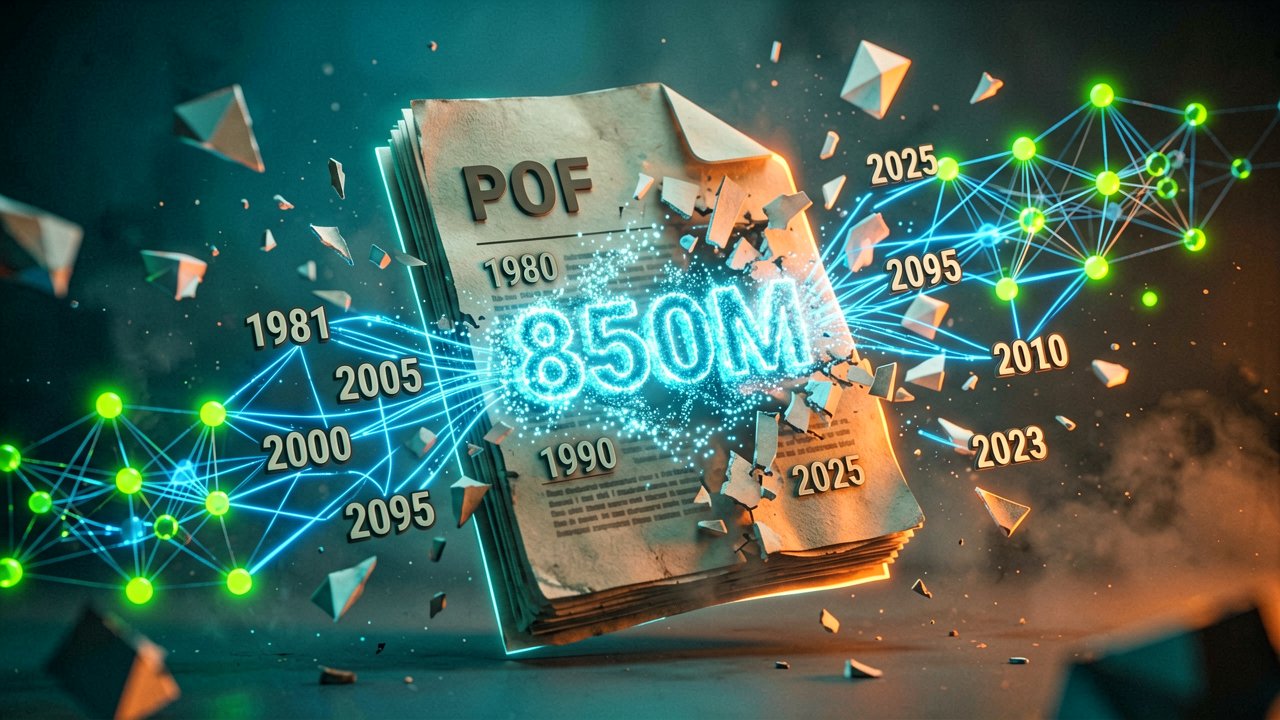
That reinvention is now squarely focused on generative AI. The numbers are staggering. Adobe reports over 850 million monthly active users, and according to a company survey, 86% of creators already use generative AI in their workflow. In filmmaking specifically—where Adobe maintains a dominant presence—85% of the films premiering at the 2026 Sundance Film Festival used Adobe software. That's not a rounding error; that's market saturation.
The physical reality of this dominance is visible in any modern editing suite. Open Photoshop or Premiere Pro and you'll find Firefly AI tools embedded directly into the interface—no separate app, no additional login, no friction. Click, type a prompt, watch the neural network generate variations. It's seamless integration, which is exactly the point. Adobe isn't asking creators to change their workflow; it's asking them to add one more button to a toolbar they already know by muscle memory.

To push mainstream adoption of Firefly—which can generate image, video, and audio—Adobe partnered with media industry leaders including United Talent Agency, production house B5 Studios, VFX studio Cantina Creative, and director David Ayer. These aren't random partnerships. They're strategic placements designed to normalize AI-assisted creation at the highest levels of the industry.
Enterprise adoption tells an even more aggressive story. Last September, Adobe reported that 99% of Fortune 100 companies have used AI in an Adobe app. Walt Disney and Coca-Cola have both deployed Adobe's AI tools for marketing campaigns. That near-universal penetration among the world's largest corporations suggests Adobe has successfully positioned itself not as a creative tool, but as infrastructure.
The financials back this up. In March, Adobe reported that its annual recurring revenue from AI-first applications tripled year over year. Firefly-related video generation specifically increased eightfold over the same period. (Eightfold. That's not growth; that's a category explosion.)
What makes this recognition notable is the context of the TIME100 Companies program itself. The TIME100 Companies platform offers three pathways to recognition: the flagship list of 100 organizations reshaping business and society globally, industry-specific lists celebrating 200 sector leaders, and Impact Awards for five companies addressing urgent societal conversations. Adobe's placement on the flagship list puts it alongside companies like Microsoft, Databricks, and Figma—the ones actually building the AI era rather than just talking about it.

There's a tension here worth noting. As AI lowers the barrier to entry for creative work, Adobe's strategy is to offer end-to-end tools that polish and distribute content at scale. The company has kept creators in control of their process, according to TIME's reporting. But control is a relative term when the underlying technology can generate entire scenes from text prompts.
Adobe's 43-year history shows a pattern: anticipate the shift, integrate it quietly, and let competitors fight over whether the new thing matters while you've already monetized it. The PDF format standardized document sharing before anyone realized documents needed standardizing. The subscription model shifted creative software from a one-time purchase to recurring revenue before anyone questioned the permanence of ownership.
Now it's AI. The question isn't whether Adobe will succeed with this iteration. The question is whether the market will eventually demand something Adobe can't simply bolt onto its existing ecosystem. Whether users actually pay for it remains the real question.
Artūras Malašauskas is an AI Systems Integrator with 20+ years of production-grade web engineering experience. He has designed, shipped, and scaled enterprise Python/PHP systems for logistics, SaaS, and public-sector clients. For the past year, he has focused exclusively on AI integrations: deploying open-source LLMs, building generative media pipelines (image, audio, video), and engineering multi-agent workflows for real production environments. His standard: reproducibility, security, cost-efficient inference—no vaporware. He documents and evaluates emerging AI tooling, separating verified capabilities from marketing noise. Technical editor at: muza-ai.eu, ai-verslas.lt, ai-naujinos.lt Connect on LinkedIn
Comments