Zack Kaplan's "The Smart Division" Explores AI-Assisted Crime in New Dark Horse Series
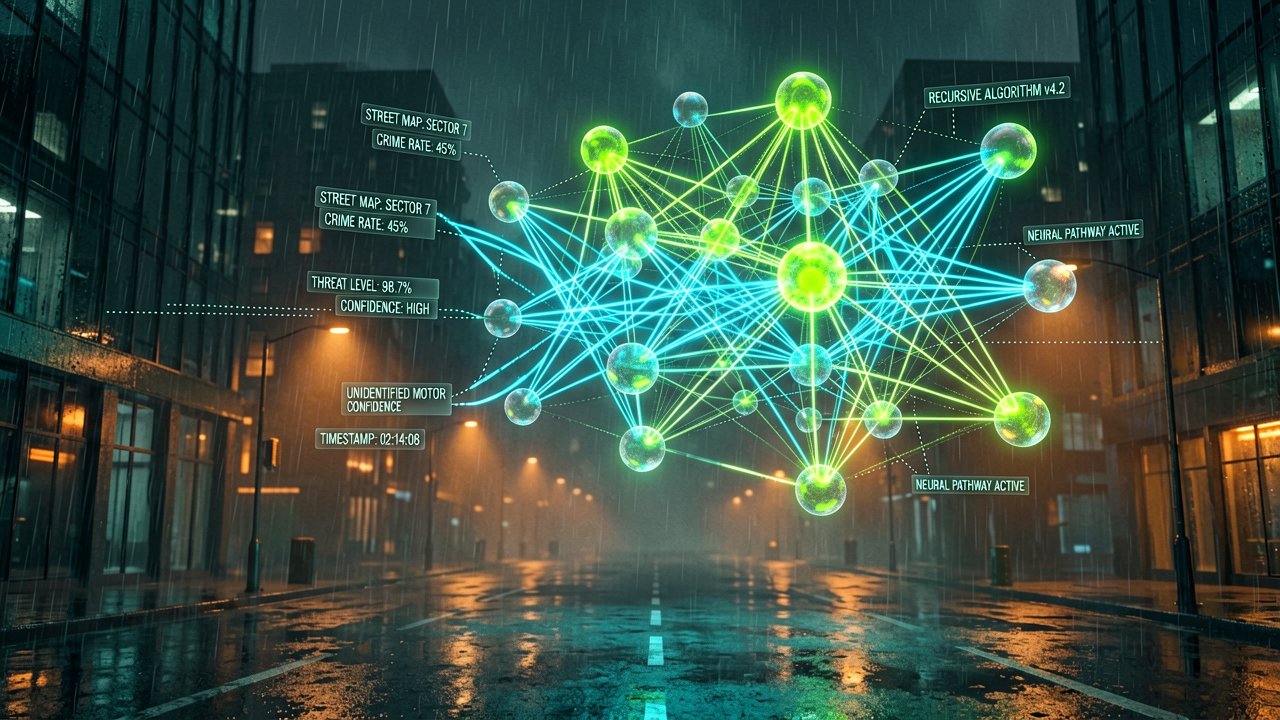
The comic book industry is grappling with the same technological anxieties as the rest of society, but Zack Kaplan is taking a darker turn. His upcoming series The Smart Division imagines a near-future where an artificial intelligence application doesn't just recommend content—it recommends how to commit murder without getting caught.
Dark Horse Comics announced the five-issue series on April 23, 2026, with the first issue hitting comic shops August 5 for $4.99. The premise is straightforward enough to be unsettling: a mysterious predictive AI program surfaces, responsible for assisting someone in executing the perfect murder. Two investigators—a chaotic Gen-Z savant and a veteran FBI agent—must hunt down the killer while simultaneously establishing the Bureau's first AI crimes division.
This isn't Kaplan's first rodeo with technology-themed narratives. He's reuniting with Eisner-winning artist John Pearson for the first time since their Vault Comics series Mindset, which was optioned by Boatrocker Studios and Don Cheadle's Radicle Act for television development. The pair has been planning this second collaboration for years, waiting for what Kaplan calls "the right story and right time."
According to the official Dark Horse Comics product page, the series is set "five minutes in the future." That's deliberately vague—close enough to feel plausible, distant enough to allow speculative fiction to breathe. The setting matters because it grounds the technology in something readers recognize. No flying cars or laser weapons. Just smartphones, apps, and the quiet horror of algorithms working against you.
Kaplan's quote from the announcement reveals the core tension: "Artificial Intelligence is the hot topic of our time, but we're exploring it like you've never seen – what happens when it helps us commit the perfect crimes." That's the hook. Most AI narratives focus on robots gaining consciousness or systems making autonomous decisions. This one asks what happens when humans use AI as a tool for their worst impulses.
Pearson's approach to the artwork reflects this duality. He's using painted pages to contrast with the technological abundance the characters face. The physical texture of ink on paper versus the sterile glow of screens. It's a deliberate aesthetic choice that mirrors the story's central conflict between analog investigation methods and digital threats. (Honestly, the painted pages probably take longer to produce, which is its own kind of rebellion against speed.)
Secondary reporting from Smash Pages confirms the creative team includes Eisner-winning letterer Hassan Otsmane-Elhaou and Eisner-nominated designer Tom Muller. The main cover art is by Pearson, with variant covers for issue #1 from Jesse Lonergan, Jacob Phillips, and illustrator Matt Taylor.
The series targets fans of The X-Files, True Detective, and Minority Report. That's a specific demographic—readers who enjoy procedural storytelling with philosophical undercurrents. The comparison to Minority Report is particularly apt given the predictive AI element, though Kaplan's take appears more grounded in contemporary criminal justice concerns than Spielberg's dystopian future.
What makes this announcement notable isn't just the premise. It's the timing. AI regulation debates are heating up globally, with governments struggling to define liability when algorithms assist in harmful acts. The Smart Division essentially dramatizes those policy questions through narrative. If an AI helps someone plan a murder, who's responsible? The user? The developer? The platform hosting the application?
Kaplan and Pearson have done this before with Mindset, which explored technology's impact on human relationships. The Smart Division raises the stakes by introducing actual criminal consequences. The "danger and dread" Kaplan mentions isn't just atmospheric—it's structural to the plot. Every chapter likely forces readers to confront how close this scenario is to reality.
The physical experience of reading this will matter. Five issues at $4.99 each means roughly $25 total investment for the complete story. That's comparable to a streaming service subscription for a month. Readers will flip through painted pages showing detectives staring at screens, trying to catch killers who've already outmaneuvered them with code. The tactile nature of comics contrasts sharply with the digital threat at the story's center.
This is one of three new series from Kaplan and Dark Horse in 2026. Only the Savage Are Left, a post-apocalyptic action series with artist Stefano Raffaele, arrives June 3. Kill All Immortals III, the concluding chapter of his Viking action trilogy with artist Francesco Manna, follows later in the year. The Smart Division sits between these as the most technologically focused of the three.
Whether the series actually delivers on its promise remains to be seen. The premise is strong, the creative team has proven track records, and the subject matter is undeniably relevant. But comic book crime thrillers have a long history of promising more than they deliver. The real test will be whether the execution matches the ambition.
For now, the announcement itself is the story. A major publisher betting on AI-as-weapon fiction in 2026 signals that the industry sees commercial potential in these anxieties. Whether readers actually want to pay for stories about their worst fears is another question entirely. The market will decide when those August 5 copies start selling—or not.
Artūras Malašauskas is an AI Systems Integrator with 20+ years of production-grade web engineering experience. He has designed, shipped, and scaled enterprise Python/PHP systems for logistics, SaaS, and public-sector clients. For the past year, he has focused exclusively on AI integrations: deploying open-source LLMs, building generative media pipelines (image, audio, video), and engineering multi-agent workflows for real production environments. His standard: reproducibility, security, cost-efficient inference—no vaporware. He documents and evaluates emerging AI tooling, separating verified capabilities from marketing noise. Technical editor at: muza-ai.eu, ai-verslas.lt, ai-naujinos.lt Connect on LinkedIn
Comments