Decoding Decade-Long AI Stock Growth: Strategic Insights for Long-Term Investors
The artificial intelligence ecosystem is transitioning from a speculative hardware buildout into a mature, software-driven phase. While early market momentum favored chip manufacturers, institutional analysts are now focusing on enterprises capable of sustaining multi-billion dollar capital expenditure cycles while generating recurring software revenue. For long-term investors aiming to construct a decade-long portfolio, identifying enterprises with deep competitive moats, active institutional accumulation, and clear monetization pathways is essential to navigating impending structural market shifts.
Recent equity analysis reveals that Wall Street continues to favor established technological leaders that command dominant market shares while aggressively expanding their operational infrastructure. According to market data aggregated by Yahoo Finance, institutions like New Street Research have updated their long-term conviction lists, pointing to significantly higher revenue potentials driven by evolving enterprise computational demands. This capital concentration highlights a strategic consensus: the next decade of AI growth will reward companies that control the underlying platform architecture rather than point-solution providers.
Nvidia: The Indispensable Platform Layer
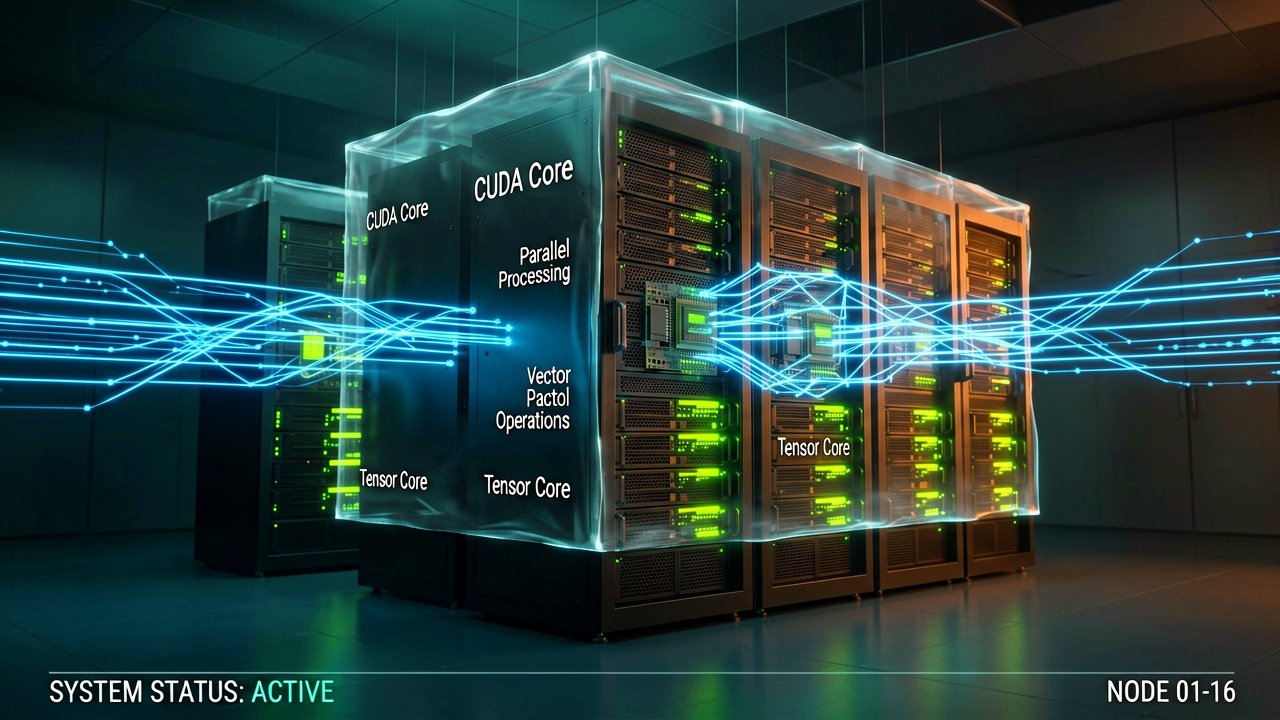
Nvidia continues to anchor institutional portfolios as the primary beneficiary of global AI infrastructure deployment. Financial evaluations published by Seeking Alpha show a massive 85% year-over-year surge in first-quarter revenue to $81.6 billion, fueled by a 92% expansion in its data center division. This monumental growth is increasingly sustained by the emergence of "agentic AI"—multi-agent systems and automated coding tools that consume up to 30 times more compute power per task than traditional conversational models, compounding hardware demand. Furthermore, research from Intellectia.ai notes that Nvidia maintains an 85% to 92% market share in specialized accelerators, protected by its proprietary CUDA software ecosystem. This creates high switching costs for developers and positions the firm to evolve from a hardware supplier into a comprehensive, long-term AI platform provider.
Palantir Technologies: Capitalizing on Enterprise Software Monetization
As hardware infrastructure stabilizes, the financial spotlight is moving toward software firms that can convert raw computing power into measurable corporate efficiency. Palantir Technologies has emerged as a top analyst pick for long-term growth due to its highly effective enterprise scaling. Analysis from Bank of America highlights that Palantir remains a high-conviction investment choice, supported by accelerating enterprise adoption and consistently expanding profit margins. The firm's operational strength is validated by data from Investing.com , which shows Palantir maintaining an 82.4% gross profit margin alongside 56.2% trailing revenue growth. This exceptional profitability underscores Palantir’s ability to entrench itself within government and commercial operations, making it a highly resilient candidate for decade-long portfolio positioning.
The Hidden Dynamics of a Mature Intelligence Infrastructure
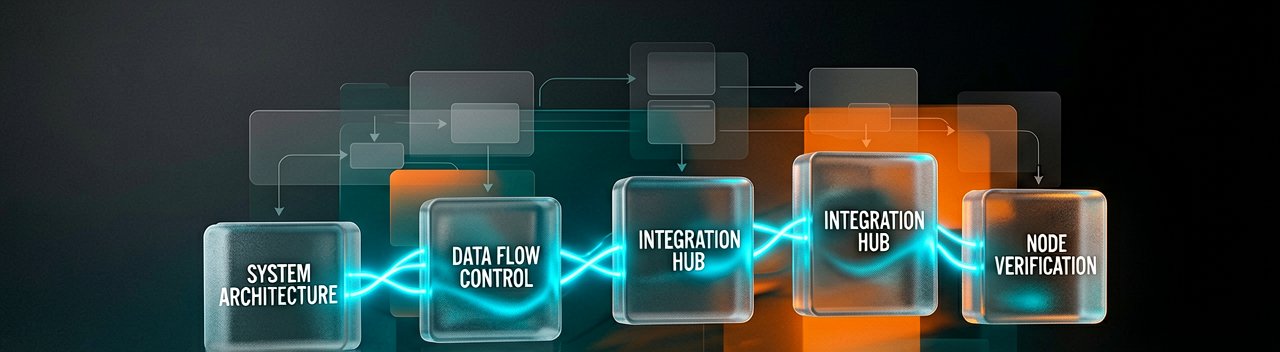
What Most Reports Miss: The transition from physical server deployments to software-driven monetization is triggering an aggressive reorganization of corporate spending. In the first phase of the artificial intelligence boom, capital expenditure was dominated by speculative infrastructure buildouts, as hyperscalers scrambled to secure hardware pipelines. Today, institutional capital is shifting toward enterprises that can prove operational return on investment, forcing a pivot from raw computational capacity to workflow integration. This maturity phase alters how corporations allocate their technology budgets, moving AI from an experimental line item to the core architecture of enterprise software.
This spending reallocation has exposed a deep divide between public technology firms. Software providers that rely on simple wrapper applications face severe margin pressure and high customer churn because their tools lack defensible IP. Conversely, platform architects who integrate specialized models into legacy workflows are successfully securing multi-year enterprise commitments. This operational division explains why institutional investors are consolidating their capital into a handful of foundational companies, treating them as defensive utilities for the digital age rather than volatile growth stocks.
Historical parallels from earlier technological shifts provide valuable lessons for navigating this market maturity. During the dot-com era and the mobile expansion of the late 2000s, the initial building phase favored companies producing infrastructure, such as fiber-optic networks and cellular towers. However, the highest long-term market caps were ultimately captured by the software platforms and services built on top of that physical infrastructure. Current market dynamics indicate a similar trajectory, where initial hardware advantages are gradually converting into permanent software ecosystems.
Geopolitical realities and sovereign data demands add another layer of complexity to this enterprise expansion. National governments and heavily regulated industries are rejecting public cloud models in favor of private, air-gapped infrastructure to protect sensitive data assets. This shift benefits software enterprises that offer flexible deployment models capable of running locally or within hybrid environments. For long-term investors, evaluating a company's ability to navigate sovereign compliance and national security contracts is becoming just as critical as analyzing traditional financial metrics.

The Vulnerabilities of Hyper-Scale Concentration
Reading Between the Lines: The prevailing Wall Street narrative assumes that enterprise AI adoption will follow a linear, uninterrupted upward trajectory over the next decade. This consensus overlooked a glaring contradiction in current corporate balance sheets: the massive divergence between capital expenditure on infrastructure and actual enterprise software revenue. While hyperscalers continue to spend tens of billions of dollars per quarter on advanced processing clusters, the broader corporate sector is experiencing a slower, more cautious integration phase. This capital asymmetry creates a structural risk, as hardware supply could easily outpace organic software demand if enterprise cost savings fail to materialize quickly enough.
Furthermore, the assumption that early platform monopolies are completely secure ignores the rapidly declining cost of open-source model training and deployment. While proprietary ecosystems currently command premium pricing, the proliferation of highly capable, open-source alternatives gives enterprise clients significant leverage to negotiate lower software licensing costs. This shifting dynamic threatens the high gross margins that software firms currently project. Long-term investors must realize that a company's current pricing power may not hold up against an increasingly commoditized algorithmic landscape.
This valuation premium also assumes that global supply chains will remain stable enough to support uninterrupted technological expansion over the next ten years. The hyper-concentration of advanced semiconductor manufacturing leaves the entire AI sector vulnerable to regional geopolitical disruptions and resource scarcity. Even the most advanced software platforms cannot generate revenue if the underlying physical hardware layers experience sudden production halts. Therefore, market projections that ignore these physical constraints and assume endless computational scaling rest on a fragile foundation.
Ultimately, the true long-term winners will likely be the companies that prioritize data curation and proprietary application over sheer computational scale. As foundational models become cheaper and more uniform, the unique corporate data injected into these systems will serve as the primary source of competitive advantage. Investors who evaluate companies solely on infrastructure spending rather than proprietary data access risk misallocating capital during the next phase of market consolidation.
Investing in a decade-long technology trend is a lot like buying a house near an active volcano; the views of the economic horizon are spectacular, provided you do not mistake the glowing red rivers of burning capital expenditure for a permanent source of sustainable enterprise warmth.
Artūras Malašauskas is an AI Systems Integrator with 20+ years of production-grade web engineering experience. He has designed, shipped, and scaled enterprise Python/PHP systems for logistics, SaaS, and public-sector clients. For the past year, he has focused exclusively on AI integrations: deploying open-source LLMs, building generative media pipelines (image, audio, video), and engineering multi-agent workflows for real production environments. His standard: reproducibility, security, cost-efficient inference—no vaporware. He documents and evaluates emerging AI tooling, separating verified capabilities from marketing noise. Technical editor at: muza-ai.eu, ai-verslas.lt, ai-naujinos.lt Connect on LinkedIn
Comments