Orange Health Labs' Shift Redefines Consumer-Centric Healthcare Strategies

India's fast-evolving diagnostics ecosystem is undergoing a fundamental transformation as tech-enabled startups challenge legacy providers. Orange Health Labs has formally pivoted its market strategy by introducing its new brand positioning, "Speed Meets Science," according to Adgully. Accompanied by a fresh digital video commercial, this strategic rebranding directly answers a major shift in consumer behavior where urban professionals demand proactive, rapid, and frictionless healthcare infrastructure that aligns with their mobile-first lifestyle.
The core philosophy of this shift focuses on a critical biological reality of diagnostics: human blood degrades immediately after collection. Traditional diagnostic chains rely on batched processing, which inadvertently stretches transit times and risks compromising sample integrity. By optimizing its proprietary, full-stack logistics and automated infrastructure, Orange Health Labs delivers 60-minute at-home sample collection and returns verified reports within six hours through NABL-accredited facilities, a model highlighted by The Growth Loop and confirmed on their LinkedIn profile.
Financially, the consumer-centric strategy has validated itself, propelling the health-tech startup past an annual revenue run rate of ₹180 crore, as detailed by WEM India. The company continues to aggressively scale its market share across primary Indian metros—including Bangalore, Mumbai, Hyderabad, and Delhi NCR—leveraging approximately $50 million in capital raised from prominent institutional backers such as Accel, Y Combinator, General Catalyst, and the Amazon Smbhav Venture Fund.
Market Deconstruction and the Speed-Accuracy Balance
For decades, traditional players conditioned the Indian diagnostic consumer to choose between speed and accuracy. Orange Health Labs' rebranding seeks to dismantle this false trade-off. By controlling the entire chain through its dedicated workforce of "eMedics," the firm minimizes the time blood spends outside a temperature-controlled environment. This creates a dual value proposition: consumers experience maximum convenience while clinical clinicians receive hyper-fresh samples that generate higher diagnostic precision.
Disrupting Loyalty with Subscription-Based Preventive Models
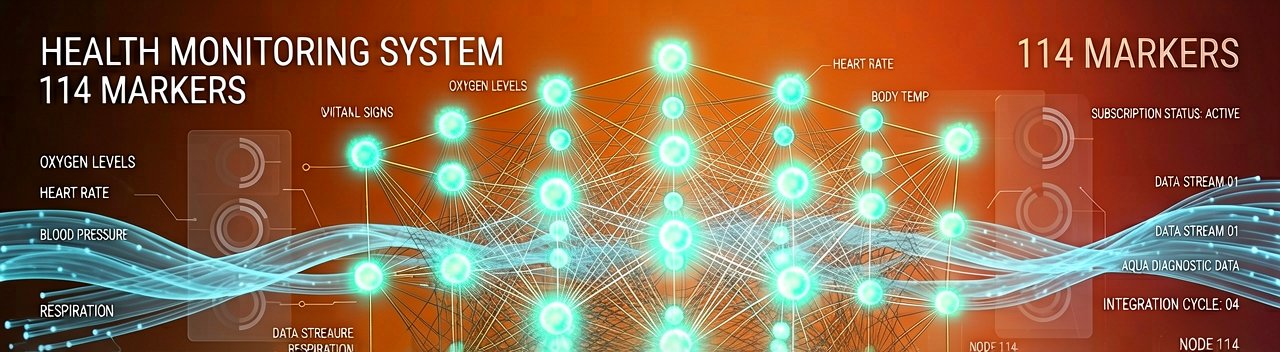
A crucial pillar of Orange Health Labs' long-term strategy to lock in customer retention is the shift from episodic, pay-per-test transactions toward proactive health tracking. This strategy materialized with the release of Orange One, a subscription product designed to manage ongoing preventive health, as documented by The Wire. By replacing the archaic transaction model with a comprehensive initial assessment across 114 markers and offering year-round monitoring of key chronic indicators free of charge, the company effectively shifts the consumer relationship from reactive sick-care to continuous wellness oversight.
The B2B Advantage and Digital Infrastructure Ecosystem
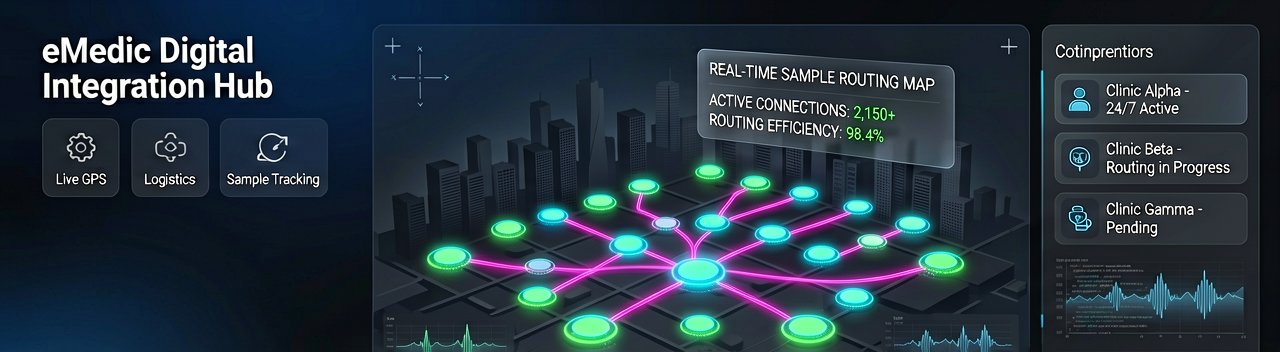
While the brand's positioning heavily courts the retail consumer, its enterprise network forms a resilient defensive moat. The provider has onboarded over 2,000 healthcare clinics onto its custom digital platform. This gives medical practitioners real-time visibility into sample processing and accelerated clinical workflows. This integration allows local clinics to offer medical-center-level speeds without requiring on-site lab infrastructure. It transforms diagnostics from a slow backend utility into an on-demand, integrated technology product.
The Logistics Architecture of Fresh Blood Diagnostics
Behind the Scenes: The central operational bottleneck in legacy Indian diagnostics has never been lab automation, but rather the structural volatility of ambient-temperature logistics. Human blood begins undergoing cellular and biochemical degradation within hours of extraction, yet the industry standard has long relied on local collection centers batching samples for hours before dispatching them to distant reference laboratories via third-party couriers. Orange Health Labs’ strategic gamble relies entirely on replacing this legacy aggregation model with a decentralized, technology-driven hub-and-spoke infrastructure. By treating the time between needle extraction and centrifuge insertion as a critical medical variable, the company has algorithmically optimized its dispatch networks to bypass traditional holding patterns.
This operational pivot relies heavily on a highly specialized proprietary fleet known internally as "eMedics." Unlike the gig-economy delivery personnel utilized by generic quick-commerce platforms, these individuals are trained phlebotomists integrated into a real-time routing engine. This software continuously calculates traffic density, proximity to automated micro-labs, and strict sample-temperature thresholds to guarantee that every tube enters a controlled environment before degradation begins. This continuous tracking fundamentally shifts the consumer value proposition; it transforms speed from a mere marketing convenience into a quantifiable clinical metric that reduces the risk of pre-analytical errors and false lab anomalies.
From an investment perspective, institutional backers like Accel and General Catalyst are not merely financing a diagnostic chain, but rather backing a highly scalable logistics software company operating within the healthcare sector. The true commercial friction in Indian healthcare has always been access and reliable fulfillment rather than a lack of analytical instruments. By capturing the patient interaction directly at the doorstep and automating the subsequent routing, the company circumvents the expensive real estate overhead required to maintain thousands of physical collection centers, reallocating those capital reserves into dense, urban micro-labs that maximize asset utilization and drive down processing costs.
However, scaling this model across tier-one and tier-two cities exposes a sharp competitive dynamic with deep-pocketed legacy players such as Dr. Lal PathLabs and Metropolis Healthcare. These established giants command decades of brand equity, vast institutional medical trust, and extensive B2B referral networks with senior physicians. While urban millennials eagerly adopt the digital-first convenience of on-demand home health, building identical trust within older, chronic-disease patient demographics remains a steep hurdle. To capture this segment, the company's enterprise layer integrates directly into independent clinics, positioning itself as a silent infrastructure utility that allows standalone doctors to compete with corporate hospital systems by offering rapid, high-margin lab diagnostics under their own roofs.
Ultimately, this convergence of on-demand logistics, subscription wellness models, and digital clinic integration points toward a heavily consolidated health-tech landscape. The initial era of rapid cash-burn to acquire transactional customers is yielding to an era focused on permanent lifestyle integration and high lifetime value. As consumer expectations permanently shift toward near-instantaneous turnaround times across all digital services, diagnostics providers that fail to control their own end-to-end logistics chains will find themselves structurally isolated from the modern urban consumer.
The Unit Economics of On-Demand Phlebotomy
Reading Between the Lines: The primary vulnerability in the quick-commerce approach to diagnostics is the assumption that premium urban consumers will indefinitely pay a margin high enough to offset localized logistics costs. While returning verified test results within six hours is a powerful marketing differentiator, maintaining a specialized, on-call fleet of trained medical professionals creates a permanent, high operational floor. Unlike generic food or grocery delivery services, where a courier requires no formal medical credentials, a home-health network relies on certified phlebotomists who command fixed, higher wages. This means that during off-peak hours or in lower-density urban zones, the cost of sending an individual courier to collect a single blood sample can severely erode the profitability of basic, low-margin test packages.
This operational reality reveals a distinct contradiction between the company's retail branding and its broader financial imperatives. To achieve sustainable profitability on its venture capital funding, Orange Health Labs cannot rely purely on the occasional, episodic consumer who books a blood test only when they feel unwell. This friction explains the urgent strategic push behind subscription frameworks like Orange One. By locking users into recurring, long-term monitoring plans, the company attempts to convert erratic consumer behavior into predictable, high-margin revenue streams. However, convincing a generally reactive consumer base to pay upfront for preventive monitoring requires overcoming deep-seated consumer inertia in a market historically accustomed to paying for healthcare only during an active crisis.
Furthermore, the competitive response from legacy diagnostic conglomerates introduces structural headwinds that a pure-play tech platform cannot ignore. Institutional giants like Dr. Lal PathLabs and Metropolis Healthcare are not static targets; they possess deep cash reserves and decades of institutional medical authority. While these legacy players have been slower to digitize, they are actively upgrading their own mobile applications and localized home-collection networks. If these established brands manage to narrow the convenience gap to an acceptable window—such as a twelve-hour turnaround instead of six—the premium value of on-demand speed may quickly diminish, forcing a tech-first operator to compete on price rather than pure operational velocity.
The long-term survival of this decentralized micro-lab model depends on its ability to expand its B2B footprint deeper into the independent clinic network. By serving as an outsourced, high-speed laboratory infrastructure for local doctors, the company can aggregate sample volumes organically, effectively subsidizing the high fixed overhead of its residential consumer business. If this B2B volume fails to scale at the same pace as residential demand, the company risks holding an expensive, underutilized infrastructure asset that struggles to compete whenever price wars inevitably break out in the broader diagnostic market.
Building a seamless, on-demand health platform is an impressive feat of modern engineering, until one remembers that the ultimate prize for managing a flawlessly optimized, high-velocity logistics network is the privilege of transporting a tiny vial of metabolic waste across gridlocked urban traffic at seven in the morning.
Artūras Malašauskas is an AI Systems Integrator with 20+ years of production-grade web engineering experience. He has designed, shipped, and scaled enterprise Python/PHP systems for logistics, SaaS, and public-sector clients. For the past year, he has focused exclusively on AI integrations: deploying open-source LLMs, building generative media pipelines (image, audio, video), and engineering multi-agent workflows for real production environments. His standard: reproducibility, security, cost-efficient inference—no vaporware. He documents and evaluates emerging AI tooling, separating verified capabilities from marketing noise. Technical editor at: muza-ai.eu, ai-verslas.lt, ai-naujinos.lt Connect on LinkedIn
Comments