Navigating Legal Waters: How New AI Guidelines Are Reshaping Attorney Practices
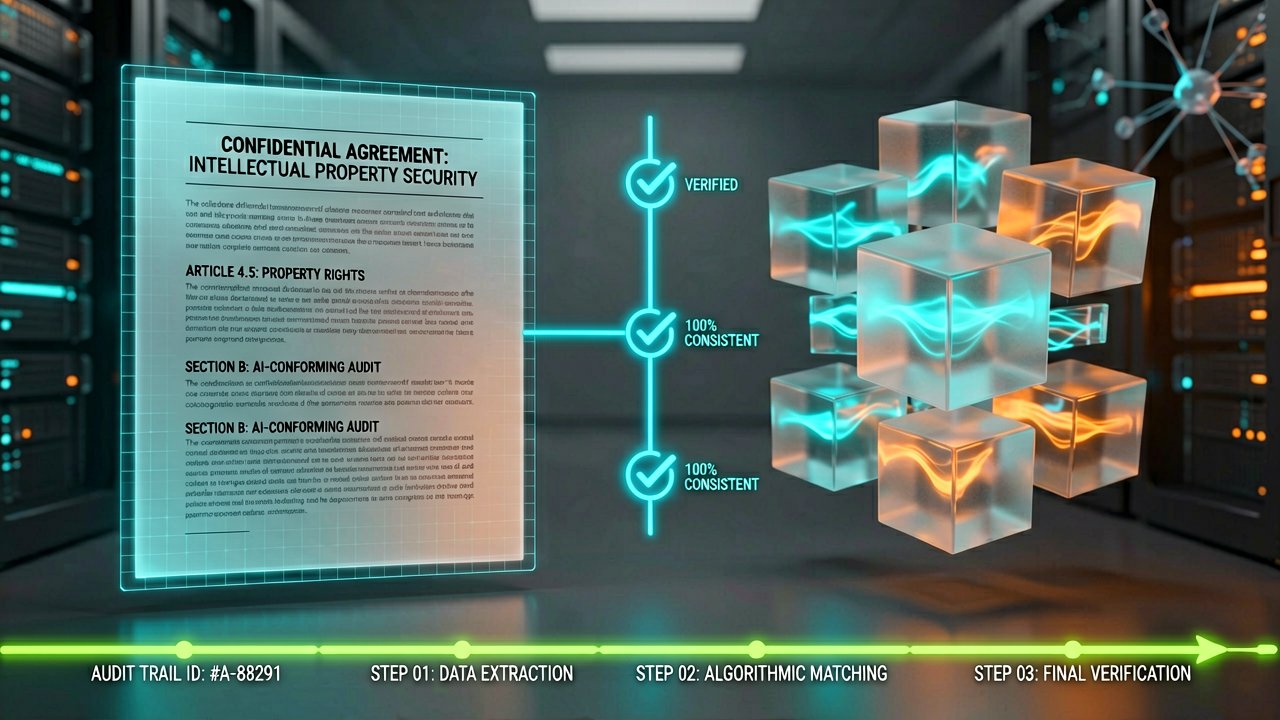
The legal market has reached a critical regulatory milestone as the New York State Unified Court System implemented Part 161, a statewide rule governing artificial intelligence technology in litigation. Rather than restricting technological tools or mandating formal disclosure, the rule establishes a system-wide standard focused on ultimate human accountability. Legal practitioners are permitted to utilize generative systems for drafting, research, and analysis, but the signing attorney remains legally responsible for every factual claim and citation submitted to the court.
This development, heavily informed by recommendations adopted by the New York State Bar Association, marks a clear strategic shift from algorithmic policing to strict personal liability. Legal experts observe that the framework effectively addresses the market disruption caused by model hallucinations and fabricated case laws. By tying software output directly to judicial sanctions, the regulation forces law firms to move away from unmonitored automation toward mandatory internal verification workflows.
From a broader industry perspective, this policy establishes a template for professional governance in an automated workforce. Legal tech providers must adapt to this risk-conscious climate by building explicit audit trails and citation-checking mechanisms directly into their platforms. As individual chambers continue to exercise localized discretion, organizations operating across state and federal jurisdictions must proactively develop comprehensive governance policies to protect their case credibility and institutional standing.
The Architecture of Part 161 and the Disclosure Debate
The regulatory structure avoids a blanket disclosure requirement, choosing instead to focus solely on the competence and accuracy of the final human-verified submission. This approach preserves corporate and client confidentiality by shifting the institutional focus from how a document was drafted to whether a qualified professional verified its contents.

Operational Impact on Litigation and Risk Mitigation
Law firms are compelled to redesign their case workflows, deposition prep, and document analysis pipelines to include rigorous manual oversight layers. Strategic risk management now dictates that attorneys check not only their own machine-assisted drafts but also carefully audit opposing papers for hallucinated precedents.
Operational Shift: Deepening Professional Competence and Risk Accountability
Behind the Scenes: The structural shift within the legal market demands a dramatic re-evaluation of technical literacy across all tiers of practice. It is no longer sufficient for an attorney to simply possess standard litigation skills; they must actively understand the processing mechanics, security baselines, and data-retention limits of the specific large language models deployed by their firm. Educational initiatives, such as the comprehensive resources developed by the American Bar Association, underscore that the blind utilization of commercial software suites without granular data-governance controls introduces grave liabilities regarding client confidentiality and systemic case mismanagement.
The institutional friction arising from these guidelines highlights a clear generational and cultural divide within the infrastructure of modern law firms. Senior stakeholders often display a natural aversion to algorithmic tools due to high-profile cases of model hallucinations, while junior associates increasingly lean on automated platforms to quickly streamline labor-intensive eDiscovery and initial draft generation. To manage this operational tension, risk-mitigation specialists emphasize that automated systems are not independent legal experts but rather highly sophisticated, overconfident algorithmic assistants that require exhaustive, step-by-step human verification before any work product leaves the firm.
Furthermore, this dynamic regulatory environment is actively reshaping the traditional financial models of corporate law firms by forcing a transition away from standard billable hours toward alternative fixed-fee agreements. As automated platforms drastically compress the time required to perform exhaustive case law research and standard contract analysis, firms must differentiate themselves through specialized, high-tier professional judgment rather than raw manual output. Consequently, the long-term competitive health of a modern legal practice depends on its ability to build secure, firm-approved prompt libraries and strict workflow guidelines that safely accelerate case management while completely insulating the practice from judicial sanctions.

The Systemic Blind Spots of Algorithmic Liability
Reading Between the Lines: The legal industry’s rush to implement human-in-the-loop guidelines like Part 161 operates on a highly flawed assumption: that the average practicing attorney possesses the technical acuity to effectively audit a black-box algorithmic output. While regulatory bodies comfortably dictate that lawyers must check every citation and verify every factual claim, they fundamentally ignore the cognitive phenomenon of automation bias. When presented with highly coherent, grammatically flawless brief drafts generated by sophisticated enterprise platforms, human reviewers routinely suffer from a false sense of security, overlooking subtle structural gaps and contextual misinterpretations that a human intern would never commit.
This regulatory approach creates a distinct institutional contradiction by placing the entire burden of technological failure onto the end-user while granting absolute operational immunity to the foundational model developers. Corporate software providers aggressively market their systems as revolutionary tools capable of automating sophisticated reasoning, yet their standard terms of service explicitly disclaim all liability for inaccurate or misleading outputs. Consequently, mid-sized and smaller firms find themselves in an unsustainable operational position, caught between client demands for machine-driven efficiency and a regulatory environment that threatens severe professional ruin for software errors they lack the computational expertise to predict.
Ultimately, these stringent oversight frameworks may inadvertently accelerate the consolidation of market power among elite, highly capitalized law firms rather than democratizing access to justice. While larger organizations can afford to establish internal data science divisions, build private retrieval-augmented generation systems, and train custom fine-tuned models, smaller practices must rely on generic commercial platforms that carry significantly higher operational risks. Instead of leveling the playing field, the mandate for human verification creates an expensive new layer of compliance and manual review, ensuring that advanced legal automation remains a luxury asset that only the wealthiest practices can safely deploy.
The legal profession has successfully survived the printing press, the typewriter, and the internet by convincing clients that a lawyer's time is valuable; it remains to be seen if the billable hour can survive an era where a machine does forty hours of research in four seconds, and a human partner must spend the next four days proving they actually read it.
Artūras Malašauskas is an AI Systems Integrator with 20+ years of production-grade web engineering experience. He has designed, shipped, and scaled enterprise Python/PHP systems for logistics, SaaS, and public-sector clients. For the past year, he has focused exclusively on AI integrations: deploying open-source LLMs, building generative media pipelines (image, audio, video), and engineering multi-agent workflows for real production environments. His standard: reproducibility, security, cost-efficient inference—no vaporware. He documents and evaluates emerging AI tooling, separating verified capabilities from marketing noise. Technical editor at: muza-ai.eu, ai-verslas.lt, ai-naujinos.lt Connect on LinkedIn
Comments