WRITER Launches Event-Based Triggers for Enterprise AI Agents
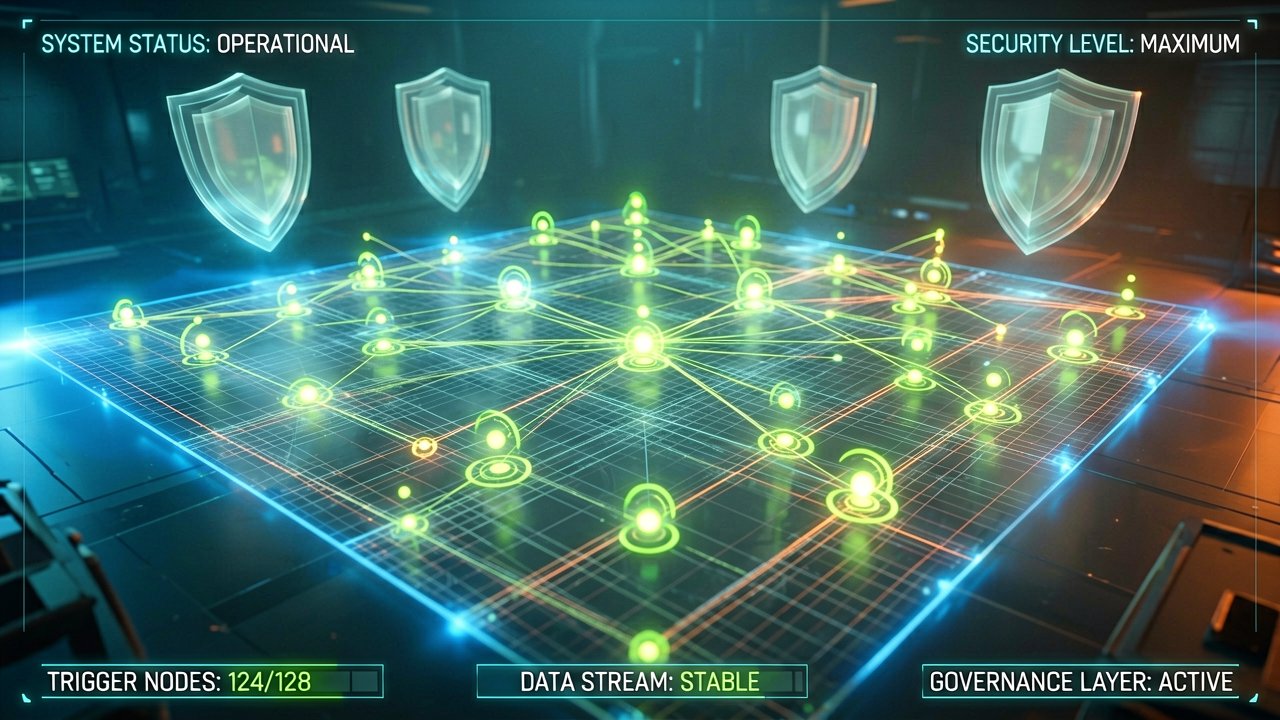
The enterprise AI platform WRITER announced event-based triggers for WRITER Agent on April 30, 2026, fundamentally changing how organizations deploy autonomous AI workflows. The update allows AI agents to detect business signals across connected systems and execute multi-step tasks without requiring manual initiation from users. This marks a shift from reactive AI assistants to proactive agents that operate independently within enterprise infrastructure.
According to the company's official press release, WRITER Agent now responds to triggers across Gmail, Gong, Google Calendar, Google Drive, Microsoft SharePoint, Slack, and additional enterprise tools. When a qualifying event occurs—a sales call ending in Gong, a brief landing in a Google Drive folder, a customer email arriving—the system automatically fires predefined playbooks that orchestrate research, content generation, and system updates. The physical experience changes noticeably: instead of opening a chat window and typing a prompt, users simply complete their normal workflow and the agent handles the rest.
WRITER's official announcement details the core capabilities. Doris Jwo, VP of Product Management at WRITER, explained the distinction between this approach and generic AI assistants. "Instead of employees initiating every workflow, the platform recognizes the moments that matter and acts autonomously," she said. "When your sales call ends, when your content deadline approaches, when your customer sends feedback—WRITER Agent is already moving."
The release also includes new enterprise connectors, most notably Adobe Experience Manager. This integration gives marketing teams direct read/write access to pages, fragments, and digital assets within Adobe's enterprise content management system. Combined with the new Google Drive connector, WRITER Agent can now autonomously operate across the folders, documents, and publishing systems that creative teams use daily. The practical implication: a marketing brief dropped in a designated folder triggers a cascade of playbooks that assemble research, generate assets, and prepare deliverables for human review without anyone remembering to start the process.
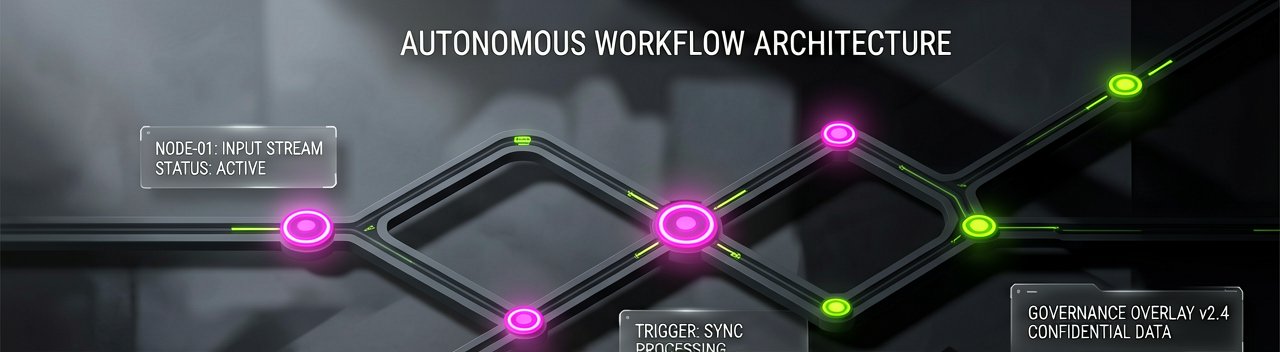
Independent reporting from VentureBeat contextualizes the competitive landscape. The launch positions WRITER against AWS, Salesforce, and Microsoft, all racing to establish their own agentic platforms. The comparison to Zapier is inevitable, but Jwo addressed it directly during interviews. "It's more than just an LLM in the middle," she said. "It is an agent with reasoning and then access to a really powerful set of tools that includes connectors, that includes its own virtual sandbox, which enables it to do things like write and execute code on the fly and create those assets."
The distinction matters for understanding where WRITER sits in an increasingly crowded automation landscape. Traditional workflow tools require users to manually define rigid logic paths, specifying exact conditions and actions in deterministic sequences. WRITER's approach uses its Palmyra-powered reasoning engine to process event context and make real-time execution decisions. Users describe goals in natural language rather than dragging boxes and defining conditional branches (which, let's be honest, is where most Zapier workflows die in production).
As AI agents work autonomously across external systems—triggered by events in third-party enterprise tools—IT teams need visibility and control over what those agents are doing in third-party environments. WRITER introduced an extended suite of new administrative controls specifically designed to manage autonomous agents working outside the organization's direct infrastructure. The new capabilities include:
- Connector Profiles: Configure multiple versions of the same connector with different permissions and access scopes per team
- WRITER Agent Profiles: Deploy customized versions of WRITER Agent with capability toggles, pre-configured Knowledge Graphs, and security settings per team
- AI Studio Observability: Auditable event tracking for every agent interaction, including tools called, guardrails applied, and error rates
- Datadog Logs Plugin: Forward every LLM request/response to Datadog as structured log events with full metadata
- Bring-Your-Own Encryption Key: Customer-held control over data encryption, deletion, and access through AWS, Azure, or GCP KMS integration
"We talk to a lot of CIOs and CISOs who want their teams using AI agents, but they need to see what those agents are actually doing," Jwo added. "Audit logs, team-level permissions, and custom encryption keys aren't 'nice-to-haves.' They're the difference between a limited pilot and deploying agents across regulated operations."

The governance controls address a critical friction point in enterprise AI adoption. When agents operate autonomously across external systems, IT teams lose the visibility they typically have with traditional software deployments. The Datadog Logs Plugin forwards every LLM request and response as structured log events with full metadata. Bring-Your-Own Encryption Key gives customers control over data encryption, deletion, and access through cloud KMS integration. These aren't marketing features—they're requirements for deploying AI agents in regulated environments where compliance failures carry real financial consequences.
WRITER's event-based triggers, new connectors, and enhanced governance controls are available immediately to enterprise customers. The company, founded in 2020 and backed by investors including Insight Partners, ICONIQ, Radical Ventures, Salesforce Ventures, and Adobe Ventures, positions itself as the enterprise AI agent platform trusted by Fortune 500 companies globally.
The real question isn't whether the technology works. It's whether enterprises will actually trust autonomous agents with their workflows. The governance controls help, but handing over execution authority to AI systems that operate without human initiation requires a cultural shift that many organizations haven't made yet. Whether CIOs approve this level of autonomy remains the actual bottleneck, not the engineering.
Artūras Malašauskas is an AI Systems Integrator with 20+ years of production-grade web engineering experience. He has designed, shipped, and scaled enterprise Python/PHP systems for logistics, SaaS, and public-sector clients. For the past year, he has focused exclusively on AI integrations: deploying open-source LLMs, building generative media pipelines (image, audio, video), and engineering multi-agent workflows for real production environments. His standard: reproducibility, security, cost-efficient inference—no vaporware. He documents and evaluates emerging AI tooling, separating verified capabilities from marketing noise. Technical editor at: muza-ai.eu, ai-verslas.lt, ai-naujinos.lt Connect on LinkedIn
Comments