Karma Launches AI Shopping Agent for Automated Price Tracking
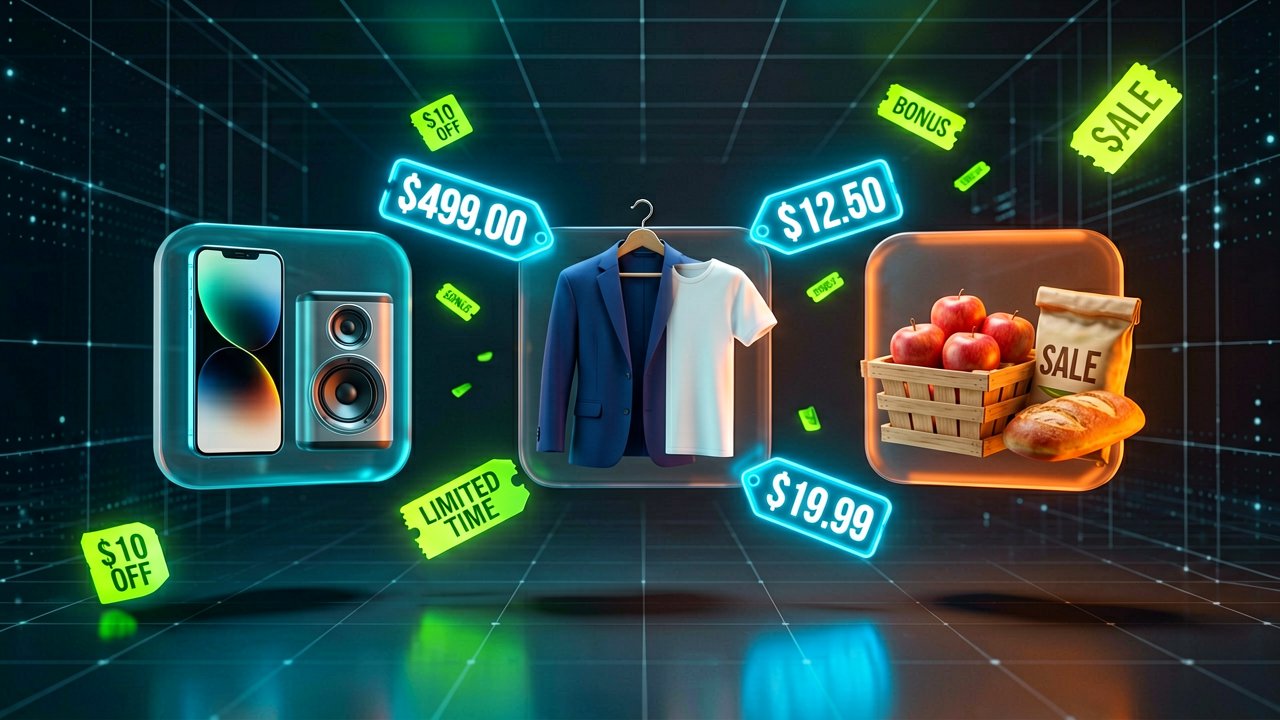
The AI-powered shopping platform Karma announced the launch of its intelligent shopping agent on April 30, 2026, introducing automated price tracking and coupon application capabilities designed to reduce the friction of online deal hunting.
The announcement comes via official press release distributed through Newsfile Corp., positioning the tool as a solution to what the company describes as steadily worsening pain points for online shoppers.
Here's the reality of modern e-commerce: prices shift constantly across electronics, travel, clothing, and beauty categories. Coupons expire without warning. Items vanish from inventory before checkout completes. For anyone managing a wish list across multiple retailers, staying on top of it all has become a part-time job.
Karma's agent handles this work in the background. Once a shopper saves a product, the platform monitors it across retailers, flags live price changes, sends back-in-stock notifications, and tests coupon codes at checkout so shoppers do not have to manually refresh pages or hunt for working discount codes.

The tool is built to respond differently depending on the product category. In beauty, where stock availability often determines whether someone buys, the agent prioritises availability alerts. In tech, where price gaps between retailers can be significant, it leans into comparison data. In travel, it monitors timing windows that tend to move fast.
"The gap between what consumers pay and what they could pay is becoming easier to close," said Hannah Barre, spokesperson for Karma. "We built this to run in the background so shoppers are not constantly refreshing pages or second-guessing whether a deal is real."
This addresses a documented consumer behavior pattern. According to NielsenIQ data cited in the announcement, roughly 40% of consumers actively hunt for deals during major shopping events, a figure that points to how much money people believe they are leaving on the table.
The physical experience of using the agent matters here. Instead of opening multiple tabs, checking price history charts, and manually testing coupon codes that often fail at checkout (a frustration that has plagued users for years, frankly), the agent operates through Karma's existing browser extension and mobile app infrastructure.

Users save items they want to track. The system monitors those items across retailers. When conditions align—price drops, stock returns, or valid coupons appear—the agent notifies the user. This removes the cognitive load of constant monitoring while maintaining purchase control.
The AI agent is available now across Karma's major shopping categories, including retail, fashion, travel, beauty, home, and technology. The company's website confirms the platform already serves 6.5 million users who shop through their browser extension or mobile app.
From a technical standpoint, the agent leverages large-scale shopping data and behavioural intelligence to automate tracking and coupon activation. This isn't a new feature added to an existing product—it's positioned as a core capability of the platform's mission to ensure shoppers experience the best deal as a given.
Industry context matters. Price tracking tools have existed for years, but they've typically required manual setup, browser extensions that slow down page loads, or separate apps that fragment the shopping experience. Karma's approach integrates the monitoring directly into the browsing workflow.
The company is based in Laguna Beach, California, and describes itself as an AI-powered shopping agent and purchase assistant. Contact information lists Krystal Park as the primary media contact, with the official website at karmanow.com.
What this means for consumers is straightforward: less time spent hunting deals, more time spent actually shopping. The agent removes the need to constantly refresh pages or second-guess whether a deal is real.
What this means for retailers is less clear. Automated price tracking increases price transparency across the market. When shoppers can easily compare prices and find working coupons, the competitive pressure on margins intensifies. Whether retailers view this as a threat or a market efficiency remains to be seen.
The real question isn't whether the technology works. It's whether users will actually trust an AI agent to make purchase timing decisions on their behalf. Some will embrace the automation. Others will want to verify every alert before clicking buy.
Whether users actually pay for it remains the real question.
Artūras Malašauskas is an AI Systems Integrator with 20+ years of production-grade web engineering experience. He has designed, shipped, and scaled enterprise Python/PHP systems for logistics, SaaS, and public-sector clients. For the past year, he has focused exclusively on AI integrations: deploying open-source LLMs, building generative media pipelines (image, audio, video), and engineering multi-agent workflows for real production environments. His standard: reproducibility, security, cost-efficient inference—no vaporware. He documents and evaluates emerging AI tooling, separating verified capabilities from marketing noise. Technical editor at: muza-ai.eu, ai-verslas.lt, ai-naujinos.lt Connect on LinkedIn
Comments