BBVA's AI Strategy Prioritizes Talent Over Technology

The Spanish banking giant BBVA has taken an unconventional approach to artificial intelligence integration. Rather than focusing primarily on technology procurement, the bank has built its AI strategy around human capital development. This talent-first methodology has resulted in measurable adoption metrics across its global workforce.
According to Aila Jiménez, Head of Talent & Culture Transformation and Data at BBVA, the difference lies not in the technology itself but in how the organization supports employees in trying new workflows. The bank's official documentation details this philosophy: "Technology brings speed and the ability to analyze large volumes of data, but people remain essential in contributing judgment, critical thinking, and empathy in decision-making."
The numbers reflect this human-centric approach. Virtually the entire BBVA Group workforce now has access to generative AI licenses through global agreements with OpenAI and Google. More than half of employees use these tools weekly. ChatGPT sees an average of 12 days of use per month per employee, while Gemini averages nearly nine days per month. These metrics show consistency across areas and countries, indicating adoption has permeated the organization.
Teams have identified more than 8,000 active use cases, with approximately 700 considered strategically relevant. The figure continues growing as capabilities embed across workflows. One concrete example: a virtual assistant in the Talent & Culture area handles over 34,000 queries monthly, drawing from a knowledge base of 2,500+ documents. Employees in Mexico and Spain access it for questions about compensation, benefits, professional development, and payroll.

The bank estimates that automating repetitive tasks saves each employee around three hours per week. That's roughly 150 hours annually per person—time redirected toward higher-value activities. (Three hours a week adds up faster than most people realize, especially when you're staring at a spreadsheet at 4:55 PM on a Friday.)
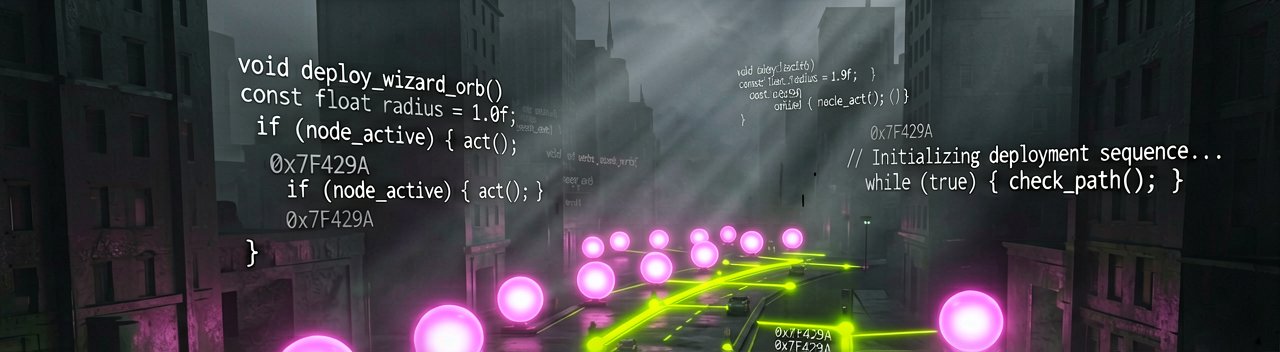
What distinguishes BBVA's model is the creation of internal "wizard" roles. Close to 750 employees comprise this network, growing week by week. These wizards promote AI adoption across different areas, identify new use cases, share best practices, and support teams in integrating tools into workflows. Their role accelerates the learning curve and makes AI accessible organization-wide.
Training remains the essential lever for this rollout. The Gemini Express course became the most widely attended training in the bank's history during its first week, with more than 105,000 employees trained through the program. Overall, AI-related training programs exceeded 280,000 hours in 2025. More than 90,000 employees now participate in a community of practice, driving internal training activities like bootcamps, meetups, and mentoring sessions.
BBVA's official innovation page documents these initiatives alongside the bank's broader AI transformation strategy. The page outlines how training, new internal roles, and a culture encouraging experimentation form the pillars of the approach.
Harvard Business Review has recognized BBVA as a benchmark for corporate AI adoption. The publication analyzed how expanding access to generative AI tools can channel internal demand into innovation drivers. All Group employees now have access to generative AI tools, including those in the commercial network.
The HBR recognition article details how BBVA's strategy addresses the "shadow AI" phenomenon—employee use of AI tools without informing technology or compliance departments. A survey by MIT Media Lab found 90% of surveyed professionals use AI tools for work tasks, but only 40% of companies have purchased official licenses.
BBVA's approach channels this demand securely. Senior management speed was vital in streamlining risk assessment, legal review, and GDPR compliance processes in just two months. The bank trained 250 main directors, including the CEO and Chair, to view the technology as a valuable assistant and lead by example.
The bank also runs BBVA Bot Talent, an internal competition where employees develop AI solutions for corporate challenges. The second edition received 315 proposals from over 1,200 employees. The winning project, PresentAltor, automates corporate content creation in seconds, reducing manual tasks and enhancing team efficiency.
Physical interaction with these tools matters. Employees don't just read about AI—they click through interfaces, type prompts, review outputs, and validate results. The friction of learning new systems is real, and BBVA's wizard network helps smooth that experience. Someone who's never used generative AI faces a different reality than someone who's spent months experimenting with prompts and refining workflows.
Human-controlled governance remains critical. AI does not directly write in central databases without human validation, and assistant quality is regularly evaluated to ensure transparency and security. This oversight balances empowerment with risk management.
The bank's ultimate goal measures success by the degree of transformation achieved across the organization and in how people work, not just by the number of tools deployed. Whether this talent-first approach translates to sustained competitive advantage remains the real question. Other banks can copy the training programs, but replicating the cultural shift takes time—and not every organization has the patience for that kind of transformation.
Artūras Malašauskas is an AI Systems Integrator with 20+ years of production-grade web engineering experience. He has designed, shipped, and scaled enterprise Python/PHP systems for logistics, SaaS, and public-sector clients. For the past year, he has focused exclusively on AI integrations: deploying open-source LLMs, building generative media pipelines (image, audio, video), and engineering multi-agent workflows for real production environments. His standard: reproducibility, security, cost-efficient inference—no vaporware. He documents and evaluates emerging AI tooling, separating verified capabilities from marketing noise. Technical editor at: muza-ai.eu, ai-verslas.lt, ai-naujinos.lt Connect on LinkedIn
Comments