Australia Edge AI Chip Market Projected to Reach $5.5B by 2035

The Australian semiconductor landscape faces a structural reality: the country imports over 90% of its advanced AI chipsets from US, Taiwanese, and South Korean fabrication facilities. This dependency shapes every aspect of the Edge Artificial Intelligence Chips market, from procurement timelines to competitive positioning for domestic design houses.
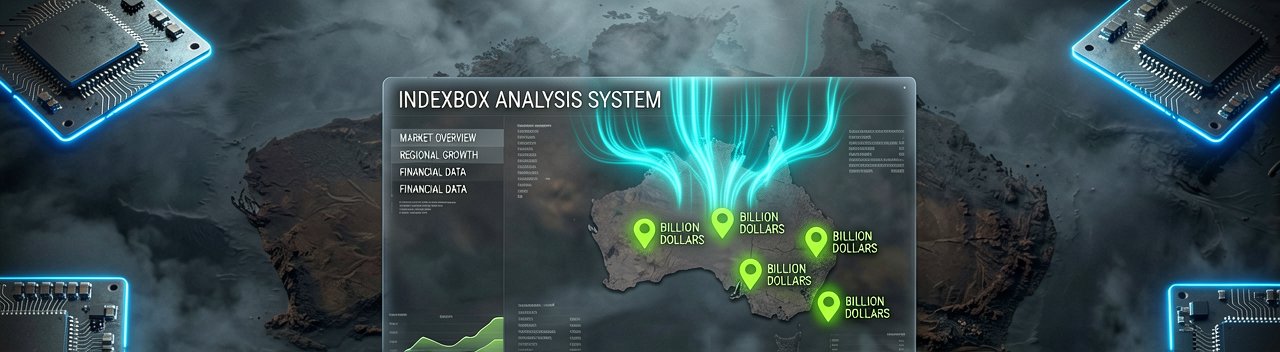
According to the latest IndexBox market analysis, the market is projected to expand from approximately USD 1.2–1.5 billion in 2026 to USD 4.5–5.5 billion by 2035. That represents a compound annual growth rate of 14–17%, which sounds impressive until you factor in the supply constraints.
Edge AI chips are specialized semiconductor devices designed to perform inference tasks directly on-device. They enable real-time data processing without reliance on cloud connectivity. For practical applications, this means a mining sensor in Western Australia can classify rock formations locally rather than transmitting terabytes of data to a Sydney server farm. The latency difference matters when autonomous haul trucks are moving at 60 kilometers per hour.
Demand architecture skews heavily toward data center inference accelerators and edge inference system-on-chips. Hyperscaler cloud expansion and sovereign AI initiatives within Australia's public and private sectors drive the bulk of procurement. The government's push for onshore AI compute creates captive demand for inference chipsets in local data centers rather than relying solely on overseas cloud providers.
Consumer electronics represents the largest end-use segment at an estimated 32% market share. Smartphones, wearables, and smart home devices integrate dedicated Neural Processing Units for computational photography, real-time language translation, and health monitoring. Through 2035, demand shifts from premium flagship devices to mid-range and entry-level segments as economies of scale drive chip costs down.
Automotive follows at 24%, representing the most performance-intensive and safety-critical edge AI segment. Current deployments focus on perception stacks—processing data from cameras, LiDAR, and radar for object detection. The progression toward 2035 involves a shift from supporting Level 2/3 ADAS to enabling Level 4/5 autonomy, requiring exponential increases in compute performance within strict thermal and reliability constraints.
Here's where the rubber meets the road: Australian chip designers face lead times of 12–18 months for 5nm and 3nm wafers at TSMC and Samsung. This constrains time-to-market for new AI chipsets in ways that matter to product managers who need to ship before competitors do. Advanced packaging bottlenecks compound the problem—CoWoS and HBM supply are tightly allocated to major US and Asian players.
Long qualification cycles in automotive and industrial sectors add another layer of friction. ISO 26262 functional safety certification and OEM qualification processes can take 2–4 years. This slows adoption of Australian-designed AI chipsets in vehicles and factory automation. The talent scarcity issue runs deeper: Australia faces a shortage of architecture-level engineers with expertise in sparse tensor cores, in-memory computing, and chiplet design.

Export control compliance creates additional complexity. Australian buyers of advanced AI chipsets must navigate US export license requirements, particularly for dual-use applications in defense and critical infrastructure. The CHIPS Act and Export Administration Regulations directly affect access to leading-edge nodes below 7nm, creating supply bottlenecks for high-performance training chips.
Despite these constraints, domestic fabless design activity is expanding. Several Australian startups specialize in edge AI architectures and chiplet-based designs, though volume production remains offshore. The rise of chiplet and advanced packaging offers a workaround—Australian design teams are adopting 2.5D/3D packaging to bypass full-node scaling costs.
Vertical integration by hyperscalers adds another dimension. Global players like AWS, Microsoft, and Google increasingly design their own AI chipsets. Their Australian data center expansions create captive demand for custom accelerators, which benefits local system integrators but reduces opportunities for independent chipset vendors.
Telecommunications and defense sectors show growing adoption of AI-enabled FPGAs. Australia's 5G rollout and AUKUS-related defense programs fuel demand for reconfigurable AI chipsets with low latency and high security. These applications prioritize operational resilience and offline functionality in critical infrastructure.
The market valuation excludes module-board-level markup and software stack subscriptions, which typically add 20–35% to end-user costs. This distinction matters for procurement teams evaluating total cost of ownership versus sticker price. The real economics emerge when you factor in qualification burden, lead times, and supply assurance.
Historical analysis in the IndexBox framework covers 2012 to 2025, with forward-looking scenarios through 2035. The methodology combines deep secondary research, structured evidence review, market reconstruction, and multi-level triangulation. It prioritizes official company disclosures, regulatory guidance, peer-reviewed literature, and patents over third-party market publications.
Whether Australian companies can actually capture meaningful market share remains the real question. The growth projections look solid on paper, but supply chain bottlenecks and talent gaps create real friction. Domestic design houses will need to navigate export controls, qualification cycles, and foundry capacity constraints while competing against established global players with deeper pockets and longer track records.
The market will grow regardless of local participation. The question is whether Australian firms become suppliers or remain customers in their own market. That distinction determines whether the country builds semiconductor capability or simply imports it at a premium.
Artūras Malašauskas is an AI Systems Integrator with 20+ years of production-grade web engineering experience. He has designed, shipped, and scaled enterprise Python/PHP systems for logistics, SaaS, and public-sector clients. For the past year, he has focused exclusively on AI integrations: deploying open-source LLMs, building generative media pipelines (image, audio, video), and engineering multi-agent workflows for real production environments. His standard: reproducibility, security, cost-efficient inference—no vaporware. He documents and evaluates emerging AI tooling, separating verified capabilities from marketing noise. Technical editor at: muza-ai.eu, ai-verslas.lt, ai-naujinos.lt Connect on LinkedIn
Comments