Utah Invests $33 Million in AI Health Infrastructure and Supercomputer

The State of Utah has committed more than $33 million to build an artificial intelligence supercomputer and modernize health data infrastructure, positioning the state as a leader in AI-enabled medical research. The investment centers on two interconnected initiatives: the Utah Health Artificial Intelligence Vault (UHAIV) and advanced computing infrastructure accessible to all state universities.
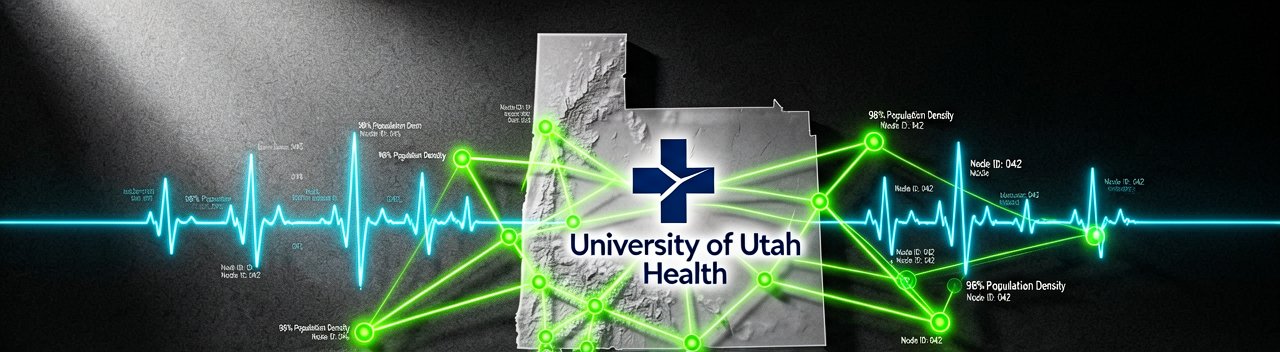
According to the official press release from University of Utah Health, the UHAIV will modernize the Utah Population Database (UPDB), a decades-old public asset that has already powered landmark discoveries in cancer genetics. The current UPDB architecture simply cannot handle modern AI workloads. (That's the reality of legacy systems—built for one era, now choking on the next.)
For over twenty years, Huntsman Cancer Institute has managed the UPDB. The database enabled identification of inherited risk genes for breast and ovarian cancer (BRCA1 and BRCA2), melanoma (CDKN2A/p16), and colon cancer (APC). These discoveries reshaped screening guidelines and prevention protocols worldwide. The new UHAIV platform will enable advanced AI analytics within a secure environment while maintaining privacy and ethical oversight standards.
Bradley Cairns, PhD, CEO of Huntsman Cancer Institute, and James Hotaling, MD, chief innovation officer at University of Utah Health, will jointly manage the UHAIV project. The initiative pairs the modernized database with Utah's new AI supercomputer, giving researchers unprecedented capabilities to accelerate breakthroughs in prevention, early detection, personalized treatments, and survivorship across numerous diseases.
The computing infrastructure component represents a separate but complementary investment. Manish Parashar, PhD, chief AI officer at the University of Utah, will oversee the supercomputer through the university's Center for High Performance Computing at the Scientific Computing Institute. The system will increase computing capacity by 3.5 times compared to current resources, enabling more researchers to work simultaneously on data-intensive projects.
Graphics processing units, high-speed networking, and secure data storage—the core components of modern AI systems—are expensive to acquire and maintain. By centralizing these resources at the state level, Utah lowers a key barrier for smaller research teams, startup companies, teachers, and students across the state. The physical reality matters here: researchers no longer need to wait weeks for cloud compute time or justify massive infrastructure purchases to their departments.
Early academic access to the supercomputer is expected to begin mid-summer 2026, after construction completes, with industry access to follow. The system will support workloads ranging from biomedical research—such as developing new treatments for cancer and Alzheimer's disease—to environmental modeling, clinical decision support, and large-scale analysis of historical and textual datasets in the humanities.
The broader AI Factory initiative, a $50 million co-investment involving Hewlett Packard Enterprise, NVIDIA, the Huntsman Family Foundation, and the state, represents a parallel infrastructure effort. This collaborative initiative will dramatically expand the university's capacity for AI-driven discovery while strengthening Utah's growing AI and technology ecosystem. The infrastructure is still being built, but it offers exciting long-term capability.
Taylor Randall, president of the University of Utah, called the investment a powerful example of what becomes possible when a state chooses to invest boldly in the health and future of its people. Utah's leadership understands that world-class discovery, advanced computing, and responsible data stewardship are essential to improving the lives of patients, families, and communities across the state.
Beyond scientific discovery, UHAIV and the AI supercomputer are expected to catalyze economic growth by enabling new public-private partnerships, supporting biotechnology and pharmaceutical innovation, and creating high-skill, high-wage jobs across Utah's life sciences and technology sectors. The state's Pro-Human AI Initiative spans policy, education, workforce training, government applications, and academic and industry research and development.
Bob Carter, MD, PhD, CEO of University of Utah Health, emphasized that these investments are not just about technology—they are about people. Patients seeking better outcomes, families navigating complex diagnoses, and communities facing health disparities all stand to benefit from accelerated discovery timelines.
The system is being developed as a sovereign AI environment, meaning computing resources and data infrastructure are controlled and governed locally rather than relying solely on external commercial platforms. This model allows researchers to work with sensitive datasets—including clinical data, genomic information, and other protected research data—within a secure environment that supports institutional governance, regulatory compliance, and responsible AI development.
Whether the infrastructure delivers on its promises depends on execution. The technology exists. The funding is secured. The real question is whether researchers can actually access these resources without bureaucratic friction, and whether the discoveries translate into treatments that reach patients in meaningful timeframes. That's where most health AI initiatives stumble—not in the code, but in the delivery.
Artūras Malašauskas is an AI Systems Integrator with 20+ years of production-grade web engineering experience. He has designed, shipped, and scaled enterprise Python/PHP systems for logistics, SaaS, and public-sector clients. For the past year, he has focused exclusively on AI integrations: deploying open-source LLMs, building generative media pipelines (image, audio, video), and engineering multi-agent workflows for real production environments. His standard: reproducibility, security, cost-efficient inference—no vaporware. He documents and evaluates emerging AI tooling, separating verified capabilities from marketing noise. Technical editor at: muza-ai.eu, ai-verslas.lt, ai-naujinos.lt Connect on LinkedIn
Comments