Trunk Tools Unveils Cortex: The AI Architecture Aiming to Cure Construction's Blueprint Headache

Anyone who has spent ten minutes on a commercial job site knows that blueprints aren't static—they're a living, breathing, and frequently chaotic mess. A single project can generate thousands of distinct 2D drawing sheets, and keeping track of how a revision to an electrical outlet impacts a structural wall is an administrative nightmare that historically required human eyes and endless patience. On June 17, 2026, New York-based construction technology startup Trunk Tools announced the launch of Cortex, a specialized AI intelligence layer designed to do what off-the-shelf language models can't: read, interpret, and cross-reference complex construction drawings with absolute precision.
Developed over four years alongside some of the largest general contractors in the United States—including industry titans like Gilbane and Suffolk—Cortex operates as an underlying "brain" for the project lifecycle. Instead of merely scanning PDFs for text, the engine builds an interconnected knowledge graph that matches symbols, revisions, and spatial relationships against schedules, requests for information (RFIs), and submittals. Founder and CEO Dr. Sarah Buchner has long championed the idea that generic AI models fail in heavy industry because they lack the context of the field. Cortex bridges that gap by ingesting the specific visual grammar used by architects and engineers, turning what used to be weeks of manual drafting cross-checks into a process that takes minutes.
Powering the Field via Specialized Autonomous Agents
Rather than dropping a clunky chatbot into a foreman's lap, Trunk Tools is deploying this underlying cognitive architecture through targeted, purpose-built AI agents. A marquee example is TrunkReview, an agent that reviews multi-sheet drawing revisions in under five minutes, automatically generating narratives for changes that architects frequently forget to explicitly cloud or call out. Meanwhile, another agent called TrunkBrowse turns flat 2D blueprints into interactive, clickable dashboards. Clicking a fixture on a tablet screen instantly surfaces its associated submittals, open RFIs, and manufacturer specifications so field teams never have to leave the drawing to hunt for data.
Streamlining Preconstruction Workflows
The operational upgrades ripple right into back-office workflows, where tools like TrunkRegister read entire multi-hundred-page specification books to generate submittal logs directly inside popular platforms like Procore, saving project engineers upwards of 30 hours of manual data entry. Similarly, TrunkBid automates "apples-to-apples" bid alignment comparisons to keep preconstruction buyouts on track. According to a press release distributed by GlobeNewswire, existing core tools like TrunkSubmittal have clocked a 74% reduction in approval cycle times since adopting the underlying architecture. By handling the high-volume document grind, this specialized software seeks to eradicate the communication slip-ups that lead to multi-million-dollar reworks on major builds.
Under the Hood of the Blueprint Brain
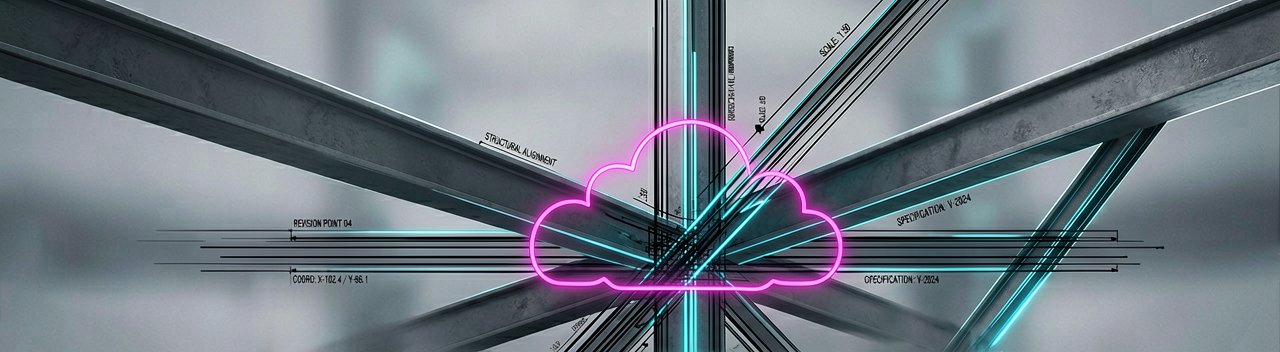
Beyond the Software Pitch: The real magic of Cortex isn't just that it reads lines on a digital page; it's how it handles the inherent ambiguity of human engineering. In traditional tech, data follows a clean, predictable structure, but a construction drawing is a chaotic mix of handwritten field notes, overlapping vector lines, and heavily compressed symbols. Generic large language models frequently hallucinate when faced with these spatial relationships because they process text sequentially rather than understanding how a two-inch pipe on an mechanical drawing physically intersects with a concrete beam on a structural plan. Trunk Tools spent years training their algorithms on this exact visual messiness, allowing the platform to translate flat pixels into an active, multi-dimensional relational database.
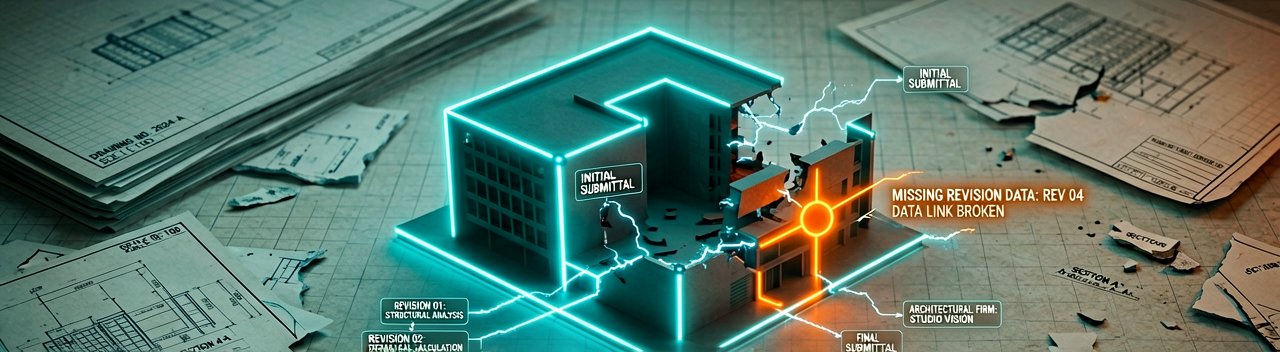
This deep contextual understanding solves one of the most frustrating bottlenecks in the preconstruction phase: the unrecorded change. When an architect revises a layout, they are supposed to place a revision cloud around the altered area, but human error means minor updates frequently slip through unannounced. By running automated pixel-by-pixel and vector-by-vector comparisons across thousands of sheets simultaneously, the system acts as an unforgiving auditor. It forces hidden discrepancies into the open before a single ounce of concrete is poured, shifting the industry from a reactive posture of fixing mistakes on site to a proactive posture of digital verification.
From the perspective of superintendents and project managers on the ground, this technology directly addresses a crushing labor crisis. Experienced estimators and detail-oriented project engineers are becoming harder to find and retain, leaving younger, less experienced staff to manage massive, high-liability document sets. By offloading the tedious, soul-crushing tasks—like manually building submittal registers line by line out of a 600-page specification book—general contractors can keep their teams focused on actual building logistics and safety rather than administrative firefighting. It alters the economics of the trailer, transforming overworked paper-pushers back into strategic project builders.
Historically, the construction sector has been notoriously slow to adopt digital tools, burned by decades of over-promised software that failed to survive the rugged reality of a muddy job site. Early attempts at artificial intelligence in this space often required teams to completely change their existing workflows, which inevitably led to field abandonment. The strategy with this new architecture flips that script by integrating directly with industry-standard platforms like Procore and Autodesk Construction Cloud. By operating quietly in the background of tools workers already use daily, the tech bypasses the typical friction of user adoption and delivers immediate utility without a steep learning curve.
Ultimately, the rollout of these specialized agents signals a broader shift in how heavy industry interacts with automation. The era of the generic chatbot is giving way to highly specialized vertical intelligence that respects the unique domain expertise of specialized trades. As projects grow more complex and timelines shrink, the contractors who win will not necessarily be the ones with the largest workforces, but the ones who can synthesize data the fastest. By turning static, confusing blueprints into an interconnected knowledge graph, this shift lays the groundwork for a future where a building’s data layer is just as resilient and well-engineered as its physical foundation.
The Friction Between Silicon Valley Logic and Hard Hats
Reading Between the Lines: While the promise of automated blueprint auditing sounds like a silver bullet for an industry plagued by cost overruns, executing this transition on actual dirt and concrete introduces heavy friction. Tech evangelists love to treat construction as a pure optimization problem, assuming that cleaner data automatically yields a cleaner build. In reality, the chaotic nature of a job site is often managed through informal, unwritten handshakes and field-level workarounds that purposely bypass official documentation to keep a project moving. Injecting an unyielding, hyper-vigilant AI auditor into this delicate ecosystem could inadvertently paralyze progress by flagging thousands of micro-discrepancies that human superintendents would normally resolve with a simple five-minute conversation.
There is also a glaring contradiction in how the industry views liability versus how AI software operates. Construction is a highly litigious game of passing the buck; architects, structural engineers, and general contractors operate under strict legal frameworks where a single misplaced dimension can trigger a multimillion-dollar lawsuit. If an autonomous agent like TrunkReview fails to spot a missing revision cloud, or worse, hallucination leads it to falsely approve an mismatched structural detail, who carries the financial blame? Software companies notoriously shield themselves with ironclad terms of service that place all ultimate risk back on the end-user, meaning human engineers cannot actually afford to lower their guard or shorten their review times as much as marketing brochures claim.
Furthermore, relying on algorithms to parse legacy specification books and messy 2D drawings might just be a sophisticated way of treating the symptoms rather than curing the disease. The root cause of construction's document crisis is that the industry remains stubborn about relying on fragmented, flat PDFs instead of fully embracing true, unified 3D Building Information Modeling (BIM). By building highly advanced tools to fix the errors inherent in outdated drafting methods, the technology might ironically prolong the lifespan of inefficient practices, giving stakeholders an excuse to delay upgrading to fully digitized, cloud-native collaborative design frameworks.
Over the long term, the widespread deployment of these automation layers risks creating a dangerous knowledge gap within construction firms. The tedious process of manually building submittal registers and cross-checking drawings is precisely how junior project engineers develop their "field eyes" and learn the intricate anatomy of a building. If an underlying intelligence layer handles all the tedious data ingestion automatically, the industry will have to reinvent how it trains the next generation of project executives. Without that foundational, grinding experience of wrestling with paper documents, future managers may lack the intuition required to spot physical anomalies on the site that software simply cannot see.
"We are rapidly approaching a future where an algorithm can spot an unclouded blueprint revision in milliseconds, yet it still takes three human beings, a specialized sub-contractor, and a four-week RFI cycle to figure out why the actual drywall doesn't fit the actual steel beam."
Artūras Malašauskas is an AI Systems Integrator with 20+ years of production-grade web engineering experience. He has designed, shipped, and scaled enterprise Python/PHP systems for logistics, SaaS, and public-sector clients. For the past year, he has focused exclusively on AI integrations: deploying open-source LLMs, building generative media pipelines (image, audio, video), and engineering multi-agent workflows for real production environments. His standard: reproducibility, security, cost-efficient inference—no vaporware. He documents and evaluates emerging AI tooling, separating verified capabilities from marketing noise. Technical editor at: muza-ai.eu, ai-verslas.lt, ai-naujinos.lt Connect on LinkedIn
Comments