Ramp Deploys AI Agents to Automate Corporate Procurement

The financial operations platform Ramp announced a significant expansion of its procurement capabilities on April 29, 2026, introducing a fleet of AI agents designed to run the entire purchasing process from source to payment.
According to the company's official press release, the new agents handle intake requests, vendor sourcing, compliance checks, and contract renewals without requiring dedicated procurement staff.
This launch marks a shift from managing spend to executing the full buying lifecycle. The agents triage employee requests, source vendors, review contract terms, and handle compliance checks autonomously.
Geoff Charles, Chief Product Officer at Ramp, stated in the release that "the tools companies use to buy haven't kept pace with the speed or sophistication of what they're buying."
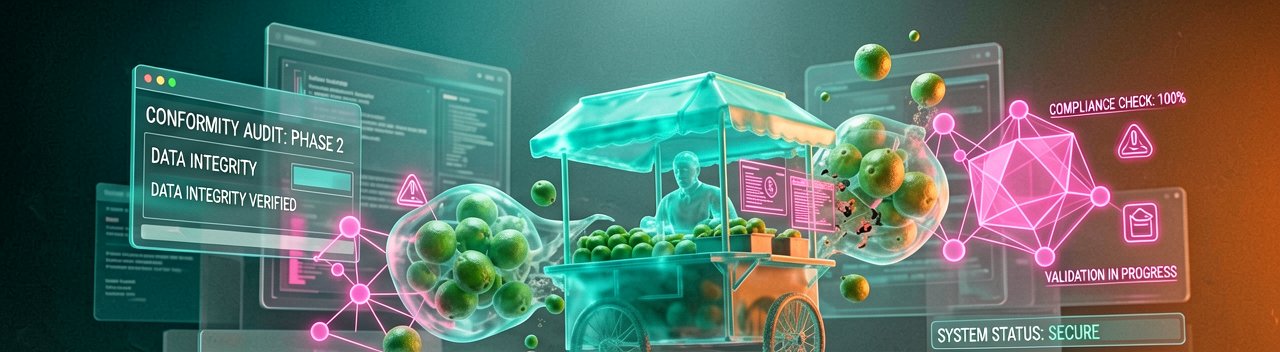
The platform leverages anonymized pricing benchmarks and vendor data from millions of Ramp transactions. This gives smaller companies access to the same benchmark data typically reserved for Fortune 500 firms.
Consider the physical reality of the old workflow. A finance lead at a 200-person company needs new HR software. They open multiple browser tabs. They query AI chatbots. They parse vendor quotes in spreadsheets. They chase approvals over email. The process takes weeks.
Ramp's agents compress that into a single conversation. Employees describe what they need in plain English. The agent asks context-aware follow-up questions. It pre-fills the request form. It catches policy violations before anything hits an approver's queue.
Independent reporting from PYMNTS corroborates the timeline and scope of the announcement.

The company reported that Ramp Procurement customers reduce vendor costs by 16% annually on average. They also cut manual purchasing work by 46 hours per month.
These metrics matter because the procurement landscape has changed dramatically. AI adoption has crossed 50% of U.S. businesses. The average AI contract has jumped from $39,000 to over $500,000 in two years.
Finance teams are now signing the biggest deals of their careers. They're doing it on pricing models that didn't exist last year. And they're using the same tools they had in 2021.
The new agent platform includes several distinct capabilities. Natural language intake lets employees tell Ramp what they need in plain English. The agent asks follow-up questions and catches policy violations before they reach approvers.
An advanced workflow builder supports parallel approval paths. It integrates bidirectionally with CLM, TPRM, and ticketing tools. Customers report running their entire procurement process three times faster than before.
Agent-run due diligence conducts custom compliance checks for security, legal, and finance teams before a request reaches an approver. This saves stakeholders approximately two hours of manual research per request.
Renewal and contract intelligence delivers negotiation briefings 90 days out. The briefing includes pricing benchmarks, Okta seat usage, user satisfaction signals, and flagged contract terms.
Zero-touch sourcing is available in early access. Describe the vendor you need. Ramp researches options, generates the RFx, collects vendor responses, scores them, and recommends a winner.
Sourcing events that used to take weeks of research and coordination are now compressed into a single conversation with Ramp.
This isn't Ramp's first foray into AI agents. The company released Agents for Controllers in July 2025. It followed with Agents for AP in October 2025.
In March 2026, Ramp and Visa announced AI agents that automate corporate bill pay. Those agents reduce manual work, curb spend, and unlock savings.
The companies said these agents would provide Ramp customers with greater payment flexibility and more control over corporate spend.
Ramp reported that its enterprise customer base grew 133% year over year in 2025. Companies are seeking replacements for old infrastructure burdened by manual controls and disconnected systems.
The PYMNTS Intelligence report "The Investment Impact of GenAI Operating Standards on Enterprise Adoption" found that among U.S. firms generating at least $1 billion in annual revenue, 25% are actively using generative AI in their procure-to-pay cycle.
Another 48% are considering doing so.
Every agent in the new platform is backed by anonymized pricing benchmarks and vendor data from Ramp. The data is tailored to each customer's business size, industry, and specific needs.
Full procurement reporting provides end-to-end visibility into spend and process. You can see every purchase from request to PO to payment. Ramp surfaces outstanding purchase orders, budget variance, and approval bottlenecks.
If you need something specific, just ask in plain English and Ramp generates the report.
Charles called this "the first step toward a fully autonomous back office." He added that every company deserves procurement-grade rigor, whether they have a procurement team or not.
The technology addresses a real gap. Ninety-eight percent of U.S. businesses don't have dedicated procurement teams in-house. Full departments drive savings, own critical vendor relationships, and ensure every dollar spent is intentional.
That discipline directly protects margin. But most companies don't have it.
When a 200-person company needs new HR software or a data platform, the process is usually multiple browser tabs, a series of AI chatbot queries, and a frustrated finance lead trying to parse it all.
That gap is getting expensive, fast.
Whether the agents actually deliver on their promises in real-world deployments remains to be seen. The metrics come from existing Ramp Procurement customers, not from the new AI agent features specifically.
Companies will need to evaluate whether the time savings justify the platform costs. They'll also need to assess whether AI-driven vendor selection matches their risk tolerance.
For now, the launch signals a broader trend. Procurement is moving from manual workflows to autonomous agents. The question isn't whether this happens. It's whether finance teams can trust the agents enough to let them run the process end-to-end.
That trust will be earned through consistent performance, not press releases.
Artūras Malašauskas is an AI Systems Integrator with 20+ years of production-grade web engineering experience. He has designed, shipped, and scaled enterprise Python/PHP systems for logistics, SaaS, and public-sector clients. For the past year, he has focused exclusively on AI integrations: deploying open-source LLMs, building generative media pipelines (image, audio, video), and engineering multi-agent workflows for real production environments. His standard: reproducibility, security, cost-efficient inference—no vaporware. He documents and evaluates emerging AI tooling, separating verified capabilities from marketing noise. Technical editor at: muza-ai.eu, ai-verslas.lt, ai-naujinos.lt Connect on LinkedIn
Comments