Jackson College Hosts AI Manufacturing Event for Michigan Industry
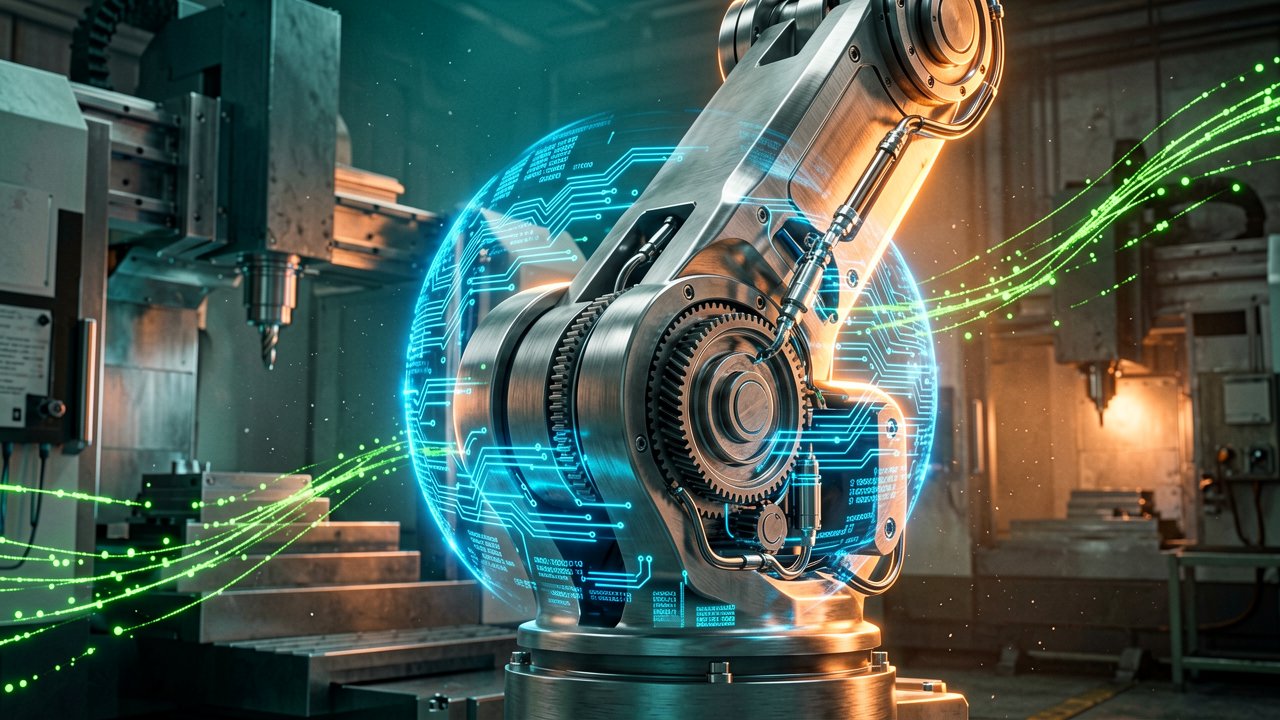
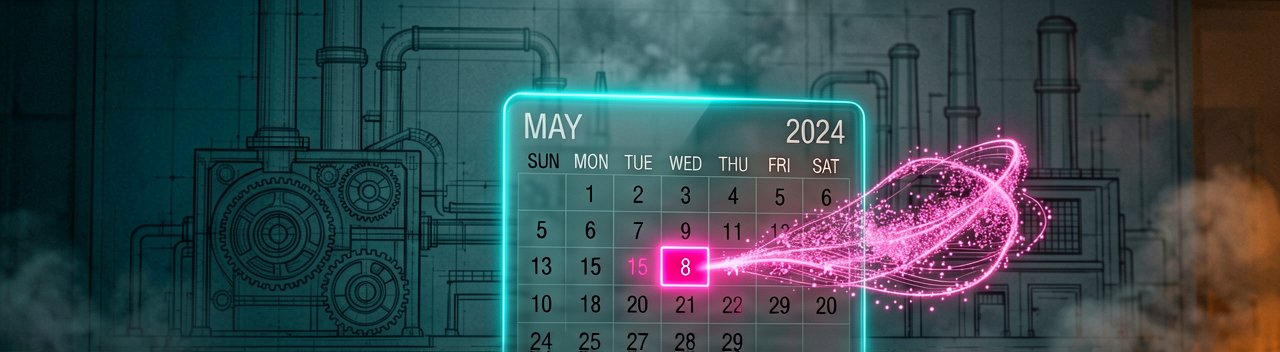
Manufacturers in Michigan's Jackson County will gather this month to confront a practical question: after five years of Industry 4.0 exploration, what actually works when artificial intelligence enters the factory floor? Jackson College, in partnership with the Michigan Manufacturing Technology Center, is hosting ReMaking Michigan 2026: The Next Era of Manufacturing on Friday, May 8, from 8:30 a.m. to 11:30 a.m. in the Victor Cuiss Fieldhouse on the college's Central Campus.
The event represents a deliberate pivot in regional manufacturing strategy. After years of testing automation, digital twins, and sensor networks, the conversation has moved from whether to adopt these technologies to how to optimize them. This distinction matters. Implementation is one thing; extracting measurable productivity gains is another entirely.
According to the official event announcement, sessions will highlight what has worked, what has not, and where companies should focus next in an increasingly AI-driven landscape. The three-hour window is packed with expert insights, real-world manufacturer case studies, and practical discussions designed to help attendees move beyond implementation.
Amber Collins, director of economic and workforce development at Jackson College, framed the event's purpose bluntly: "This event is about helping manufacturers take the next step. We want participants to leave with actionable strategies they can apply immediately in their organizations." The emphasis on immediate applicability suggests organizers recognize that theoretical AI discussions have limited value for shop floor managers facing quarterly production targets.

Registration is required, though the event is free to attend. Interested parties can register through the Michigan Manufacturing Technology Center's education portal. The logistics are straightforward: show up, listen to case studies, network with peers facing similar challenges. No elaborate tech demos or flashy presentations—just manufacturers talking about what actually moves the needle on productivity.
This timing reflects broader industry patterns. After the initial wave of Industry 4.0 enthusiasm, many manufacturers found themselves with expensive equipment and unclear ROI. The shift to optimization acknowledges that digital transformation isn't a one-time purchase; it's continuous refinement. (Honestly, most companies discovered this the hard way after their first smart factory rollout.)
The physical reality of this transition deserves attention. AI in manufacturing isn't about chatbots or generative text—it's about predictive maintenance algorithms that reduce unplanned downtime, computer vision systems that catch defects before they reach customers, and supply chain optimization that prevents the kind of material shortages that halted production lines during the pandemic. These systems require specific infrastructure: reliable connectivity, sensor networks, and staff trained to interpret data outputs rather than just operate machines.
MLive reported that the event marks a transition in how manufacturers approach digital tools, with the focus shifting from adoption to optimization. This mirrors what industry analysts have observed across the Midwest: the early adopters are now struggling with integration challenges, while late adopters are watching from the sidelines, waiting to see what actually delivers value.
The partnership between Jackson College and MMTC is significant. Community colleges have traditionally focused on workforce training, but this event positions the institution as a hub for industry strategy. It's a natural evolution—colleges understand that their manufacturing programs must align with what employers actually need, not what textbooks say they should need.
What makes this event different from typical industry conferences? The scope is regional, the audience is local manufacturers, and the content is grounded in Michigan's specific manufacturing ecosystem. The automotive supply chain, medical device production, and food processing all face different AI challenges. A solution that works for a Detroit auto parts supplier may not translate to a Jackson County food packaging operation.
Case studies will likely cover common pain points: equipment downtime, quality control consistency, labor shortages, and supply chain volatility. These aren't abstract problems—they're daily realities for plant managers who've spent the last five years wrestling with digital tools that promised more than they delivered.
The three-hour format suggests organizers understand attention spans. Manufacturers don't need a full-day seminar; they need concentrated, actionable information they can implement on Monday morning. This pragmatic approach reflects the event's stated goal: helping participants leave with strategies they can apply immediately.
Industry observers note that AI optimization requires more than software upgrades. It demands cultural shifts within organizations—workers comfortable with data-driven decision-making, management willing to invest in continuous improvement, and IT infrastructure that can support real-time analytics. These are harder problems to solve than buying new equipment.
The event's location in the Victor Cuiss Fieldhouse is telling. It's not a high-tech conference center or a corporate campus. It's a community college gymnasium—accessible, familiar, and free of the pretense that often accompanies industry events. This choice signals that the organizers prioritize substance over spectacle.
Whether this event translates into measurable productivity gains for Jackson County manufacturers remains to be seen. The real test won't be the quality of the presentations—it'll be whether attendees implement what they learn and whether those implementations deliver the promised ROI. Many manufacturers have attended similar events over the past five years. The question is whether this one will be different.
For now, the event represents a regional acknowledgment that the AI conversation in manufacturing has matured. The hype cycle has passed; the work of optimization has begun. Whether that work succeeds depends less on the technology itself and more on whether manufacturers can align their operations, workforce, and investment strategies with what the data actually shows.
Artūras Malašauskas is an AI Systems Integrator with 20+ years of production-grade web engineering experience. He has designed, shipped, and scaled enterprise Python/PHP systems for logistics, SaaS, and public-sector clients. For the past year, he has focused exclusively on AI integrations: deploying open-source LLMs, building generative media pipelines (image, audio, video), and engineering multi-agent workflows for real production environments. His standard: reproducibility, security, cost-efficient inference—no vaporware. He documents and evaluates emerging AI tooling, separating verified capabilities from marketing noise. Technical editor at: muza-ai.eu, ai-verslas.lt, ai-naujinos.lt Connect on LinkedIn
Comments