WEF Releases Framework for Government Agentic AI Readiness

The World Economic Forum has released a new readiness framework designed to help governments navigate the deployment of agentic artificial intelligence across public services. The report, titled Making AI Work For Government: A Readiness Framework, represents the first systematic attempt to map where autonomous AI systems can deliver value without introducing unacceptable risk.
Unlike earlier automation tools that handled single tasks in isolation, agentic AI systems can coordinate entire workflows: gathering information, making decisions, routing cases and delivering outcomes across organizational boundaries. Imagine a citizen applying for housing benefits at 9:00 pm on a Sunday. By Monday morning, their documents have been verified, their eligibility assessed by three agencies and their application approved, all without a single government employee logging in. It sounds like science fiction, but the technology exists to make it happen.
The framework was developed in partnership with the Global Government Technology Centre Berlin and Capgemini. According to the official WEF publication, the report maps 70 core government functions against two critical dimensions: the potential for agentic AI to add public value and the complexity of deploying it responsibly.
The findings are mixed but encouraging. Half of the 70 functions assessed fall into the high or medium readiness categories. Public service activities such as appointment management, document validation and public information provision come out particularly well. These are high-volume, rule-based functions where agentic AI can make a visible difference to citizens relatively quickly and without excessive risk. Early wins build the institutional confidence needed to tackle harder problems later.

That momentum is real. A recent Capgemini survey of 350 public-sector organizations found that 90% plan to explore or deploy agentic AI within two to three years. That level of enthusiasm is exciting but it is also a signal to tread carefully. As Gartner predicts, over 40% of agentic AI projects could be cancelled by 2027, often because organizations have moved without a clear sense of where the real value lies.
The question most governments are asking is: where do we begin? After deciding to adopt agentic AI, there are still decisions on how to prioritize, sequence and deploy it in ways that actually deliver. The answer requires a different way of thinking about government work. Agentic AI does not map neatly onto organizational charts or departmental structures. It works across workflows—the recurring, end-to-end processes that cut across ministries and agencies.
Think eligibility assessment, fraud detection, permit issuance and document processing. These are the units that matter for agentic AI rather than the organizational chart. "With agentic AI, governments can move from automating individual tasks to delivering entire outcomes," said Manuel Kilian, managing director for the Global Government Technology Centre in Berlin. "Those that act strategically now—mapping their workflows, building the right foundations—will be in a fundamentally stronger position than those that don't."
The report offers six practical steps to bridge the gap between global frameworks and local realities. Assess local conditions honestly. Develop risk strategies before deployment. Adjust global scores with local knowledge. Sequence from high-readiness functions first. Test through small pilots before scaling. Revisit the assessment regularly (because nothing stays static in this space, frankly).
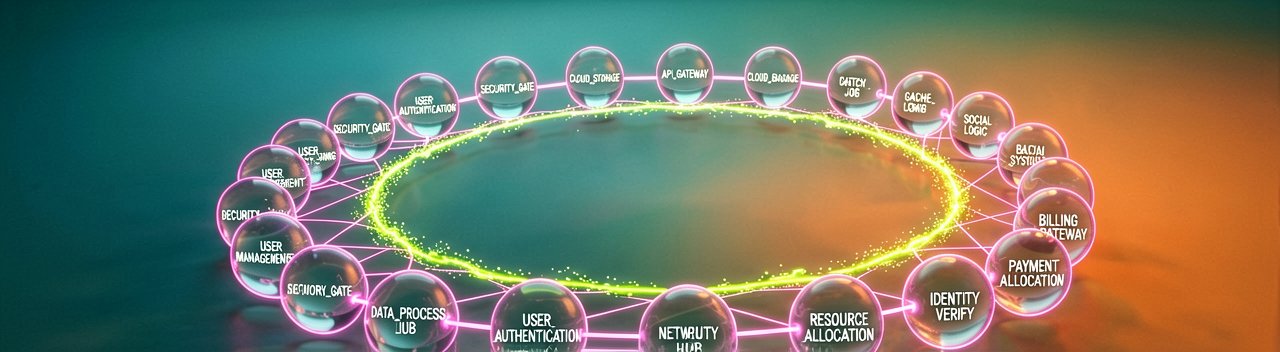
No global framework can tell a government exactly what to do. Local context, such as the state of digital infrastructure, workforce capabilities, regulatory environment and public trust in AI, shapes what is actually feasible. A function that scores low globally might be entirely achievable in a jurisdiction with strong data governance and political will. The same function might be a stretch elsewhere.
There is a physical reality to this that matters. When a government employee clicks through a legacy system, they feel the friction—the lag between mouse movement and screen response, the multiple logins required, the PDFs that won't open properly. Agentic AI removes that friction but introduces a different kind of opacity. You cannot see the decision being made. You only see the result. That matters when the result affects someone's benefits, their permit, their access to services.
The OECD AI Policy Observatory notes that while national AI strategies proliferate, functional frameworks for real-time agentic oversight remain absent. We are building engines without brakes, expecting legacy seatbelts to save us. Traditional compliance is often post-mortem, but systems operating at machine velocity cannot be audited retroactively. Relying on static audits for an autonomous agent is like analyzing the trajectory of a bullet after it has struck the wall.
Governance must now be encoded, not discussed. As agents move from conversational novelties to core operational engines, the latency between a strategic directive and a catastrophic execution shrinks to zero. In practice, this means boards are now voting, often blindly, on where human judgement ends and machine authority begins. The defining tradeoff is between maximum system yield and legal defensibility. Absolute efficiency eliminates human legibility. If you cannot explain how a decision was made, you cannot defend it.
Governance therefore requires intentionally constraining speed. Boards must engineer "legible friction": defined pause points where high-stakes actions require human authorization. What appears as inefficiency is, in practice, operational control. Kathleen Hicks, former US Deputy Secretary of Defense, has emphasized: "When we say 'human in the loop', we mean that someone in the chain of command must ultimately take responsibility."
Infrastructure can be outsourced, but liability remains anchored to the institution. When an autonomous procurement agent executes a discriminatory vendor-selection practice, it does so under the authority of the board, whether that authority is explicitly understood or not. You cannot buy an indemnity clause for a synthetic actor acting on your behalf. If the agent acts, a named executive must own the consequence.
These shifts are no longer scenarios on a risk register. They are showing up in board minutes and litigation dockets, and they now demand an institutional response measured in quarters, not years. The framework helps public sector organizations progress from ambition to implementation with agentic AI. Using this framework, they can identify where the balance between risk and reward is right, and learn as they go, expanding to more complex areas when ready.
Whether governments actually have the technical capacity to implement this framework remains the real question. The roadmap is clear. The execution is where most projects will fail.
Artūras Malašauskas is an AI Systems Integrator with 20+ years of production-grade web engineering experience. He has designed, shipped, and scaled enterprise Python/PHP systems for logistics, SaaS, and public-sector clients. For the past year, he has focused exclusively on AI integrations: deploying open-source LLMs, building generative media pipelines (image, audio, video), and engineering multi-agent workflows for real production environments. His standard: reproducibility, security, cost-efficient inference—no vaporware. He documents and evaluates emerging AI tooling, separating verified capabilities from marketing noise. Technical editor at: muza-ai.eu, ai-verslas.lt, ai-naujinos.lt Connect on LinkedIn
Comments