Profluent and Lilly Partner on AI-Designed Recombinases for Gene Editing

Emeryville-based Profluent announced a multi-program strategic research collaboration with Eli Lilly to develop and commercialize custom site-specific recombinases for genetic medicine. The partnership, disclosed on April 28, 2026, combines Profluent's frontier AI platform with Lilly's clinical and developmental capabilities in genetic medicines.
At the core of this deal is a technical challenge that has stumped researchers for years: kilobase-scale DNA editing. Many genetic diseases stem from multiple different mutations across patient populations rather than a single mutation. This heterogeneity makes it difficult to develop targeted therapies that work for all patients. Traditional approaches rely on finding naturally occurring enzymes that happen to work at target sites. Profluent is taking a different approach: using AI to create designer recombinases—custom enzymes programmed to target exact locations in the genome.
Under the agreement, Profluent will apply its AI models to design and optimize site-specific recombinases for multiple genomic targets. Lilly will receive an exclusive license to advance selected recombinases through in vivo research, preclinical development, clinical studies, and commercialization. The financial terms are substantial. Profluent will receive an upfront payment in addition to committed research and development funding. In total, Profluent is eligible to receive up to $2.25 billion in development and commercial milestone payments plus tiered royalties on net sales.
According to the official press release, the collaboration focuses on enabling large-scale, precise DNA editing capabilities that remain out of reach using conventional gene editing systems. "Kilobase-scale DNA editing remains a holy grail in genetic medicine," said Ali Madani, co-founder and CEO of Profluent. "Our work with Lilly is aimed at unlocking these therapeutics previously thought impossible."

Profluent's generative models are trained on what the company claims is the world's largest protein dataset, including the most comprehensive database of naturally occurring recombinases. The firm describes itself as an AI-first company pushing the frontier of de novo protein design to author new biology. Founded in 2022, Profluent is backed by leading investors including Altimeter Capital, Bezos Expeditions, Spark Capital, Insight Partners, Air Street Capital, AIX Ventures, and Convergent Ventures.
This isn't Lilly's first foray into recombinase technology. Back in January, the Indianapolis-based pharma agreed to a $1.12 billion collaboration with Seamless Therapeutics to use the German biotech's recombinase platform to create treatments for hearing loss. The Profluent deal comes as Lilly continues an aggressive deal-making spree. The company recently acquired Verve Therapeutics for $1 billion upfront, Ventyx for $1.2 billion upfront, and Kelonia Therapeutics in a $3.2 billion upfront deal.
Independent reporting from FierceBiotech notes that Profluent has claimed to be the first company to demonstrate that large language models can generate functional proteins. The company touts its atlas of over 115 billion unique proteins as being the "largest protein data resource in the world." Those credentials attracted big-name investors, with Bezos Expeditions co-leading on Profluent's $106 million funding round last November.
Standard knock-out and base editing approaches leave entire categories of disease out of reach. Kilobase-scale DNA editing is how we reach them—and Profluent's generative models were built for exactly this problem. The goal is to create a fully programmable platform applicable across rare and common diseases alike. Whether the AI can actually deliver on this promise remains to be seen (the gap between in silico design and in vivo function is notoriously wide in biotech).
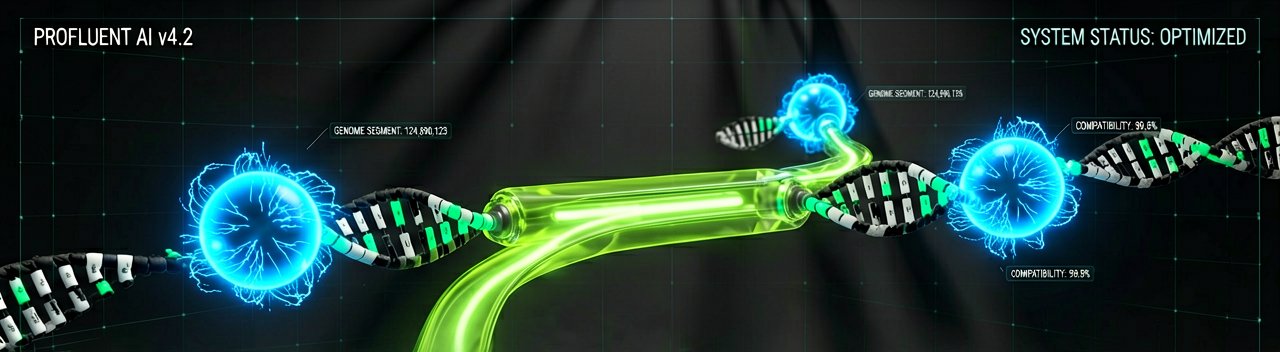
From a physical standpoint, the difference between current gene editing and what Profluent is attempting is stark. Current systems work like a scalpel—precise but limited in scope. The recombinases Profluent is designing would function more like a modular construction crew, capable of inserting entire genes at precise locations. This requires not just computational accuracy but physical reliability in living cells, where temperature, pH, and cellular machinery all introduce variables that no simulation can fully capture.
The pharmaceutical industry has been hungry for AI-driven protein design solutions. This partnership validates Profluent's approach to solving previously intractable problems. But validation is one thing; clinical success is another. The timeline for moving from AI-designed recombinases to approved therapeutics typically spans a decade or more, with attrition rates that would make most investors sweat.
Lilly has been on a deal-making spree, announcing a cancer biotech buyout for up to $2.3 billion on Monday. That acquisition followed takeovers of two other oncology outfits—CrossBridge Bio and Kelonia Therapeutics—in the last few weeks. While today's deal is a departure from the oncology streak, it fits nicely into Lilly's dedication to AI. The pharma has recently joined forces with AI biotech Insilico and unveiled a supercomputer with NVIDIA designed to help accelerate drug discovery and development.
Whether users actually pay for these therapies remains the real question. The upfront investment is massive, the development timeline is uncertain, and the regulatory pathway for AI-designed biologics is still being written. Time will tell if this works.
Artūras Malašauskas is an AI Systems Integrator with 20+ years of production-grade web engineering experience. He has designed, shipped, and scaled enterprise Python/PHP systems for logistics, SaaS, and public-sector clients. For the past year, he has focused exclusively on AI integrations: deploying open-source LLMs, building generative media pipelines (image, audio, video), and engineering multi-agent workflows for real production environments. His standard: reproducibility, security, cost-efficient inference—no vaporware. He documents and evaluates emerging AI tooling, separating verified capabilities from marketing noise. Technical editor at: muza-ai.eu, ai-verslas.lt, ai-naujinos.lt Connect on LinkedIn
Comments