Neural Frames Unveils Neural Tunes for End-to-End AI Music Creation
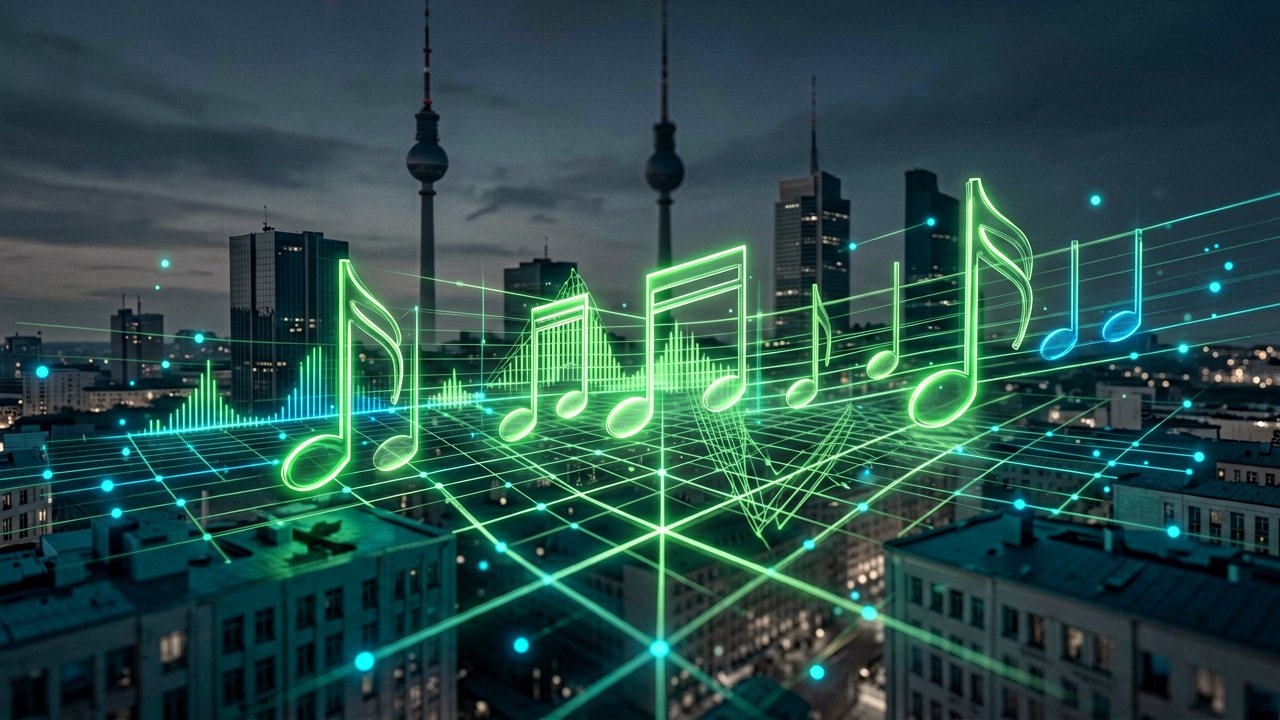
Neural Frames has expanded beyond video generation into full music creation with the April 27, 2026 launch of Neural Tunes. The Berlin-based startup now allows artists to generate complete AI songs from text prompts before producing custom music videos in one unified workflow.
This marks a significant shift for the company, which previously focused solely on transforming existing tracks into visual content. According to the official Business Wire press release, Neural Tunes builds on the platform's existing audio analysis technology that reads rhythm, tempo, and energy to generate cinematic visuals.
The feature set is ambitious. Artists can input BPM, length, genre, and mood parameters to shape their AI-generated tracks. Lyric integration lets users write their own words or build around them. Once the song exists, the platform's AI storyboard recommends scenes, cuts, and pacing that match the music's structure.
Dr. Nicolai Klemke, Founder and CEO of Neural Frames, framed the launch as a natural evolution. "Neural Frames has always been about helping artists get their music discovered by turning finished tracks into scroll-stopping videos that can break through on platforms like TikTok, Instagram, and YouTube," he said in the announcement. "With Neural Tunes, we're expanding that capability, giving real artists the ability to create the music, and take an idea all the way through to a finished video in one place."
The physical reality of using this tool matters. Instead of juggling separate DAW software, video editors, and AI generators, creators now face a single interface. The timeline-based editing works in a DAW-style layout, which means musicians familiar with Ableton or Logic won't need to relearn their entire workflow. (This is actually refreshing, given how many AI tools force users into completely foreign paradigms.)
Autopilot 2.5 adds another layer: users can edit videos through chat commands, with a Vibe-Story slider to push narrative or chase a song's emotion. The platform integrates leading video generation models including Kling, Seedance, and Runway into one dashboard. Character consistency across videos remains possible, which is critical for artists building visual identities.
Secondary reporting from Startup Fortune corroborates the timeline and adds business context. The company is fully bootstrapped and on track to reach $5 million in annual recurring revenue. Nearly 2 million music videos have been generated using Neural Frames to date, suggesting substantial existing adoption before this expansion.
For independent musicians, the value proposition is straightforward. Traditional music videos cost five-figure budgets and take weeks to produce. Neural Tunes compresses that timeline to days or minutes. Artists can paste Spotify, YouTube, or TikTok links, or upload from Suno and Freebeat, and receive AI beat-synced video output.
The platform claims 4K export quality ready for YouTube, Spotify Canvas, TikTok Reels, and even the screen behind a DJ booth. Users retain full commercial ownership of their videos—Neural Frames doesn't claim rights or use content without explicit permission.
Community testimonials on the official site show varied use cases. Producer Magic Mizrahi called the platform "user friendly and intuitive" with results "well beyond whatever I imagined would be possible." Musician ILan Raz noted that visuals locking to phrasing and mood help listeners stay longer. Singer Kirsty McGee described the experience as "working alongside an incredible artist whose fresh vision & lack of ego made the creative process like being in the presence of an enthralling and fascinating magic."
These reviews, while positive, come from the company's own marketing page. Independent verification of actual user satisfaction remains limited. The broader AI music video market is crowded with competitors like Sondo, which hit a one-year milestone in the space, and Artlist, which reached $300M ARR with shot-by-shot control generative tools.
The technical architecture deserves scrutiny. Neural Frames uses 8-stem audio intelligence to parse songs into components. This allows the video to respond natively to drops, lyrics, and structural changes rather than generic beat-matching. The platform reads stems, lyrics, and drops so the video responds to music natively—a distinction from simpler visualizers that just pulse to volume.
Three creation modes exist: Autopilot for instant song-to-video generation in two clicks, Frame-by-Frame Editor for unprecedented control over every single frame, and Text-to-Video Editor with timeline-based editing. This tiered approach accommodates both casual creators and professionals who need granular control.
Market timing is interesting. The launch coincides with broader AI workflow adoption in creator software. Competitors like Gumloop, n8n, Zapier, and Make are building AI automations. Adobe Summit recently showcased AI creative agent tools for workflows and personalization. Neural Frames is positioning itself within this ecosystem rather than as a standalone novelty.
For TikTok and YouTube creators, the democratization angle is real. Visual storytelling that previously required video editors, directors, and production crews is now accessible to bedroom producers. Whether this actually improves music discovery or just floods platforms with homogenized content remains unproven.
The pricing structure wasn't detailed in the press release. Neural Frames' website shows a free tier exists, but professional features likely require subscription access. For artists already paying for DAW software, streaming distribution, and marketing tools, another monthly fee adds friction. Whether the time savings justify the cost depends on individual workflow needs.
Copyright and ownership questions persist in AI music generation. While Neural Frames grants users full ownership of videos, the underlying AI models' training data and the generated audio's legal status remain murky. The music industry is still litigating these boundaries. Artists should understand they may face platform restrictions or legal challenges regardless of Neural Frames' terms.
Adoption will depend on output quality. AI-generated music often suffers from generic melodies, inconsistent vocals, or muddy mixes. If Neural Tunes produces tracks that sound polished enough for Spotify playlists, the tool gains credibility. If it sounds like background elevator music, it becomes a novelty rather than a production tool.
The company's bootstrapped status suggests they're prioritizing sustainable growth over venture capital-fueled expansion. This could mean slower feature development but more stable pricing. For creators wary of AI startups that vanish after burning through funding, this is a modest reassurance.
Whether musicians actually pay for this remains the real question. The market is saturated with free AI music generators. Neural Frames' advantage is the integrated video workflow, but that's only valuable if artists need music videos regularly. Casual creators might use it once for a TikTok clip and never return.
Time will tell if Neural Tunes becomes a staple in independent music production or another AI tool that fades into obscurity. The technology exists. The workflow is unified. The market is hungry for shortcuts. Whether it delivers consistent, professional results at scale is what separates this from the hundreds of similar launches.
Artūras Malašauskas is an AI Systems Integrator with 20+ years of production-grade web engineering experience. He has designed, shipped, and scaled enterprise Python/PHP systems for logistics, SaaS, and public-sector clients. For the past year, he has focused exclusively on AI integrations: deploying open-source LLMs, building generative media pipelines (image, audio, video), and engineering multi-agent workflows for real production environments. His standard: reproducibility, security, cost-efficient inference—no vaporware. He documents and evaluates emerging AI tooling, separating verified capabilities from marketing noise. Technical editor at: muza-ai.eu, ai-verslas.lt, ai-naujinos.lt Connect on LinkedIn
Comments